Tag Archive for: iconic

Cadillac Reveals CELESTIQ Show Car

An inspired vision of design, technology and bespoke craftsmanship previews flagship sedan

Today, Cadillac unveiled the CELESTIQ show car, a vision of innovation and purpose that previews the brand’s future handcrafted and all-electric flagship sedan.

Conceived to lead Cadillac’s electric future and inspired by the brand’s 120-year heritage, it serves as a touchstone for the Cadillac design and engineering teams, who continue to develop CELESTIQ as it moves closer to production.

“The CELESTIQ show car is the purest expression of Cadillac,” said Magalie Debellis, manager, Cadillac Advanced Design. “It brings to life the most integrated expressions of design and innovation in the brand’s history, coalescing in a defining statement of a true Cadillac flagship.”

In developing the show car, the design and engineering teams immersed themselves in the artisanship and customization that defined early Cadillac sedans such as the bespoke V-16 powered coaches of the prewar era, and the hand-built 1957 Eldorado Brougham. The CELESTIQ is the culmination of that heritage, brought to life with innovative production methods and new technologies.

“Those vehicles represented the pinnacle of luxury in their respective eras, and helped make Cadillac the standard of the world,” said Tony Roma, chief engineer. “The CELESTIQ show car — also a sedan, because the configuration offers the very best luxury experience — builds on that pedigree and captures the spirt of arrival they expressed.”

Designers drew further inspiration from classic architecture such as the mid-century masterpieces of architect Eero Saarinen, along with other iconic American designs, which made era-defining statements when introduced and endured with distinctive timelessness.

Realizing and infusing those influences within an Ultium-based EV architecture resulted in a clean-sheet expression for the CELESTIQ show car that considers the entirety of travel as a curated experience — one intended to evoke an emotional response.  The result is a vehicle that makes a magnetic first impression and cultivates a permanent personal connection.

“We’ve combined the beauty of function with the beauty of form,” said Laetitia Lopez, creative designer, Cadillac Color and Trim. “We had to reconsider all aspects to immerse the customer, all of their senses, and create a connection with the vehicle through the finest genuine materials, exceptional detailing and advanced technology.”

www.cadillac.com

The show car previews some of the materials, innovative technologies and hand-crafted attention to detail harnessed to express Cadillac’s vision for the future. Highlights include five high-definition, advanced LED interactive displays, including a 55-inch-diagonal advanced LED display, along with expected industry firsts such as a variable-transmission Smart Glass Roof and Ultra Cruise1, General Motors’ next evolution of available hands-free driver assistance technology which Cadillac plans to offer on CELESTIQ.

The Smart Glass Roof features Suspended Particle Device (SPD) technology that allows for four zones of variable lighting, enabling passengers to fine-tune their cabin experience for completely personalized comfort and visibility. Additionally, the 55-inch-diagonal advanced LED display introduces a passenger display with electronic digital blinds, an active privacy technology, which is designed to allow passengers to enjoy video content while blocking it from the view of the driver.

While they are previewed on the show car, these technologies and more will make CELESTIQ the most advanced vehicle ever from Cadillac. Availability for the production version of CELESTIQ will be announced at a later date.

GM is investing $81 million to support its assembly at GM’s Global Technical Center, the landmark campus originally designed by Eero Saarinen and the heart of the company’s engineering and design efforts. The CELESTIQ will be the first production vehicle built2 there since the center’s inauguration in May 1956.

Additional details on the CELESTIQ production model will be announced later this year.

Visit www.cadillac.com for more information.

Cadillac Reveals CELESTIQ Show Car

An inspired vision of design, technology and bespoke craftsmanship previews flagship sedan

Today, Cadillac unveiled the CELESTIQ show car, a vision of innovation and purpose that previews the brand’s future handcrafted and all-electric flagship sedan.

Conceived to lead Cadillac’s electric future and inspired by the brand’s 120-year heritage, it serves as a touchstone for the Cadillac design and engineering teams, who continue to develop CELESTIQ as it moves closer to production.

“The CELESTIQ show car is the purest expression of Cadillac,” said Magalie Debellis, manager, Cadillac Advanced Design. “It brings to life the most integrated expressions of design and innovation in the brand’s history, coalescing in a defining statement of a true Cadillac flagship.”

In developing the show car, the design and engineering teams immersed themselves in the artisanship and customization that defined early Cadillac sedans such as the bespoke V-16 powered coaches of the prewar era, and the hand-built 1957 Eldorado Brougham. The CELESTIQ is the culmination of that heritage, brought to life with innovative production methods and new technologies.

“Those vehicles represented the pinnacle of luxury in their respective eras, and helped make Cadillac the standard of the world,” said Tony Roma, chief engineer. “The CELESTIQ show car — also a sedan, because the configuration offers the very best luxury experience — builds on that pedigree and captures the spirt of arrival they expressed.”

Designers drew further inspiration from classic architecture such as the mid-century masterpieces of architect Eero Saarinen, along with other iconic American designs, which made era-defining statements when introduced and endured with distinctive timelessness.

Realizing and infusing those influences within an Ultium-based EV architecture resulted in a clean-sheet expression for the CELESTIQ show car that considers the entirety of travel as a curated experience — one intended to evoke an emotional response.  The result is a vehicle that makes a magnetic first impression and cultivates a permanent personal connection.

“We’ve combined the beauty of function with the beauty of form,” said Laetitia Lopez, creative designer, Cadillac Color and Trim. “We had to reconsider all aspects to immerse the customer, all of their senses, and create a connection with the vehicle through the finest genuine materials, exceptional detailing and advanced technology.”

www.cadillac.com

The show car previews some of the materials, innovative technologies and hand-crafted attention to detail harnessed to express Cadillac’s vision for the future. Highlights include five high-definition, advanced LED interactive displays, including a 55-inch-diagonal advanced LED display, along with expected industry firsts such as a variable-transmission Smart Glass Roof and Ultra Cruise1, General Motors’ next evolution of available hands-free driver assistance technology which Cadillac plans to offer on CELESTIQ.

The Smart Glass Roof features Suspended Particle Device (SPD) technology that allows for four zones of variable lighting, enabling passengers to fine-tune their cabin experience for completely personalized comfort and visibility. Additionally, the 55-inch-diagonal advanced LED display introduces a passenger display with electronic digital blinds, an active privacy technology, which is designed to allow passengers to enjoy video content while blocking it from the view of the driver.

While they are previewed on the show car, these technologies and more will make CELESTIQ the most advanced vehicle ever from Cadillac. Availability for the production version of CELESTIQ will be announced at a later date.

GM is investing $81 million to support its assembly at GM’s Global Technical Center, the landmark campus originally designed by Eero Saarinen and the heart of the company’s engineering and design efforts. The CELESTIQ will be the first production vehicle built2 there since the center’s inauguration in May 1956.

Additional details on the CELESTIQ production model will be announced later this year.

Visit www.cadillac.com for more information.

Cadillac Reveals CELESTIQ Show Car

An inspired vision of design, technology and bespoke craftsmanship previews flagship sedan

Today, Cadillac unveiled the CELESTIQ show car, a vision of innovation and purpose that previews the brand’s future handcrafted and all-electric flagship sedan.

Conceived to lead Cadillac’s electric future and inspired by the brand’s 120-year heritage, it serves as a touchstone for the Cadillac design and engineering teams, who continue to develop CELESTIQ as it moves closer to production.

“The CELESTIQ show car is the purest expression of Cadillac,” said Magalie Debellis, manager, Cadillac Advanced Design. “It brings to life the most integrated expressions of design and innovation in the brand’s history, coalescing in a defining statement of a true Cadillac flagship.”

In developing the show car, the design and engineering teams immersed themselves in the artisanship and customization that defined early Cadillac sedans such as the bespoke V-16 powered coaches of the prewar era, and the hand-built 1957 Eldorado Brougham. The CELESTIQ is the culmination of that heritage, brought to life with innovative production methods and new technologies.

“Those vehicles represented the pinnacle of luxury in their respective eras, and helped make Cadillac the standard of the world,” said Tony Roma, chief engineer. “The CELESTIQ show car — also a sedan, because the configuration offers the very best luxury experience — builds on that pedigree and captures the spirt of arrival they expressed.”

Designers drew further inspiration from classic architecture such as the mid-century masterpieces of architect Eero Saarinen, along with other iconic American designs, which made era-defining statements when introduced and endured with distinctive timelessness.

Realizing and infusing those influences within an Ultium-based EV architecture resulted in a clean-sheet expression for the CELESTIQ show car that considers the entirety of travel as a curated experience — one intended to evoke an emotional response.  The result is a vehicle that makes a magnetic first impression and cultivates a permanent personal connection.

“We’ve combined the beauty of function with the beauty of form,” said Laetitia Lopez, creative designer, Cadillac Color and Trim. “We had to reconsider all aspects to immerse the customer, all of their senses, and create a connection with the vehicle through the finest genuine materials, exceptional detailing and advanced technology.”

www.cadillac.com

The show car previews some of the materials, innovative technologies and hand-crafted attention to detail harnessed to express Cadillac’s vision for the future. Highlights include five high-definition, advanced LED interactive displays, including a 55-inch-diagonal advanced LED display, along with expected industry firsts such as a variable-transmission Smart Glass Roof and Ultra Cruise1, General Motors’ next evolution of available hands-free driver assistance technology which Cadillac plans to offer on CELESTIQ.

The Smart Glass Roof features Suspended Particle Device (SPD) technology that allows for four zones of variable lighting, enabling passengers to fine-tune their cabin experience for completely personalized comfort and visibility. Additionally, the 55-inch-diagonal advanced LED display introduces a passenger display with electronic digital blinds, an active privacy technology, which is designed to allow passengers to enjoy video content while blocking it from the view of the driver.

While they are previewed on the show car, these technologies and more will make CELESTIQ the most advanced vehicle ever from Cadillac. Availability for the production version of CELESTIQ will be announced at a later date.

GM is investing $81 million to support its assembly at GM’s Global Technical Center, the landmark campus originally designed by Eero Saarinen and the heart of the company’s engineering and design efforts. The CELESTIQ will be the first production vehicle built2 there since the center’s inauguration in May 1956.

Additional details on the CELESTIQ production model will be announced later this year.

Visit www.cadillac.com for more information.

Cadillac Reveals CELESTIQ Show Car

An inspired vision of design, technology and bespoke craftsmanship previews flagship sedan

Today, Cadillac unveiled the CELESTIQ show car, a vision of innovation and purpose that previews the brand’s future handcrafted and all-electric flagship sedan.

Conceived to lead Cadillac’s electric future and inspired by the brand’s 120-year heritage, it serves as a touchstone for the Cadillac design and engineering teams, who continue to develop CELESTIQ as it moves closer to production.

“The CELESTIQ show car is the purest expression of Cadillac,” said Magalie Debellis, manager, Cadillac Advanced Design. “It brings to life the most integrated expressions of design and innovation in the brand’s history, coalescing in a defining statement of a true Cadillac flagship.”

In developing the show car, the design and engineering teams immersed themselves in the artisanship and customization that defined early Cadillac sedans such as the bespoke V-16 powered coaches of the prewar era, and the hand-built 1957 Eldorado Brougham. The CELESTIQ is the culmination of that heritage, brought to life with innovative production methods and new technologies.

“Those vehicles represented the pinnacle of luxury in their respective eras, and helped make Cadillac the standard of the world,” said Tony Roma, chief engineer. “The CELESTIQ show car — also a sedan, because the configuration offers the very best luxury experience — builds on that pedigree and captures the spirt of arrival they expressed.”

Designers drew further inspiration from classic architecture such as the mid-century masterpieces of architect Eero Saarinen, along with other iconic American designs, which made era-defining statements when introduced and endured with distinctive timelessness.

Realizing and infusing those influences within an Ultium-based EV architecture resulted in a clean-sheet expression for the CELESTIQ show car that considers the entirety of travel as a curated experience — one intended to evoke an emotional response.  The result is a vehicle that makes a magnetic first impression and cultivates a permanent personal connection.

“We’ve combined the beauty of function with the beauty of form,” said Laetitia Lopez, creative designer, Cadillac Color and Trim. “We had to reconsider all aspects to immerse the customer, all of their senses, and create a connection with the vehicle through the finest genuine materials, exceptional detailing and advanced technology.”

www.cadillac.com

The show car previews some of the materials, innovative technologies and hand-crafted attention to detail harnessed to express Cadillac’s vision for the future. Highlights include five high-definition, advanced LED interactive displays, including a 55-inch-diagonal advanced LED display, along with expected industry firsts such as a variable-transmission Smart Glass Roof and Ultra Cruise1, General Motors’ next evolution of available hands-free driver assistance technology which Cadillac plans to offer on CELESTIQ.

The Smart Glass Roof features Suspended Particle Device (SPD) technology that allows for four zones of variable lighting, enabling passengers to fine-tune their cabin experience for completely personalized comfort and visibility. Additionally, the 55-inch-diagonal advanced LED display introduces a passenger display with electronic digital blinds, an active privacy technology, which is designed to allow passengers to enjoy video content while blocking it from the view of the driver.

While they are previewed on the show car, these technologies and more will make CELESTIQ the most advanced vehicle ever from Cadillac. Availability for the production version of CELESTIQ will be announced at a later date.

GM is investing $81 million to support its assembly at GM’s Global Technical Center, the landmark campus originally designed by Eero Saarinen and the heart of the company’s engineering and design efforts. The CELESTIQ will be the first production vehicle built2 there since the center’s inauguration in May 1956.

Additional details on the CELESTIQ production model will be announced later this year.

Visit www.cadillac.com for more information.

Manolo Blahnik for ELVIS

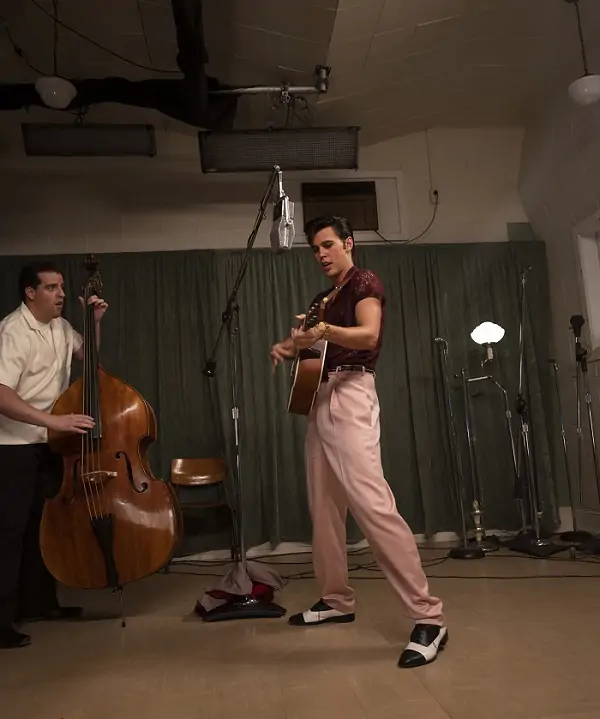
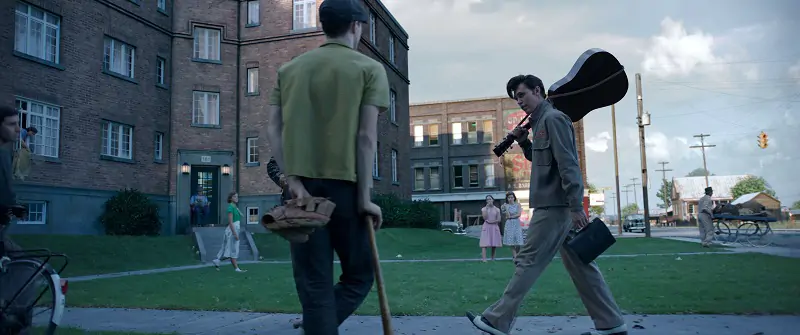
Manolo Blahnik has partnered with Academy Award-winning costume designer Catherine Martin to create a selection of custom shoes for Baz Luhrmann’s larger-than-life film, Elvis, from Warner Bros. Pictures.

Inspired by existing Manolo Blahnik silhouettes, the shoes can be seen throughout the film on Elvis Presley (played by Austin Butler) and also on Jerry Schilling (played by Luke Bracey), who portrays the artist’s longtime associate. Manolo Blahnik and Martin have partnered together in the past, creating shoes for Luhrmann’s 2001 Oscar-winning film Moulin Rouge!.

© 2022 Warner Bros. Ent. All Rights Reserved.

“It has been an honor to work with the wonderful Catherine Martin once again,” said Blahnik. “She is a visionary of the costume world and so beautifully brings motion picture to life through her divine creative imagination and originality. I am constantly inspired by cultural movements and music and with Elvis as the muse, these styles were a joy to create! The `50s in general is an era that I am so often drawn to, particularly in my menswear designs, with some of my past and more recent collections inspiring the pieces for the film. I am incredibly grateful to Catherine for including my work in this already iconic film. It has been marvelous, a true privilege.”

© 2022 Warner Bros. Ent. All Rights Reserved.

Manolo Blahnik designs featured in the film are TUPELO, a black-and-white lace-up inspired by ‘50s menswear, VICTOR, a sleek white calf leather boot, and GRACELAND, a classic toggle desert boot in cappuccino-coloured suede.

© 2022 Warner Bros. Ent. All Rights Reserved.

“Manolo Blahnik’s brilliance and extraordinary craft is something I have admired for many years,” said Martin. “To work with him and create something unique yet historically truthful was an incredible privilege. To have at one’s disposal such extraordinary Italian ateliers was a luxury, resulting in beautiful, gorgeously crafted shoes. Coincidentally, Manolo Blahnik’s signature spectator lace ups are strikingly similar to the shoes Elvis habitually wore in the mid`50s. The iconic designer’s love of this style serendipitously reflected Elvis’s aesthetic in the 1950s.”

Baz Luhrmann’s ELVIS Only in Theaters June 24.

Shop similar styles from the Manolo Blahnik men’s collection to those seen in the new film.

Austin Healey

HEALEY BY CATON : el icónico auto deportivo evolucionado para la era moderna por la nueva marca británica de lujo

  • Reencarnación ultra exclusiva de la icónica Austin-Healey 100 lanzada por
    la nueva marca británica de lujo, Caton
  • Healey by Caton presenta una combinación única de diseño de vanguardia y técnicas artesanales tradicionales, lo que actualiza este venerado auto deportivo.
  • Las mejoras visuales y de rendimiento de precisión dan como resultado un verdadero automóvil para conductores: una experiencia inmersiva, embriagadora y altamente emocional.
  • 25 ejemplos serán construidos a mano por Caton en Coventry, Reino Unido
  • Caton ocupa una posición única en el mercado de lujo que combina diseño e ingeniería de calidad OEM con habilidades artesanales tradicionales.
  • Debut público mundial en el Salón Privé de Londres del 21 al 23 de abril, antes de exhibirse en una variedad de eventos en el Reino Unido, incluido el próximo Bicester Scramble. el 24 de abril
  • Sitio web: reino unido

Coventry, 13 de abril de 2022 : la nueva marca británica de lujo Caton revela su primera creación: una reencarnación ultra exclusiva del icónico auto deportivo Austin-Healey 100. Con una combinación única de diseño e ingeniería de grado OEM con técnicas artesanales tradicionales, Healey by Caton actualiza el venerado automóvil deportivo.

Con mejoras visuales y de rendimiento de precisión, totalmente en consonancia con el espíritu del automóvil original, Healey by Caton es un verdadero automóvil para conductores: una experiencia inmersiva, embriagadora y altamente emocional. También será extremadamente raro, con un conjunto de ejecución muy limitado de 25 autos que se construirán a mano en Coventry. El Healey by Caton hará su debut público mundial en el próximo evento Salon Privé London del 21 al 23 de abril, que se llevará a cabo en el Royal Hospital Chelsea. ¡El equipo y el automóvil anunciarán un plan completo de eventos, centrado en el Reino Unido para 2022, incluida la asistencia y presentación en el próximo Bicester Scramble con entradas agotadas! Evento el domingo 24 de abril.

HEALEY-BY-CATON-coche-deportivo-icónico

HEALEY-BY-CATON-coche-deportivo-icónico

Caton ocupa una posición única en el mercado, forjando nuevos productos a partir de un conjunto de habilidades excepcionales y tecnología de punta. Con recursos inigualables que le permiten ofrecer una propuesta de lujo completamente nueva, su primera oferta es en vehículos a medida. Sin embargo, el equipo de Caton se compromete a crear y fabricar productos que se alineen con la artesanía británica de lujo en el futuro previsible, y no solo con los automóviles. La marca pone al descubierto una armonía excepcional de experiencia, pasión, tecnología de nivel OEM y artesanía, centrándose exclusivamente en la mejora comprensiva y la evolución de productos preciados para la era moderna, el primero de los cuales es un vehículo fabricado en carrocería, el Healey by Caton.

Adoptando un enfoque forense pero comprensivo, los diseñadores de Caton han introducido una suavidad sutil en las líneas reconocibles al instante del Healey, amplificando suavemente el dinamismo visual mientras respetan por completo los principios de ingeniería y diseño del creador del automóvil original, Donald Healey.

En el interior, la cabina es totalmente nueva con un enfoque en los mejores materiales contemporáneos y de época. Gracias a un rediseño del túnel de transmisión y una nueva caja de cambios manual de cinco velocidades, se ha producido una transformación en el espacio de la cabina. Como resultado, Healey by Caton es un automóvil deportivo muy útil, que ofrece a todos los conductores la sensación de un clásico pero con verdadera comodidad. El toque final es un motor de alto rendimiento y una suspensión finamente perfeccionada, todo lo cual se combina para elevar el placer de conducir a otro nivel.

Un ícono de Midlands, modernizado

El equipo de Caton son grandes defensores de Healey. En 1952, Donald Healey construyó el primer prototipo Healey 100 en los talleres de su empresa en Warwick, ubicados a diez millas al sur de la sede central de Caton en Coventry. Healey llevó su incipiente roadster biplaza con motor de cuatro cilindros al Salón del Automóvil de Earls Court de Londres de ese año. donde forjó una famosa alianza con el jefe de Austin, Leonard Lord, para construirlo como el Austin-Healey 100.

Se produjeron seis iteraciones del automóvil entre 1953 y 1958, y el motor de cuatro cilindros finalmente se reemplazó por una unidad de seis cilindros. Se sabía que Donald Healey prefería el motor de cuatro cilindros, que es más liviano y se presta a mejoras de rendimiento más fácilmente que el de seis cilindros. Con estas razones en mente, Caton eligió el modelo 100 ‘BN1’ original de cuatro cilindros como base e inspiración.

Tim Strafford, director ejecutivo del socio estratégico de construcción de vehículos de Caton, Envisage Group, dijo: “Caton representará lo mejor en la construcción de carrocerías británica y es la visión de nuestros inversores [de Envisage Group]. Decidimos que el primer producto de Caton tenía que ser creativo, destacarse en el mercado, atraer a una audiencia global, y fue un paso natural que elegimos poner nuestra marca Caton en un Healey 100”.

Para el proyecto, los diseñadores e ingenieros de Caton han podido recurrir a los formidables recursos del socio estratégico Envisage Group en cada paso. Y también han desplegado habilidades y herramientas artesanales tradicionales, que habrían sido utilizadas por quienes construyeron el Healey 100 en los años cincuenta.

Strafford continuó: “El Healey de Caton es un automóvil para aquellos que aprecian los objetos hermosos y las obras de arte exquisitas. También es para aquellos que aman el olor a gasolina y el sonido de un motor de alto rendimiento que funciona con carburadores. El Healey by Caton expone deliberadamente a sus ocupantes a los elementos y los coloca justo en el corazón de una experiencia de conducción única, altamente visceral y que afirma la vida, nada más que el sonido del escape de salida lateral debajo del oído del conductor.

“Con todos los componentes mecánicos reconfigurados como nuevos, Healey by Caton libera a los propietarios de cualquier reserva que puedan tener sobre la compra de un automóvil clásico. Brinda tranquilidad, belleza seductora y un rendimiento impresionante”.

Diseño exterior y carrocería

El espíritu de Caton es tomar automóviles y objetos amados y preciados del pasado y mejorarlos utilizando nuevos materiales y procesos de fabricación ultraprecisos. Este enfoque, que va más allá de la mera reinvención, es uno de purificación, modernización y, en última instancia, reencarnación, y está encarnado de manera fascinante en el Healey de Caton.

El diseño de Healey by Caton ha sido dirigido por Darryl Scriven, quien explica: “Donald Healey acertó mucho cuando diseñó el automóvil originalmente. Queríamos rendir homenaje al vehículo original y hacerlo más cómodo para vivir, más divertido de conducir e incluso más dinámico y hermoso a la vista”.

Scriven y su equipo rediseñaron con simpatía la parrilla delantera, mejorando la sensación de profundidad y proporción con una meticulosidad que solo las herramientas y sistemas de diseño de nivel OEM pueden ofrecer para denotar el rendimiento adicional con el que está dotado el automóvil. La parrilla, que es una pieza de joyería en la parte delantera del automóvil, es una obra de arte con cada listón creado individualmente, ensamblado para crear una apariencia flotante, detrás del borde hexagonal Caton, una forma que fluye delicada pero deliberadamente a lo largo del vehículo.

Se quitaron los parachoques originales de un cuarto de largo y se remodeló el frente para crear una apariencia más suave y limpia. La cenefa delantera también se ha alargado para ocultar la parte delantera de las patas del chasis, creando una sensación más premium. La remodelación sutil de los faros ha logrado un efecto similar y ha creado una iluminación superior con la integración de LED y luces de circulación diurna.

Se ha aplicado la ejecución de un aspecto más limpio y suave en todo el cuerpo, sin costuras ni pedrería. Esto es evidente en los nuevos guardabarros delanteros de aluminio, que cuentan con una construcción más parecida a una concha. A pesar de estar construidos sobre una rueda inglesa, usando métodos tradicionales, están completamente libres de las cuentas que corrían por el centro de los artículos originales. Se han integrado una nueva salida de aire y un embellecedor en los flancos, amplificando visualmente la línea de buceo que recorre el lateral del coche.

Caton también agregó detalles adicionales al guardabarros trasero del automóvil. Scriven revela por qué: “ Hemos incorporado un poco más de sustancia, lo que da un poco más de volumen y crea una mayor sensación de dinamismo. No he trabajado con ninguna otra empresa o carrocero que pueda crear un coche como este, desde cero. Un ejemplo clave es el volumen en el capó. Re-esculpimos sutilmente, a mano en una rueda inglesa, para crear una línea más suave que fluye hacia abajo en la parte delantera del automóvil, para reemplazar el capó más plano del automóvil básico original”.

Sin embargo, en su mayor parte, Caton ha refinado, en lugar de agregado, el cuerpo de Healey. Los parachoques traseros desaparecieron, al igual que las bisagras externas del maletero, reemplazadas por nuevas bisagras internas que funcionan con puntales de gas modernos. La manija del maletero también se elimina y la tapa ahora se abre mediante un mecanismo de liberación interno, operado por una nueva y moderna llave Caton.

“Para permanecer fieles al ADN del automóvil, nos preguntamos: ‘¿Qué habría hecho Healey al construir un automóvil en los años cincuenta si tuvieran las herramientas y las técnicas de fabricación que estamos en la posición única de tener a nuestra disposición hoy?’”, Continuó . Escrito.

La tecnología de nivel OEM a la que se refiere permitió a Caton capturar un escaneo 3D completo del automóvil. Una máquina de control numérico por computadora (CNC) permitió a los fabricantes trabajar con tolerancias de solo 0,2 mm, creando espacios de panel ultra perfectos que se suman al embellecimiento de la carrocería. Sin embargo, el equipo también implementó tecnología que habría sido completamente familiar para quienes construyeron el automóvil en ese período, como una rueda inglesa, que se usó para enrollar a mano los paneles de aluminio.

Después de una construcción en seco para garantizar una precisión absoluta en el montaje final, la carrocería pasa dos semanas en el taller de pintura de Caton. Está imprimado, equipado con una capa de protección anticorrosión estándar OEM y luego pintado. No se escatima ningún nivel de detalle, con pintura también aplicada al interior del maletero. El automóvil conserva su insignia original, con la sutil adición del logotipo de la marca Caton en los guardabarros delanteros. Las llantas de aleación de aluminio negro Borrani de 72 radios y estilo de época, con ruedas giratorias negras, están equipadas y calzadas con neumáticos Michelin listos para usar, correctos para la época pero de fabricación moderna.

Interior

El rediseño de Caton de la cabina del Healey mantiene por completo la esencia del original, al mismo tiempo que crea mucho más espacio. Esto se ha logrado principalmente mediante el rediseño y el estrechamiento del túnel de transmisión, que fue posible gracias a la introducción de una nueva caja de cambios manual de cinco velocidades.

El automóvil estándar usaba una caja de cambios de tres velocidades diseñada originalmente para la activación del cambio de columna, con la palanca de cambios colocada desplazada en el lado izquierdo del túnel de transmisión. Ahora, la palanca de cambios se encuentra en una posición central en la parte superior del túnel de transmisión, transformando tanto el atractivo estético de la cabina como el placer de conducir. Los Healey 100 originales se diseñaron y construyeron para una población más pequeña, lo que significa que muchos de los conductores de hoy pueden tener dificultades para disfrutar cómodamente de la experiencia. Gracias al rediseño de la parte trasera y la instalación de una caja de pedales diferente, se informa que en las pruebas de desarrollo, un conductor de 6 pies de altura necesitaba mover el asiento hacia la cabina mientras luchaban por encajar en un Healey 100/4 original.

El gerente de proyecto de Healey by Caton, David Moore, explica: “Elegimos reemplazar la caja de cambios Healey existente con su voluminoso túnel de transmisión y palanca de cambios desplazada, con una nueva transmisión manual de cinco velocidades por las razones antes mencionadas de mejorar el espacio y la practicidad dentro de la cabina, pero también, por supuesto, para transformar la experiencia de conducción.

“La nueva caja de cambios es proporcionada por expertos en transmisión líderes en el mundo. La unidad altamente probada es excepcionalmente duradera y su configuración de cinco velocidades dota al automóvil de una capacidad de turismo de larga distancia mucho más cómoda. Pero es sobre un paso de montaña lleno de horquillas donde los conductores realmente apreciarán la diferencia. En combinación con un cojinete de liberación de embrague concéntrico hidráulico personalizado, la caja de cambios proporciona una sensación de cambio de marcha rápida e inmensamente satisfactoria”.

El Healey de Caton se ha modernizado con la instalación de una caja de pedales estilo coche de carreras para aumentar aún más el espacio para las piernas disponible para el conductor. También se han quitado el techo y la cubierta de lona del automóvil, junto con el calentador. No hay un sistema de información y entretenimiento que reste valor a la experiencia de conducción, aunque se proporcionan dos puertos USB para permitir la carga de dispositivos electrónicos si es necesario. Las tarjetas de la puerta y los bolsillos también se han maximizado para que quepa una botella de agua y otros artículos.

Ensalzando aún más los valores sobre los que se ha construido Healey by Caton, Scriven dice: “Queríamos acentuar la sensación visceral de la experiencia de conducción y dejar que el conductor y el pasajero realmente disfrutaran del sonido del motor y las sensaciones de la carretera abierta. El escape de salida lateral se ha colocado meticulosamente cerca de la oreja del conductor, por ejemplo.

Sin embargo, también queríamos asegurarnos de que los ocupantes pudieran hablar entre ellos y estar cómodos en viajes largos. El Healey by Caton es un automóvil que puede conducir a Goodwood por un día, pero también es un automóvil que puede conducir a lo largo de una hermosa carretera costera en Mónaco. Hemos ampliado ligeramente la altura del parabrisas delantero para reducir los golpes y hemos añadido elementos de refuerzo a los marcos de los asientos, dando a los asientos de estilo de época más soporte y mayor comodidad”.

Para el salpicadero se eligió cuero optimizado por contracción estándar del OEM y se rediseñaron los paneles de las puertas para obtener un ajuste y un acabado superiores y una mayor durabilidad que proporciona. Sin embargo, el material se evitó deliberadamente para los asientos de los automóviles por la razón muy simple pero muy importante de que no produce ningún olor.

“El cuero optimizado para encogimiento no crea ese maravilloso aroma que se obtiene del cuero natural”, continúa Scriven. “Es por eso que, después de consultar con nuestro estudio interno de tapicería y telas, elegimos tapizar los asientos con cuero Bridge of Weir de primera calidad, que enriquece la cabina con la fragancia del cuero y desarrollará una hermosa pátina con el tiempo. Eso es parte del auténtico atractivo del Healey by Caton, que solo mejorará cada vez más cuanto más se conduzca el automóvil”.

Transmisión

El corazón palpitante del automóvil es un motor de cuatro cilindros y 2954 cc de 185 bhp y 195 ft/lbs de torque, dotado de rendimiento para llevar el automóvil mucho más allá de la velocidad máxima de 100 mph por la que recibió su nombre. Basado en un bloque Austin-Healey original, el motor se desmonta por completo, se aligera por completo, se equilibra y luego se reacondiciona a cero millas. Se ha mejorado aún más con un cigüeñal completamente de acero, cubiertas de cojinetes mejoradas, pistones de alta compresión, un árbol de levas de carreras con lóbulos más agresivos y balancines de rodillos. Los carburadores Twin H8 más grandes y las entradas de flujo de gas brindan una excelente respuesta del acelerador. Un sistema de escape de salida lateral de carrera se suma aún más al considerable atractivo auditivo del automóvil.

El motor y la mayoría de los componentes mecánicos del automóvil son obra de los principales especialistas en Healey del mundo, JME Healeys (JME), que tiene fuertes vínculos históricos con la empresa Healey original. Jonathan Everard, quien fundó JME, y su padre Harold, trabajaban para Donald Healey Motor Company en Warwick. Hoy en día, la empresa está dirigida por los hijos de Jonathan, Chris y Dan, y tiene su sede en The Cape Works en Warwick, el hogar original de la empresa Healey.

Tim Strafford explica la lógica detrás de la creación de Caton de una asociación de colaboración con JME: “La misión de Caton es crear productos en la industria automotriz y más allá del calibre más alto posible de diseño, calidad y atractivo. Caton es completamente transparente sobre cómo logra esto. Cuando creamos los valores de marca de Caton, nos preguntamos: ‘¿Dónde está Caton de clase mundial? ¿Y dónde podría agregar valor para sus clientes mediante la formación de asociaciones estratégicas para incorporar habilidades adicionales?’ Cuando se trata de la marca Austin-Healey, no hay nadie con más experiencia o conocimiento que JME”

Por lo tanto, Caton optó por utilizar la última especificación Healey 100 BN1 Cape Works de JME como base para el proyecto Healey by Caton. El automóvil se beneficia de un nuevo chasis, reforzado y modificado en los puntos débiles conocidos, incluida la adición de nuevos mamparos delanteros y traseros, identificados a partir de las décadas de experiencia de JME en la restauración, el mantenimiento y los rallies de Healey. Proporciona un bloque de construcción excepcional y sólidamente probado para Healey by Caton. No obstante, Caton quería ampliar los parámetros de rendimiento considerables del coche y reforzar aún más su atractivo de conducción único.

Los ejes de transmisión reforzados transfieren el formidable rendimiento a la carretera. De acuerdo con el atractivo puro y centrado en el conductor del Healey by Caton, no hay controles electrónicos de tracción o estabilidad para diluir la experiencia de conducción. Las pinzas de aleación de cuatro pistones con discos delanteros ventilados en la parte delantera proporcionan una potencia de frenado ejemplar, y los discos y las pinzas de aleación de tres pistones se montan en la parte trasera. No se ha instalado ningún sistema ABS en consonancia con la sensación de conducción purista.

Suspensión y dirección

Décadas de éxito en rallyes internacionales atestiguan la fuerza y ​​durabilidad inherentes de la configuración de suspensión original de Healey. JME ha perfeccionado aún más el sistema al tiempo que conserva la configuración original de la ballesta semielíptica trasera. El Healey de Caton presenta una configuración de doble horquilla y resorte helicoidal ajustable en la parte delantera, con un sistema amortiguador de brazo de palanca y el probado sistema de ballesta del automóvil en la parte trasera. Las barras antivuelco fabricadas a medida y totalmente unidas con rosetas también se instalan en la parte delantera y trasera. El sistema de dirección sin asistencia ofrece niveles excepcionales de sensación y respuesta.

Primeros valores del cliente

Con la producción del Healey by Caton limitada a 25 ejemplares, la compañía se comunicará con los clientes de manera muy personal, uno a uno, con la frecuencia que cada uno requiera. Cada cliente puede estar seguro del más alto nivel de servicio posible. Serán bienvenidos a visitar la sede central de Caton en Coventry de manera regular, para recorrer los estudios de diseño de la compañía, el conjunto de acabados y colores y las instalaciones de pintura, y sumergirse en cada etapa del progreso de desarrollo de su automóvil.

El cliente tiene la capacidad de agregar toques completamente personalizados y personalizados a cualquiera de los productos de Caton, ya sea el acabado de pintura exterior del automóvil creando cualquier color imaginable o eligiendo entre la amplia gama de materiales disponibles en el conjunto de colores y molduras en el sitio para el interior del coche.

Tim Strafford promete: “Será un privilegio para nosotros colaborar con los clientes de Caton para especificar su automóvil según sus requisitos exactos, ya sea que elijan visitarlo en persona o comunicarse desde cualquier lugar del mundo. No hay dos ejemplos de Healey by Caton que sean iguales, pero cada uno será de una belleza excepcional y estará construido con los niveles de calidad OEM más altos posibles. Cada uno representará una verdadera reencarnación del icónico auto deportivo Austin-Healey 100 totalmente apropiado para la era moderna. Nuestro objetivo es ofrecer una experiencia de conducción incomparable, inmersiva, embriagadora y altamente emocional”.

La producción artesanal del Healey by Caton comenzará en el segundo trimestre de 2022. ¡Hará su debut público mundial en Salon Privé London del 21 al 23 de abril inclusive y asistirá al próximo Bicester Heritage Scramble! el 24 de abril. Se insta a los clientes a registrarse en la lista de correo de Caton a través de www.caton.uk , donde se anunciará una variedad de eventos y se distribuirán noticias. El equipo de Caton planea asistir a muchos eventos, desde clubes de desayuno más pequeños hasta eventos públicos más grandes, en 2022 y más allá, comenzando en el Reino Unido y viajando más lejos a escenarios globales a partir de 2023.

Sitio web:  www.caton.uk

Medios de comunicación social:

Instagram: www.instagram.com/bycaton/

Facebook: www.facebook.com/bycaton

Twitter: twitter.com/bycaton

LinkedIn: www.linkedin.com/company/bycaton

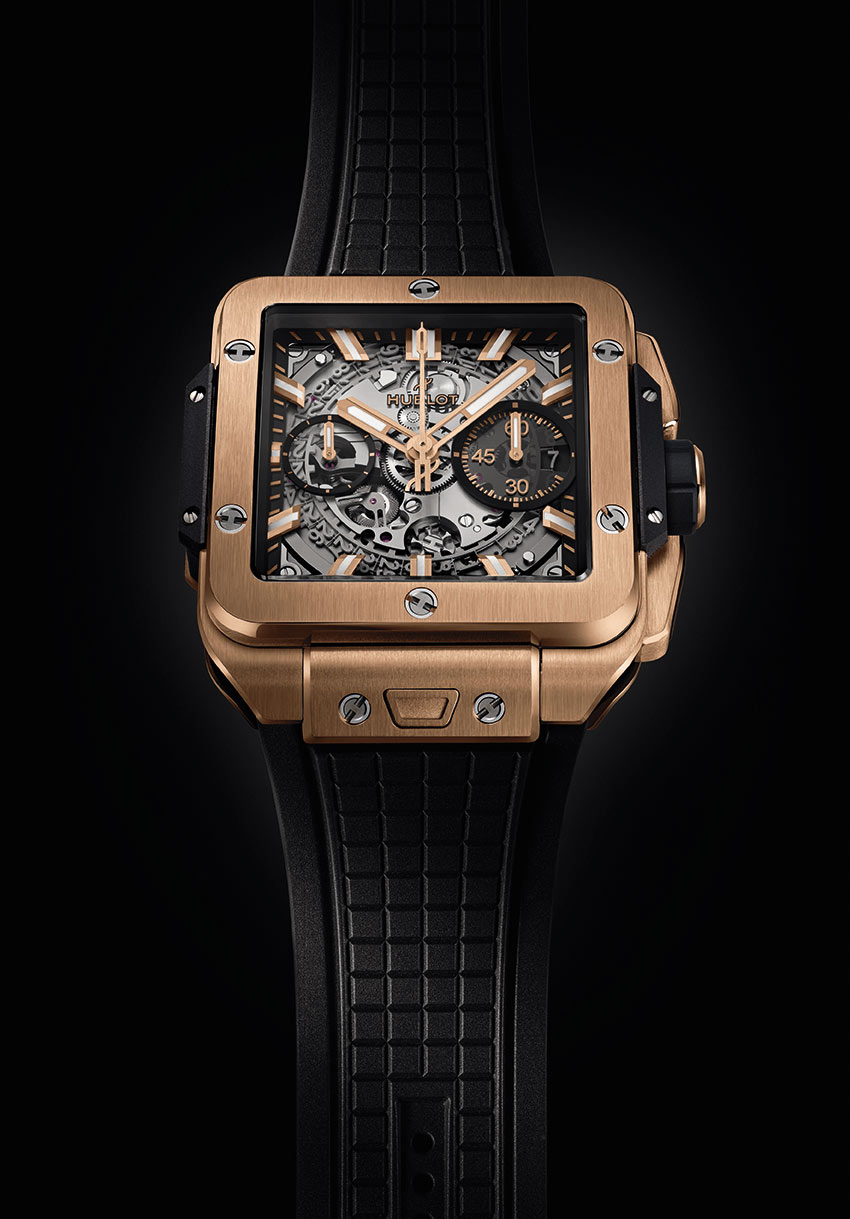
Hublot_Square-Bang-Unico-Collection_

HUBLOT – SQUARE BANG UNICO – UNA NUEVA FORMA DE RELOJ TOMA FORMA EN WATCHES & WONDERS

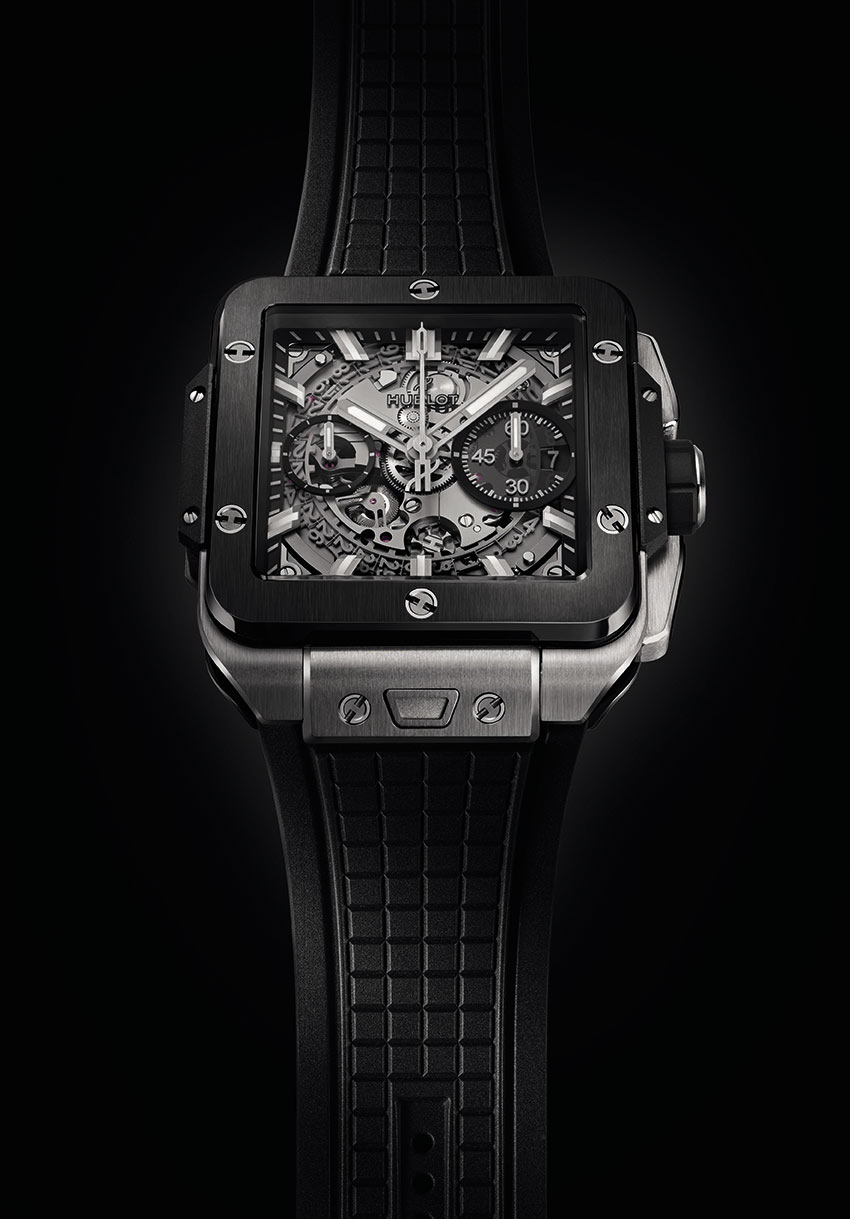
Hublot presenta su propia interpretación del reloj cuadrado, una geometría totalmente nueva para el relojero. Inspirado en el icónico Big Bang de Maison, este Square Bang Unico agrega un nuevo pilar, ‘The Shaped Collection’ para sentarse junto al Spirit of Big Bang.

¿Hay algo que no se haya explorado en la relojería? Esta es la pregunta que se hace todos los días el departamento de I+D de Hublot. Cuando ha creado los materiales más resistentes, establecido las asociaciones más locas y desarrollado complicaciones extraordinarias, la respuesta suele ser muy simple… En la forma. Hublot actualmente domina tres: un reloj redondo, un reloj en forma de barril y los MP, esas ‘Master Pieces’ que tienen que se han liberado de todas las convenciones.

Hoy se ha creado una cuarta forma: el cuadrado. Su geometría hechizó a Hublot por los desafíos que plantea. Primero, el movimiento. Dado que cada calibre tiene la rueda como componente básico, necesita un movimiento redondo. Si va a colocar armoniosamente un movimiento redondo en una caja cuadrada, esto requiere un estilo muy específico. Esta es la razón por la que la mayoría de los relojeros ocultan su movimiento, para dar la ilusión de utilizar un movimiento con forma o porque no han podido encontrar un estilo estético consistente.

Hublot decidió tomar una dirección radicalmente diferente: el relojero no oculta nada de su propio movimiento Unico, el orgullo de los relojeros de Nyon y el corazón palpitante de la mayoría de sus diseños durante más de 10 años. El cronógrafo tiene una rueda de pilares visible a las 6 en punto, mientras que su pantalla bicompax prescinde de un dial, para revelar su funcionamiento interno secreto.

El segundo desafío fue la construcción modular de la caja, diseñada en línea con el ADN de Hublot, con una carcasa central vestida con una placa superior e inferior para permitir una gran variedad de combinaciones y transformaciones. Pero esta vez, tiene forma cuadrada y, por lo tanto, es mucho más difícil hacerlo resistente al agua: Hublot supera el desafío con una resistencia al agua garantizada hasta 100 metros. El tamaño de la caja también es un factor importante para que este modelo sea perfectamente ergonómico, proporcionando una comodidad en la muñeca muy similar a la del Big Bang de 42 mm. Su pedigrí del ícono de la marca se puede ver en innumerables detalles.

anuncios

En primer lugar, está la construcción tipo sándwich de su esfera, que le otorga diferentes niveles de profundidad y un toque muy arquitectónico. Al igual que con el Big Bang, la esfera del Square Bang Unico hace un uso extensivo del zafiro para brindar una visión clara del movimiento Unico, y también reutiliza las mismas manecillas.

A continuación, encontramos los seis tornillos (funcionales) del bisel, colocados exactamente en los mismos lugares que en el Big Bang. A ambos lados del Square Bang, se encuentran las ‘orejas’ de la carcasa del Big Bang, que equilibran el diseño y protegen la carcasa. Para la correa, además del apreciado sistema One Click del Big Bang y su goma texturizada, los dos tornillos se fijan en el medio a modo de enganche. Finalmente, el Square Bang usa los mismos materiales que su predecesor, incluyendo titanio, cerámica y King Gold, sin mencionar el famoso acabado ‘All Black’.

Por último, una nueva correa decorada con ‘cuadrados de chocolate’ enfatiza aún más la identidad de Square Bang. Gracias a su sistema intercambiable (One Click), puede cambiar el aspecto de su reloj con un solo clic con una impresionante gama de correas de caucho, cocodrilo y, próximamente, de cuero suave al tacto.

Ya están disponibles cinco modelos de 42 mm. Los tres primeros son de titanio macizo, cerámica negra o King Gold. Los dos últimos combinan titanio o King Gold con un bisel de cerámica negra. Cada modelo viene con una correa de caucho negra y un cierre desplegable del mismo material que la caja. Estos originales diseños laten al ritmo del movimiento HUB1280 Unico Manufacture, un cronógrafo automático de 354 componentes, ajustado a 4 Hz (28.800 vib/h).

Como es habitual en Hublot, el acabado es intransigente y tiene un aire muy moderno: tornillos pulidos y arenados, corona de goma sobremoldeada, pulsadores decorados con ‘cuadrados de chocolate’ de goma, fondo satinado pulido y chapado en rodio o en oro 5N. Agujas plateadas, según modelo. La corona viene en caucho sobremoldeado. El patrón texturizado de la correa fue creado especialmente para Square Bang. Incluye cuatro filas (como los cuatro lados de la caja) de cuadrados elevados (como el bisel de la caja).

Porsche Design celebrates its 50th anniversary

Stuttgart. Porsche AG congratulates Porsche Design on its golden jubilee. Two very special cars are the highlights of the anniversary year: the exclusive Porsche 911 Edition 50Y Porsche Design and a historical 911 S 2.4 Targa from Porsche Design’s founding year of 1972, which has been faithfully restored by Porsche Classic. What unites them is the colour scheme, which, in recalling the legendary Chronograph I designed by Professor Ferdinand Alexander Porsche in 1972, sees both the exterior and the interior dominated by the colour black. Alongside them, Porsche Design is also presenting the Chronograph 1 – 1972 Limited Edition. The Porsche Museum will be celebrating the anniversary with its own special exhibition, opening on 19 January 2022.

“When you rethink the function of something, the form sometimes emerges as if by itself” – this was how F.A. Porsche described what still drives the engineers and designers at Porsche Design today. In 1972, he founded Porsche Design with his brother Hans-Peter. The designer of the Porsche 911 envisaged a company that would carry the principles and spirit of Porsche beyond the boundaries of the automobile. Porsche Design has long since become an internationally renowned premium lifestyle brand, known for functional and durable products with a purist aesthetic.

Exclusive special edition: a modern take on a design classic
The 911 Edition 50Y Porsche Design is a limited run of 750 cars with numerous features inspired by the iconic designs of F.A. Porsche. In addition to the all-black exterior, the nods to the past include the classic checked Sport-Tex seat centre panels and the red second hand of the Porsche Design Subsecond clock in the Sport Chrono Package, which comes as standard.

The special edition is based on the 911 Targa 4 GTS and can be ordered now from 185,606 euros¹. The anniversary model will arrive with European sales partners from April. Buyers can also purchase a special version of the new edition of the legendary Chronograph I. Features such as the edition number and wheel-shaped winding rotor underline the connection to the 911 Edition 50Y Porsche Design.

Totally unique: a 911 S 2.4 Targa signed by F.A. Porsche
For the past two years, Porsche Classic has been working on a unique project to celebrate 50 years of Porsche Design. A 911 S 2.4 Targa from 1972, the year Porsche Design was founded, has been restored for the anniversary. “The vision was to produce a historical counterpart to the new 911 Edition 50Y Porsche Design,” explains Ulrike Lutz, Head of Porsche Classic. “With the aid of the new Sonderwunsch (special wishes) programme, we were able to implement the idea of a unique pair of vehicles. The job of the designers and works restorers was to carefully transfer the specifications of the new car to the classic.”

The base vehicle, a 911 T 2.4 Targa from 1972, was in a poor condition and was missing some parts. While this would normally be a tricky start to a restoration project, on this occasion it wasn’t important for the planned modifications. The Porsche Classic experts completely upgraded the engine and chassis to the spec of the S version. The top-of-the-range model in its day, it had a displacement of 2,341 cc, which generated 190 PS at 6,500 rpm, and was equipped with mechanical fuel injection.

In tribute to Ferdinand Alexander Porsche, this one-of-a-kind vehicle features the same colours as the legendary Chronograph I watch that he designed in 1972, with black dominating both the exterior and interior. Classic side stripes with a Platinum satin finish and integrated Porsche Design lettering adorn the flanks. As a special highlight, the Targa roll bar has also been lasered in a Platinum satin finish – a new interpretation of the brushed stainless steel of the original classic model. The Targa lettering is finished in matt black. Like the special edition model, the grille on the rear engine cover features a ‘Porsche Design 50th Anniversary’ badge with a reproduction of F.A. Porsche’s signature.

Other anniversary products and accessories
For all Porsche and watch fans, Porsche Design is also presenting the Chronograph 1 – 1972 Limited Edition with a historical logo and lettering. This edition of the original, limited to 500 examples, has no visual parallels to the new special edition car and is available in the usual way from Porsche Design.

Limited Capsule Collections in the fashion, shoes and sportswear, luggage and accessories ranges, as well as special eyewear collections complete the anniversary offer.

About Porsche Design
“Good design must be honest,” F.A. Porsche always emphasised. He designed the legendary Porsche 911 and founded the design studio in 1972. Today, Managing Director Roland Heiler and his team still follow that philosophy. Using authentic materials, they design carefully thought-out, functional and durable products with a purist aesthetic. As the in-house design team of the Porsche Design brand, their inspiring high-quality products include watches, sunglasses, luggage and leather goods.

With locations in Zell am See, Berlin and Ludwigsburg, Los Angeles and Shanghai, the design office also offers its services to international clients. This results in first-class consumer goods, household appliances and industrial products – for example in collaboration with Elan, KEF, LaCie, Morita and Panasonic.

The choice of materials plays a decisive role in Studio F. A. Porsche’s products. Titanium and carbon can turn them into lifetime companions and add new, unexpected functions. The combination of traditional, honest design approaches with ambitious innovations turns the products into genuine luxury items.

Special exhibition at the Porsche Museum
The Porsche Museum is celebrating the 50th anniversary of Porsche Design with a special exhibition that will run until 11 July 2022. Part of it will feature information on the life of F.A. Porsche, his design philosophy and his huge creative influence. Exhibits spanning five decades and many product ranges will also be on display.

Symbolising the birth of Porsche Design is the Chronograph I, with two versions of the legendary timepiece forming the centrepiece of the special exhibition. The design concept radiates from this centrepiece through to the other exhibits. These include, for example, the P8478 aviator sunglasses, the Monobloc Actuator chronotimer series with fully integrated stopwatch pushers, as well as the P3613 tobacco pipe and the P9521 mobile phone. Items on display on the balcony of the Porsche Museum include the 993 Speedster owned by F.A. himself – as well as the 904 that he described as his masterpiece. The 1972 Porsche 911 S 2.4 Targa restored by Porsche Classic and the new 911 Edition 50Y Porsche Design will also form part of the special exhibition.

¹ Including VAT and with country-specific features (Germany)
More information as well as videos and photos can be found in the Porsche Newsroom: newsroom.porsche.com
Consumption and emission data determined in accordance with the measurement procedure required by law. As all new cars offered by Porsche are type-approved in accordance with the WLTP, the NEDC values are therefore derived from the WLTP values.

Further information on the official fuel consumption and official, specific CO₂ emissions of new passenger cars is available in the publication entitled “Guidelines on fuel consumption, CO₂ emissions and power consumption of new passenger cars”, which is available free of charge from all sales outlets and from DAT.

Vivian-Stauffer_Hamilton-CEO---

VIVIAN STAUFFER
CEO HAMILTON INTERNATIONAL LTD.

Vivian Stauffer es la directora ejecutiva de Hamilton, un nombre icónico en la relojería de precisión desde que se fundó en Lancaster, Pensilvania en 1892. Sus relojes se ganaron su reputación al sincronizar los primeros ferrocarriles y luego proporcionaron las muñecas de soldados, aviadores y estrellas de Hollywood. haciendo más de 500 apariciones en la pantalla grande. Hamilton ha estado a la vanguardia de las innovaciones en diseño, tecnología y artesanía, lanzando el primer reloj eléctrico del mundo en 1957 y el primer reloj digital LED en 1970. Miembro del Swatch Group, líder mundial en fabricación y distribución de relojes, Hamilton combina su Espíritu americano con verdadera precisión suiza.

Vivian Stauffer, de nacionalidad suiza, obtuvo su maestría en Ingeniería Química en la Ecole Polytechnique Fédérale de Lausanne. Un entusiasta de las actividades al aire libre, es un piloto experimentado y también disfruta del esquí gratuito, el ciclismo de montaña y el senderismo. Comenzó su carrera en Swatch, una marca del Swatch Group, en 2002, donde pasó cinco años como miembro de su equipo deportivo y comercial.

En 2007, se unió a Hamilton como Regional & Travel Retail Sales Manager y actuó como Brand Manager de Suiza entre 2010 y 2013. También fue nombrado Jefe de Ventas en 2011, desarrolló e implementó la estrategia de distribución y ventas internacionales para 24 subsidiarias y 40 distribuidores alrededor del mundo. Abrió las primeras boutiques de Hamilton en Japón y Suiza y encabezó el crecimiento de Hamilton en China como gerente de marca interino durante un año y medio.

CEO de Hamilton desde 2020, supervisa la estrategia y el desarrollo global de la marca en más de 75 países.

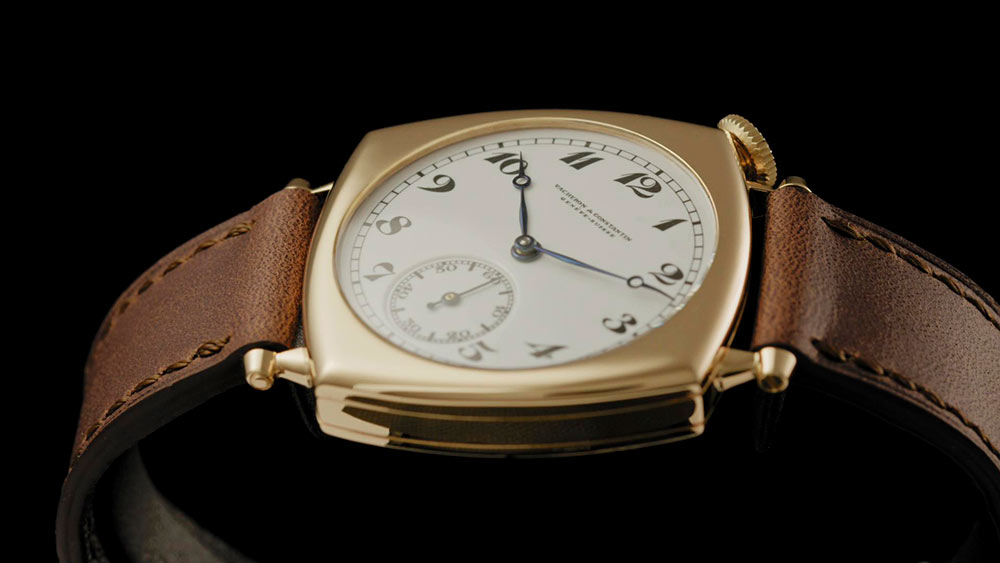
American 1921 Pièce unique: The iconic American 1921 watch faithfully recreated as if in 1921

Vacheron Constantin | American 1921 Pièce unique: The iconic American 1921 watch faithfully recreated as if in 1921

  • To celebrate the 100th anniversary of the American 1921, Vacheron Constantin has faithfully created this emblematic model from the Roaring Twenties while safeguarding its original attributes.
  • This exceptional one-of-a-kind creation symbolises the Manufacture’s commitment to the transmission and enhancement of traditional skills.

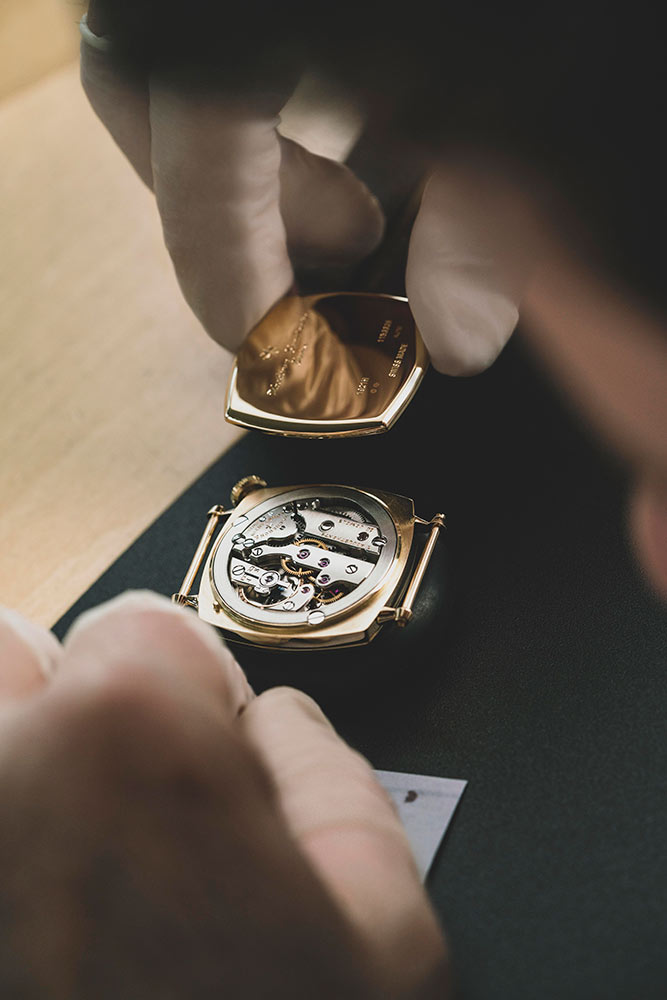
Geneva, May 25th 2021 – To mark the 100th anniversary of the American 1921 watch, Vacheron Constantin has delved into its archives and its horological expertise to offer a faithful reproduction of the timepiece emblematic of an era. Stemming from an impressive technical and human epic saga pushing the limits of fine craftsmanship excellence, the creation of the American 1921 Pièce unique watch mobilised the remarkable expertises of the Maison’s Restoration workshop and the Heritage department for an entire year. This approach might be a first in the watch industry, reflecting Vacheron Constantin’s commitment to the conservation, transmission and continuous enrichment of its heritage and of traditional skills.

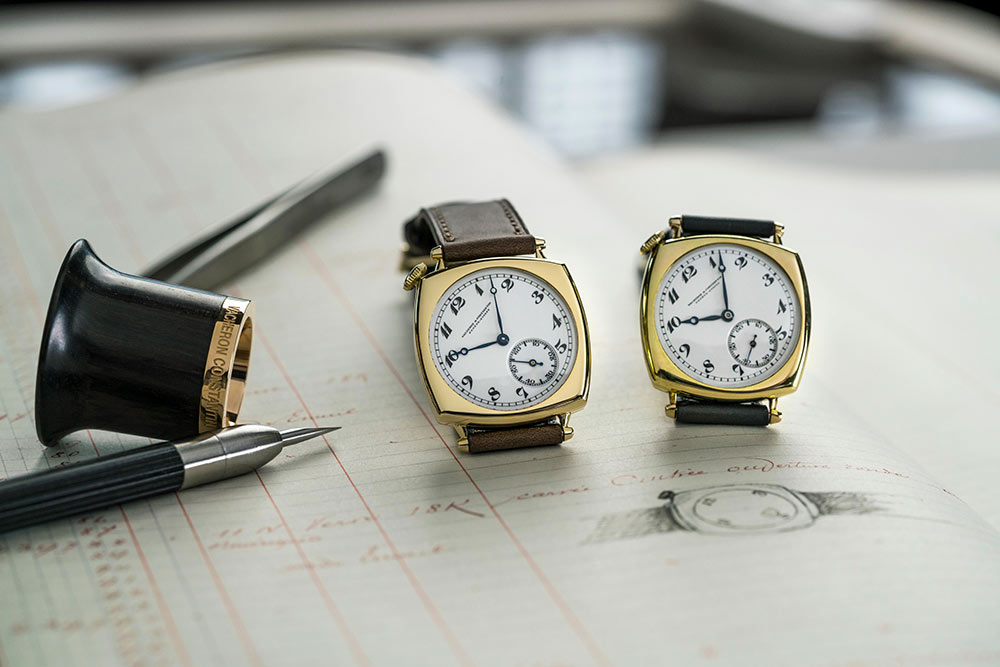
Only 24 pieces of the reference dated 1921 were originally manufactured. Today only one of them is part of Vacheron Constantin’s private collection, making it an extremely rare and sought-after timepiece for collectors and watch connoisseurs. Some watches tell stories, inviting us to travel back in time, to retrace origins and immerse oneself in bygone eras. Faithfully recreated as if in 1921, the American 1921 Pièce unique watch presented this year is a case in point, offering a journey into the creativity of the Roaring Twenties and reviving the beauty of artisanal skills as practiced a century ago. More than a jubilee watch, it is the fruit of a fascinating odyssey into the heart of the artisanal know-how cultivated by Vacheron Constantin for over 265 years.

American 1921 Pièce unique: The iconic American 1921 watch faithfully recreated as if in 1921

American 1921 Pièce unique: The iconic American 1921 watch faithfully recreated as if in 1921

Heritage and Restoration departments’ commitment to perpetuate the art of high watchmaking

When the idea of faithfully recreating an American 1921 model from the Vacheron Constantin private collection first took shape, the project looked set to be both exciting and ambitious.

A bridge between the past and future of the Maison, the Vacheron Constantin Heritage department has a place of its own within the Manufacture. Spanning an exceptional timeline that began in 1755, and overseeing a unique collection, it is anything but a dusty museum. The research and expertise of the teams working there on a daily basis are an inexhaustible source of inspiration for the creation of new collections and a masterful reference for the Restoration workshop. The department preserves 800 machine tools, workbenches and sets of watchmaking tools, along with substantial documentary and iconographic archives. No less than 420 linear metres are taken up by an infinite wealth of production and accounting registers comprising foreign sales, correspondence between associates, suppliers and clients, various documents and photographs. All contribute to shedding both historical and artistic light on Vacheron Constantin’s activity through the years and centuries. They represent a sum of written instruments serving to ensure the traceability of a creation since its origins, given that all the models produced are systematically referenced in the production registers. This unprecedent heritage helped retrace the history of the creation of the American 1921 and provided a solid basis for the Restoration workshop teams. The latter thus took up the authentic challenge of reviving some forgotten skills and combining today’s techniques with yesterday’s know-how.

Few Manufactures are able to restore all the watches that have come out of their workshops for centuries. That is why Vacheron Constantin makes it a point of honor to pass on this watchmaking know-how and to ensure that the great history of each of its timepieces continues. The skill and style of the Restoration artisans thus consists in showing respect for ethical considerations in their work. To achieve this, they can draw upon a substantial stock of components, adjust component blanks or entirely remake them – the latter being the most delicate task of all and calling for particularly complex size calculations. Experts in the art of maintaining Vacheron Constantin’s oldest timepieces without altering their nature, the Restoration workshop’s seasoned watchmakers are thus accustomed to combining a historian’s perspective with scientific analysis, but until now they had never undertaken to reproduce an antique watch in its entirety. This unprecedented work of reconstitution, respectful of ethics because it is faithful and precise down to the smallest detail, called upon the multiple competencies of these artisans, who pursued an empirical approach throughout this year-long project.

American 1921 Pièce unique: The iconic American 1921 watch faithfully recreated as if in 1921

American 1921 Pièce unique: The iconic American 1921 watch faithfully recreated as if in 1921

Several months of research in the Manufacture’s archives, weeks of reflection and observation, numerous experiments, as well as unsuccessful attempts and successful trials were necessary to produce such a work. The American 1921 Pièce unique will be in the spotlight throughout 2021 through prolonged exposure in Vacheron Constantin boutiques around the world.

Antique machines and tools

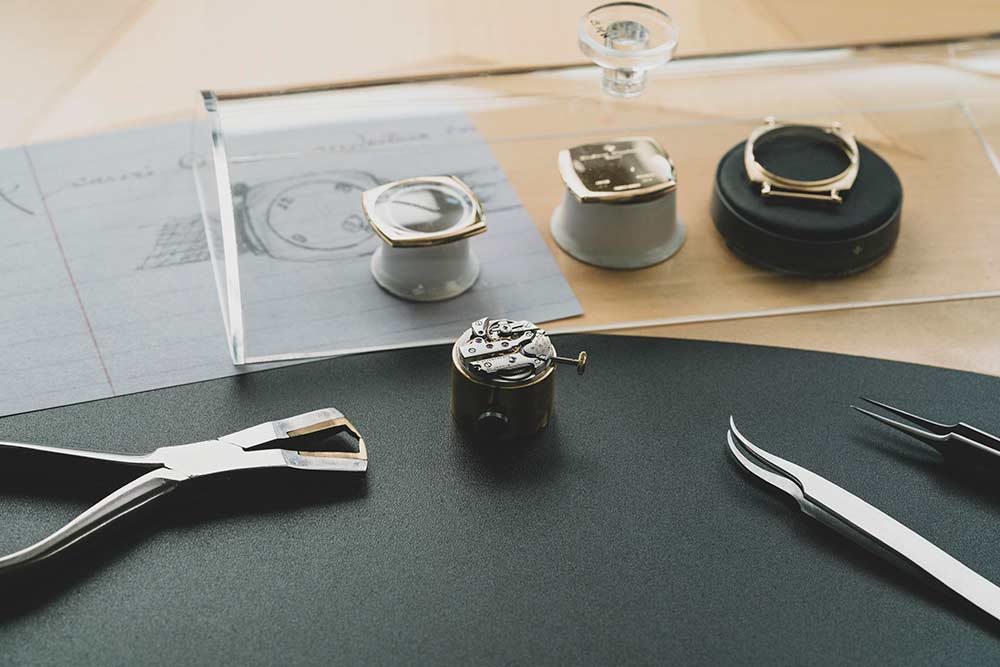
In order to reproduce the hand-crafted operations performed back in the day, artisans had to work with some historical tools from Vacheron Constantin’s Heritage. A late 19th century facing lathe enabled them to faithfully recreate the elements composing the case; a rounding-up (topping) tool from the latter half of the 19th century served to modify the profile of wheel teeth and to adjust their diameter. Watchmakers used an 18th century upright drilling accessory to drill through the movement’s mainplate. To drive the jewels into their settings, they resorted to an early 20th century staking tool.

These vintage machines were complemented by tools specially made for this project, such as custom-made milling-cutters and riveting tools in line with those of the early 20th century, enabling the artisans to work in a manner attuned to that period and closely reproducing the operations and development techniques of the time. The result of this remarkable stylistic exercise is an exceptional collector’s item symbolising Vacheron Constantin’s unwavering commitment to the transmission, enhancement and continuous enrichment of its production skills.

Rebirth of a vintage movement

While the watchmakers in Vacheron Constantin’s Restoration workshop fully master the art of bringing back to life the most exceptional timepieces produced by the Manufacture in the course of its long history, never before had they been called upon to rebuild a vintage calibre from scratch.

They began by disassembling and examining every single component of the original 11-ligne Calibre Nouveau powering the original model. Apart from the bridges and mainplate which had to be recreated, the Restoration workshop’s stocks proved to be a goldmine for the artisans who thereby had access to all the necessary blank parts. This involved extremely laborious research, since a vintage case could contain an infinite number of components, all different in terms of size and shape. In order to identify them one by one, the first stage consisted in taking the measurements and dimensions of each of the 115 components of the original movement. This meticulous work of observation and comparison subsequently led watchmakers to make plans and mock-ups of the calibre, a particularly delicate task requiring extremely complex sizing calculations.

At this stage, the archive documents safeguarded by the Heritage department proved extremely valuable, notably in recreating the bridges and the mainplate according to the specificities of this vintage movement. How could each component be adjusted and calibrated prior to assembly? How should the vintage machines be regulated? How could the jewels be set on the movement, whereas they are now generally driven in? How could the exact colour of the gilding on the wheels be achieved? At what distance and at which height should they be placed in order to be faithful to the original calibre? These were all issues that the watchmakers had to resolve by assembling the components one by one, as any potential error could jeopardise the entire project.

Setting the jewels on the movement was also a real tour de force. Since the 1940s, it has been customary to drive in the jewels, and while the watchmakers in Vacheron Constantin’s Restoration workshop are accustomed to replacing damaged jewels on very old timepieces, until now they had never had the opportunity to make the settings themselves. Successfully hollowing out the metal to the exact depth required to fit the stones to the nearest hundredth required multiple trials. Not to mention the patient research work required to develop the system for reproducing the unique ribbed pattern which, alongside various manual engravings, adorns the movement in the same way as was done at the time.

A dial and case distinguished by sophisticated craftsmanship

Accurately reproducing the exterior of the American 1921 also represented a real feat of manual workmanship. Here again, Vacheron Constantin’s watchmakers had to provide answers to numerous technical questions by observing the 1921 timepiece in minute detail, while comparing it with archive documents, and then individually crafting each element of the case and dial.

Some period components were available in the stocks of the Restoration workshop, such as rough blanks of the crown and hands. Others had to be entirely recreated, starting with the 31.5 mm case, according to the dimensions of the original American 1921. It was crafted by a Restoration workshop goldsmith from the specific gold alloy used for the historical model (18K 3N yellow gold), identified with the help of a spectrometer in order to reproduce its exact colour. Only a laser engraving applied to the case back, for customs purposes, distinguishes the American 1921 Pièce unique watch from its ancestor.

The creation of the dial also called for highly specialised expertise on the part of the artisan responsible for restoring the grain and unique beauty of the original dial. Crafted in Grand Feu enamel, an ancestral technique considered to be one of the most delicate in the field of watchmaking ornamentation, it required numerous firings in the kiln at a temperature of over 800°C. It features vintage numerals and logo, along with slender open-tipped hands that have been hand-blued by the Restoration workshop using the production techniques of the time.

And since no detail is left to chance, the exercise in style has continued right the way through to the end of the strap, whose pin buckle in 18K 3N yellow gold (the same alloy as the original model) was also produced in the Vacheron Constantin workshop.

A tribute to the art of wearing a watch in 1921

Because it retains all the original properties of the original American 1921, this unique, identically recreated timepiece reflects a historian’s approach.

It subtly mirrors the social and cultural context of the 1920s, the effervescence and the wind of freedom blowing across the United States and Europe at the dawn of the Roaring Twenties. Its distinctive design illustrates the stylistic creativity of Vacheron Constantin which revelled in expressing its “classic with a twist” style through multiple case shapes.

It also tells the story of the early days when the wristwatch began to become more widespread. At that time, men’s wristwatches were only just beginning to take precedence over pocket watches, until then regarded as more robust and accurate. Despite the considerable progress made by watch manufacturers in terms of movements’ resistance, reliability and miniaturisation, water-resistance requirements as we understand them today were not yet a reality. Choosing to wear time on the wrist thus meant exposing the watch to more risks in terms of shocks and external aggressions such as dust, humidity or water. In order to avoid any possible damage, watch owners took numerous precautions, notably including placing their wristwatch on the edge of the washbasin when they washed their hands. The watch was regarded as a life companion that was taken care of and had to be wound every day by hand.

————————————————————————

Sum-up

Enriched by a heritage based on the transmission of watchmaking expertise and stylistic research through generations of master artisans, Vacheron Constantin continues to celebrate the 100th anniversary of the American 1921 by recreating this emblematic model from scratch. From the 11-ligne Calibre Nouveau to the gold case along with the decorations and exterior components, the American 1921 Pièce unique watch reproduces the original properties of its ancestor created a century ago. This highly complex and unprecedented process involved the most experienced watchmakers in the Restoration workshop and the Vacheron Constantin Heritage team, who spent a year reviving old tools and forgotten know-how in the course of a passionately exciting human and technical adventure. The result is an exceptional one-of-a-kind timepiece, a symbol of the Maison’s attachment to its heritage and to the continuous enrichment of traditional know-how.


TECHNICAL DATA

American 1921 Pièce unique

Reference 1921H/000J-B949

Calibre
1921
Developed and crafted by Vacheron Constantin Mechanical, manual-winding
24.8 mm (11‘’’) diameter, 4.31 mm thick
Approximately 30 hours of power reserve
2.5 Hz (18,000 vibrations/hour)
115 components
16 jewels

Indications
Hours, minutes
Small seconds

Case
18K 3N yellow gold, same alloy as the 1921 original timepiece
Hand-crafted in the Vacheron Constantin restoration workshop
31 mm in diameter, 8.75 mm thick

Dial
White, Grand Feu enamel
Blued steel open-tipped hands – blued in our workshops

Strap
Brown calf leather, hand-sewn, tone-to-tone stitching, Calf lining

Buckle
18K 3N yellow gold pin buckle, same alloy as the 1921 original timepiece

Hand-crafted in the Vacheron Constantin restoration workshop