Loading
  • Pinterest
  • Instagram
  • Instagram
  • Twitter
  • Facebook
  • Flickr
  • Rss
  • Reddit
← INTERNATIONAL PORTALS → | LUXURY | DESIGN | TRAVEL | HEALTHCARE | WATCH | CEO | TECH | AGENCY |
Luxury News & Magazines - MyLuxePoint
  • PORTADA
  • MAGAZINES
    • LUXURY
    • WATCHES
    • CEO
    • DESIGN
    • TECHNOLOGY
    • HEALTHCARE
    • TRAVEL
  • POSTREEL
  • CATEGORÍAS
    • ARTE
    • BUSINESS
    • BEAUTY
    • MOTOR
    • MODA
    • COLECCIONISMO
    • DEPORTES
    • GOURMET EXPERIENCE
    • RELOJES
    • JOYERÍA
    • MEDICINA Y SALUD
    • INTERIORISMO ARQUITECTURA
    • EVENTOS
    • FINTECH
    • ESTILO DE VIDA
    • WEDDING
    • TECNOLOGÍA
    • VIAJAR
    • OCIO
    • INFLUENCERS
    • PINLUXURY
    • STREAMING
    • INTERVIU
      • ENTREVISTAS DE LUJO – BUSINESS
      • INFLUENCERS DE LUJO
  • GEODIRECTORY
  • GROUP
    • AGENCY
    • CEO
    • DESIGN
    • TECHNOLOGY
    • HEALTHCARE
    • TRAVEL
    • WATCHES
    • BUSINESS & ALIANCE
    • BUSINESS
    • TV
    • LUXURY
  • CONTACTO
  • Search
  • Menu Menu
Aniversarios, DESTACADOS, Especial, EVENTOS, MyEvents, Salón

1000 Miglia 2023: A Historic Journey Through Italy’s Automotive Legacy

The 1000 Miglia is a legendary endurance road race that has captivated automotive enthusiasts since its inception in 1927. The event takes place in Italy and covers a distance of approximately 1,000 miles (hence the name) along a scenic route that winds through picturesque Italian towns and landscapes. It has become one of the most prestigious and iconic races in the world, attracting participants and spectators from around the globe.

The history of the 1000 Miglia is rich and storied. Originally conceived as a way to showcase Italy’s growing automotive industry, the race quickly gained popularity and became a symbol of speed, elegance, and technical prowess. The route of the race has undergone several modifications over the years, but it typically starts and ends in the city of Brescia, located in the Lombardy region of northern Italy.

During its early years, the 1000 Miglia featured some of the most renowned drivers and iconic automobiles of the time. Legendary names such as Tazio Nuvolari, Juan Manuel Fangio, and Stirling Moss have all competed in the race, solidifying its status as a premier event in motorsport history. The participating cars were a diverse mix of sports cars, grand touring cars, and prototypes, showcasing the best that the automotive industry had to offer.

However, the original iteration of the 1000 Miglia came to an end in 1957 following a tragic accident that claimed the lives of several spectators. The event was subsequently canceled, but its legacy endured. In 1977, the race was revived as a regularity rally, focusing on historic cars that had participated in the original race. The new format aimed to maintain the spirit and heritage of the original event while emphasizing safety and the preservation of classic automobiles.

Today, the 1000 Miglia attracts participants from all over the world, featuring a diverse range of vintage and classic cars. The entry list includes meticulously restored vehicles from manufacturers such as Alfa Romeo, Ferrari, Porsche, Mercedes-Benz, and many others, all competing for the coveted victory.

The route of the modern 1000 Miglia typically covers a combination of public roads and closed circuits, allowing participants to experience the thrill of driving through Italy’s breathtaking countryside while also providing a controlled environment for competitive stages. The race follows a point-to-point format, with overnight stops in various Italian towns, allowing spectators to get up close and witness the impressive machines and passionate drivers.

Participating in the 1000 Miglia is not only a test of driving skill and endurance but also a celebration of automotive history and craftsmanship. The event brings together like-minded individuals who share a passion for classic cars and the heritage they represent. It offers a unique opportunity to see iconic vehicles in action and experience the timeless allure of vintage motoring.

If you are interested in attending or participating in the 1000 Miglia in 2023, I would recommend staying updated through the official website of the event. They will provide the most accurate and up-to-date information regarding the race schedule, registration process, and any other details you may need. Additionally, following relevant automotive news sources and forums can also provide insights and updates on the upcoming event.

The 1000 Miglia is a truly remarkable event that pays homage to the rich history of automotive racing and showcases the enduring appeal of classic cars. Whether you are a racing enthusiast, a vintage car collector, or simply someone who appreciates the beauty and heritage of automobiles, the 1000 Miglia is an experience that should not be missed.

All the details about 1000 Miglia 2023

LEG 1 – TUESDAY 13 JUNE

After departing from Viale Venezia and coasting Lake Garda, passing through Verona, Ferrara, Lugo and Imola, the convoy will end the first leg in Cervia-Milano Marittima.

LEG 2 – WEDNESDAY 14 JUNE

The second day will feature a passage through San Marino, Senigallia, Macerata with a lunch stop, Fermo and Ascoli Piceno and the final parade in Via Veneto in Rome.

LEG 3 – THURSDAY 15 JUNE

The third leg will ascend from the Capital offering lunch in the spectacular Siena, it will continue to Pistoia, the Abetone Pass, Modena and Reggio Emilia and will finish in Parma.

LEG 4 – FRIDAY 16 JUNE

On the fourth day, after Stradella and Pavia, the Race will reach Piedmont with lunch in Alessandria, then Asti and Vercelli and, via Novara, it will head to downtown Milan, which will host the last night of the Race.

LEG 5 – SATURDAY 17 JUNE

On the fifth day, after saying goodbye to Bergamo, Brescia’s twin city as the Italian Capital of Culture 2023, the 1000 Miglia 2023 will end in Brescia in the late morning with a city circuit before the final passage on the Viale Venezia platform and the closing lunch.

In the evening, the see-you-in-2024 celebration with the Red Arrow’s full evening events, the 1000 Miglia The Night, that will bring the intense week to an end.


Highlights of the latest edition

2 June, 2023/by Jackson Thompson
https://www.myluxepoint.com/wp-content/uploads/2023/06/1000miglia2022-a-tappa3-0036-scaled-e1656579696102.jpg 962 2527 Jackson Thompson https://www.myluxepoint.com/wp-content/uploads/2017/11/logo2v-1.png Jackson Thompson2023-06-02 12:52:522023-06-02 12:52:521000 Miglia 2023: A Historic Journey Through Italy’s Automotive Legacy
Aniversarios, Coches, Especial, EVENTOS, MyEvents, Salón

International Concours of Elegance (ICE) 2023

International Concours of Elegance (ICE) 2023

El Concurso Internacional de Elegancia, o ICE, es un evento creado para celebrar algunos de los automóviles más emocionantes del mundo, todos exhibidos en el hermoso lago St. Moritz.

Qué lujosa es la Engadina

Concurso Internacional de Elegancia

El ICE tiene lugar en el lujoso complejo alpino de St. Moritz. Como parte del evento, las personas conducen, muestran y observan autos extremadamente únicos y elegantes en un lago congelado. Esta opulenta ocasión se completa con el impresionante ambiente por el que St. Moritz es bien conocido.

El programa consta de vueltas en el lago helado, la inspección de los autos por parte de un jurado y el inicio de la “votación popular”, que deciden los coleccionistas. El programa también presenta un pueblo de hielo, un desfile y una sesión de fotos final.

El ICE tiene un elemento de informalidad y espontaneidad, después de todo, se lleva a cabo en un lago congelado. Para el público, ofrece la oportunidad de ver estos increíbles autos en un entorno completamente diferente.

El video de ICE 2022

The ICE 2019 Video

¡Prepárate para conducir!

¿Quieres ver coches únicos en un entorno inolvidable? Dirígete al  sitio web oficial

El evento

Historia

En 1985, un grupo de deportistas escoceses y británicos condujo hasta St. Moritz con sus Vintage Bentley para celebrar el centenario de Cresta Run. Parte de la celebración se llevó a cabo conduciendo sus autos alrededor de la pista de carreras de caballos sobre el lago helado de St.Moritz.

Entre los atónitos espectadores estaba nuestro Fundador y Patrono, Marco Makaus, y esta escena disparó su imaginación y siguió ardiendo durante muchos años.

Se llevó a cabo una edición de prueba en 2019, y el concepto y el proyecto se perfeccionaron y refinaron durante los dos años de Covid.

Finalmente, en febrero de 2022 se celebró con gran éxito la primera edición de The ICE St.Moritz, y ya se ha comenzado a trabajar para preparar las próximas ediciones.


El ICE St. Moritz es un evento automotriz cultural y de estilo de vida, que se lleva a cabo en el lugar menos convencional.

El ICE St.Moritz representa esencialmente una fórmula completamente nueva en un sector con muchos eventos similares que se celebran en todo el mundo.

Durante décadas, los eventos de autos antiguos se han basado en la conducción (ya sea de manera competitiva o turística) o en mostrar y juzgar los autos según su condición o restauración. La mayoría de los eventos tienen lugar en verano en un entorno elegante y lujoso.

El ICE se creó combinando la sólida relación de St.Moritz con los autos antiguos y clásicos, desarrollados a través de muchos eventos de verano exitosos, excelentes carreteras y condiciones de conducción, y una gran cantidad de autos que se mantienen en el área, con su experiencia inigualable en la organización. de eventos deportivos sofisticados.

Una mezcla única de exhibición estática y dinámica; con los coches circulando sobre hielo y nieve nos permite crear un tipo diferente de Concours, con una atmósfera más deportiva y “con los pies en el hielo”.

El hecho de que tenga lugar en una época del año en la que generalmente no se utilizan coches antiguos, y en un lugar que durante nueve meses al año ni siquiera existe, le da a The ICE un carácter aventurero y ayuda a crear esta atmósfera única.

PosterTheICE2022-HQ

PosterTheICE2019-HQ

PosterTheICE2020-HQ

Técnicamente hablando, los coches no corren ningún riesgo, ya que obviamente no hay sal ni tráfico en el lago, sino preparar el coche y los neumáticos, enviar el coche a St.Moritz, llegar allí y luego conducir desde terra ferma hasta el lago, especialmente para aquellos que conocen el área, requiere algo de tiempo, organización y un poco de agallas también. es una aventura

Mientras conduce por la rampa, se da cuenta de que debajo de las ruedas tiene algo así como 20 cm. de nieve, 50 cm. de hielo, y hasta cincuenta metros de agua… no puedes evitar un poco de emoción. Es temprano y todavía está casi oscuro, hace bastante frío y la nieve congelada cruje bajo tus neumáticos como la mejor grava de una casa señorial, pero con un sonido propio.

Lentamente, el Parque Cerrado se llena de deliciosos automóviles clásicos, mientras que la ausencia temporal del público permite a los participantes una visión única de estos tesoros automotrices, y de repente el típico sol de St.Moritz saluda desde las montañas.

Pero la larga espera también ha terminado para muchos entusiastas entusiastas y comienzan a llegar al lago por miles tan pronto como los motores comienzan a reproducir su música.

Juntos, propietarios y público crean un ambiente único.

QUÉ HACE AL ICE ST.MORITZ TAN ESPECIAL

El ICE St. Moritz ha demostrado que hay espacio para un evento internacional de autos clásicos más de alto nivel que brinda una experiencia completamente nueva para los participantes, el público y la industria, ya que:

  • Tiene lugar en un período completamente diferente del año (febrero)
  • Tiene su sede en un país y una ubicación diferente en relación con los eventos existentes más importantes
  • Se celebra en una zona que, durante nueve meses al año, está casi olvidada
  • Tiene un tipo de programa completamente diferente, mezclando cultura, espectáculo y conducción extrema.
  • Ofrece diversión para todos, en medio de este top pueblo alpino, que ofrece todo lo demás (deporte, arte, cultura, alta cocina…) además del programa del evento.

LA CLAVE DEL EVENTO ES REUNIR A GRAN GENTE Y QUE SE DIVIERTAN HACIENDO ALGO ÚNICO EN UN ESCENARIO ÚNICO. HAY UN AMBIENTE AMIGABLE PARA TODOS LOS INVOLUCRADOS: ¡PARA LOS ENTUSIASTAS DE LOS AUTOMÓVILES, LAS SEÑORAS GLAMOROSAS, LAS FAMILIAS E INCLUSO LOS PERROS!

#THEICESTMORITZ

28 February, 2023/by Carlos
https://www.myluxepoint.com/wp-content/uploads/2023/02/TheICE-24-HQ.jpg 666 1000 Carlos https://www.myluxepoint.com/wp-content/uploads/2017/11/logo2v-1.png Carlos2023-02-28 10:32:222023-03-13 09:58:11International Concours of Elegance (ICE) 2023
JEAN BUGATTI – a creative visionary ahead of his time
Aniversarios, Coches, Especiales

JEAN BUGATTI – a creative visionary ahead of his time

JEAN BUGATTI – A CREATIVE VISIONARY AHEAD OF HIS TIME

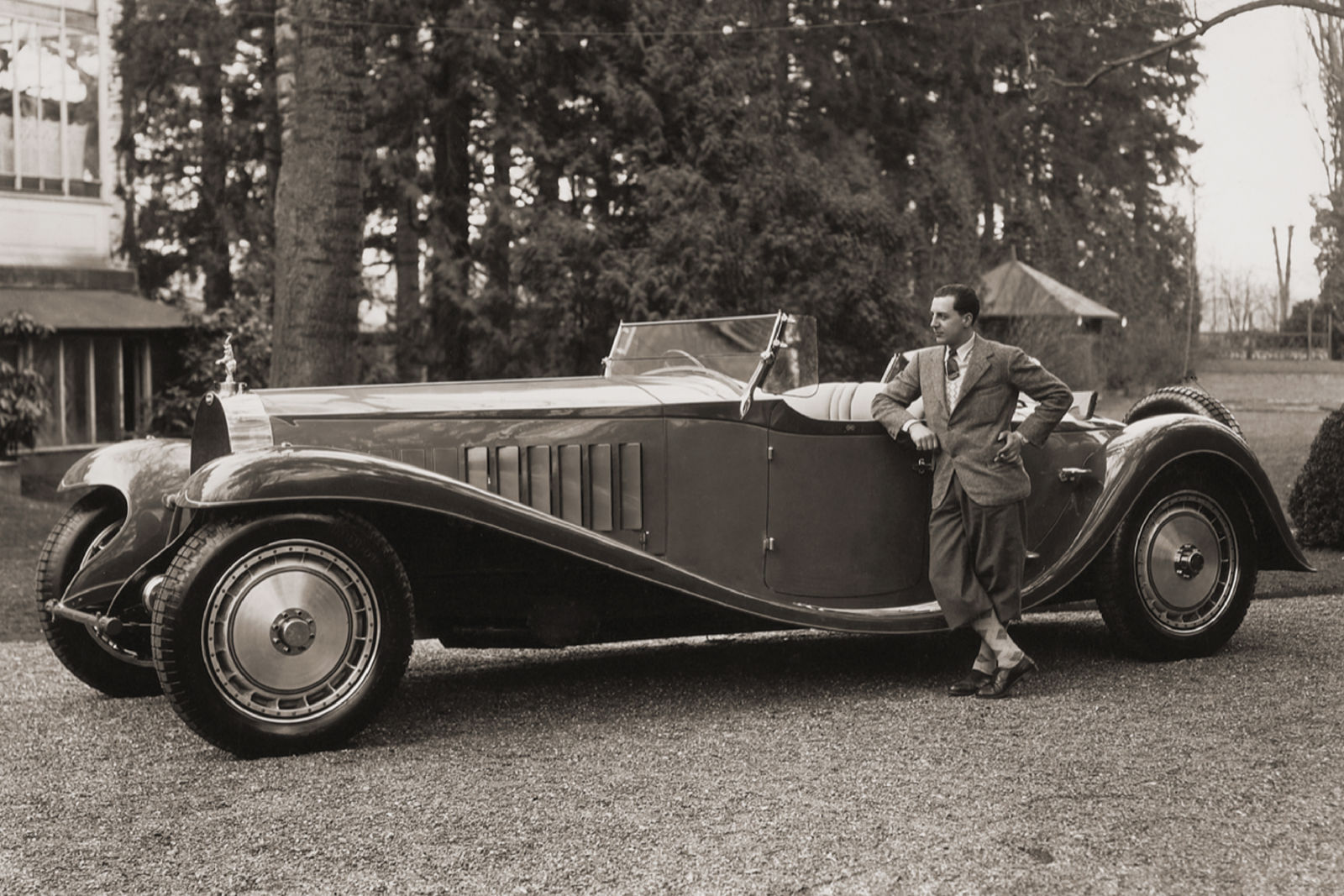
The Bugatti family worldwide will on Sunday celebrate 114 years to the day that Jean Bugatti was born. As a freethinking engineer and designer, his automobile creations were exceptional, daring to break norms and conventions. Today, his work continues to inspire the team at the home of Bugatti in Molsheim.

FUEL CONSUMPTION AND EMISSIONS

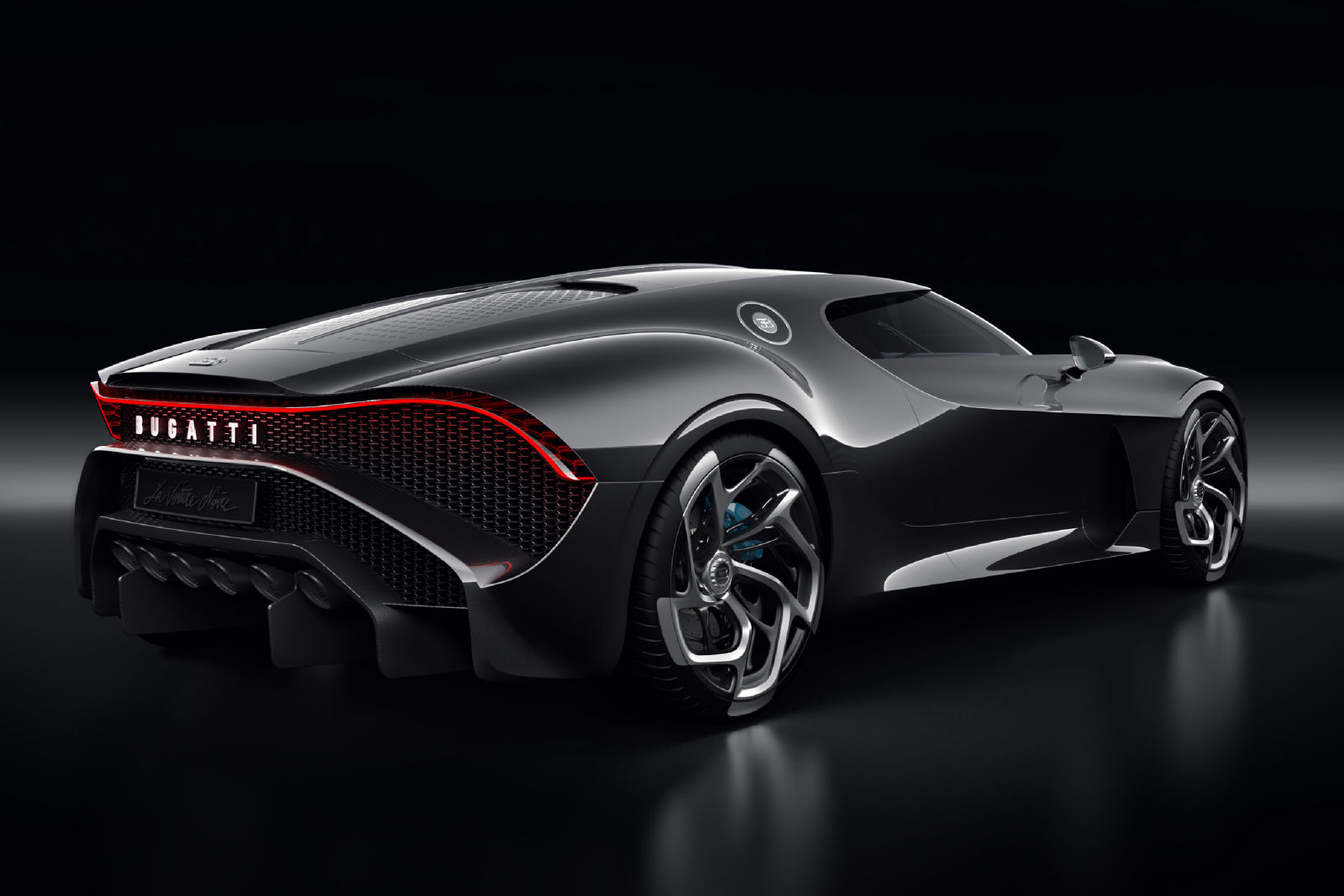
  • 1 LA VOITURE NOIRE: WLTP FUEL CONSUMPTION, L/100 KM: LOW PHASE 43,33 / MEDIUM PHASE 22,15 / HIGH PHASE 17,99 / EXTRA HIGH PHASE 18,28 / COMBINED 22,32; CO2 EMISSIONS COMBINED, G/KM: 505,61; EFFICIENCY CLASS: G
  • 2 CHIRON: WLTP FUEL CONSUMPTION, L/100 KM: LOW PHASE 44.56 / MEDIUM PHASE 24.80 / HIGH PHASE 21.29 / EXTRA HIGH PHASE 21.57 / COMBINED 25.19; CO2 EMISSIONS COMBINED, G/KM: 571.64; EFFICIENCY CLASS: G

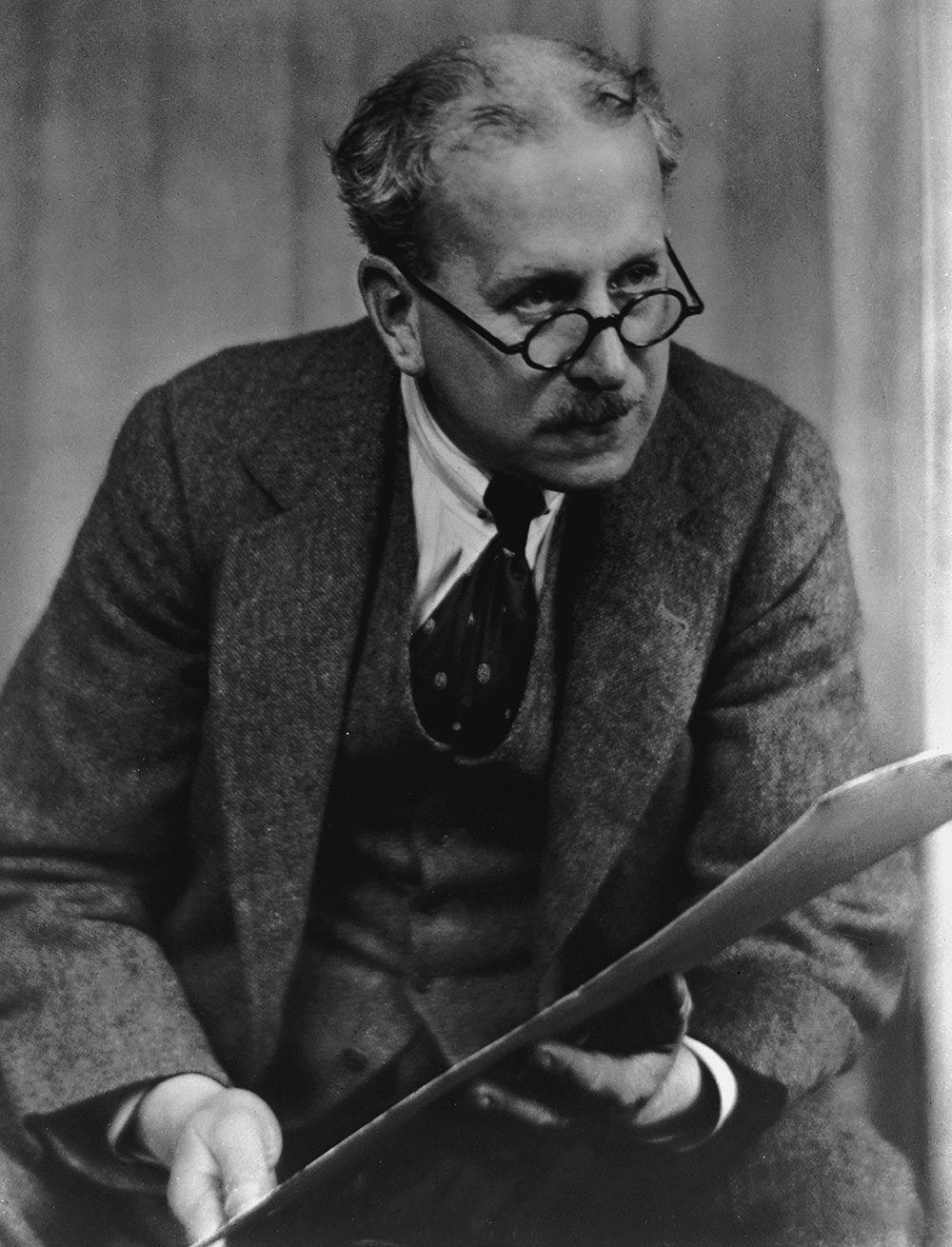
Ettore Bugatti’s first son, Gianoberto Carlo Maria Bugatti, was born in Cologne, Germany, on January 15, 1909. In Molsheim, he became known as Jean, the French equivalent to “Gian”.

Having grown up surrounded by a family of visionary artists, Jean benefited from an upbringing that would allow him to flourish as an automotive engineer. It quickly became evident to many that his mind was free from the usual set of norms and design conventions.

“Jean Bugatti was an artist of the highest order that so happened to craft his work in the automotive sphere,” says Christophe Piochon, President of Bugatti Automobiles. “And for that, we can all be thankful, because Jean’s work was extraordinary; his conceptions at the time weren’t just forward-looking, they were otherworldly.”

As a young man, he ambitiously added a new dimension to the Type 41 Royale his father presented to the world in 1926, designing the Type 41 Royale Roadster Esders, an elegant two-seater convertible. And the Esders marked the start of not only Jean’s design journey but the beginning of the Jean Bugatti era of the business, guided by his beautiful designs and ingenious creations. By 1936 Ettore passed the baton onto his son, giving him full responsibility of the company at the tender age of 27.

It’s a clear sign of his confidence and attitude that in the same year he was entrusted to run Bugatti, Jean created a car renowned today as one of the most beautiful ever: the Type 57 SC Atlantic. This car quickly became an iconic reference point that went beyond automotive, taking its place as part of a collective French design movement that was at the vanguard of interpretation: Art Deco.

His legendary creation would even come to inspire the one-of-one La Voiture Noire1, a modern homage to the Type 57 SC Atlantic. Jean’s legacy, however, would extend far beyond this one car. His daring work and artistry has echoes throughout the ages, influencing the shape and style of Bugatti in the modern age.

Jean’s acclaimed C-line design – visible in models such as the Type 50 and Type 57 – has been carried throughout the decades, visible on both the Veyron and Chiron2, becoming a core part of Bugatti’s design identity. Jean’s design work also centered on the use of perfect proportions, the bold center line accentuation and the dropping beltline, used to great effect in the Atalante and Atlantic. His use of duotone colors and the creation of shapely forms designed to reflect light in interesting ways is consistently referenced in the modern world of Bugatti design. There is no doubt that today’s modern line-up of Molsheim’s hyper sports cars is deeply connected to Jean’s visionary ideas.

Jascha Straub, Sales and Design Executive at Bugatti, said: “While working on a car with a customer, as I play with new colors, textures and designs, I always have in my mind Jean’s legacy and his groundbreaking vision for the brand and his way of treating cars as sculptures and setting motion into action even when the design is static. Many of our customers value the heritage of our brand and its visionary custodians so we often seek to accentuate the center line and create combinations of colors that best showcase Jean’s approach.”

While Jean’s light shone brightly, sadly its arc was destined to be short. On August 11, 1939, at the age of 30, Jean tragically died in a car accident not far from the Bugatti factory. But Jean’s light will forever shine upon Bugatti, helping to guide the brand as the future plays out. Even on the company’s latest creation – a unique Chiron model called the Profilée, which goes on auction in Paris on February 1 – Jean’s character and body of work is apparent, gracefully shaping the automotive solitaire with a design that is elegant and timeless.

6 February, 2023/by Carlos
https://www.myluxepoint.com/wp-content/uploads/2023/02/03-BUGATTI_Jean.jpg 1067 1600 Carlos https://www.myluxepoint.com/wp-content/uploads/2017/11/logo2v-1.png Carlos2023-02-06 09:55:422023-02-06 09:55:42JEAN BUGATTI – a creative visionary ahead of his time
Lamborghini Countach LPI 800-4
Aniversarios, Coches, Concept, Especiales, Superdeportivos

Automobili Lamborghini owners celebrate privilege of Lamborghini Countach LPI 800-4 ownership

Automobili Lamborghini owners celebrate privilege of Lamborghini Countach LPI 800-4 ownership

Exclusive customer journey through art and experience

Sant’Agata Bolognese, 6 July 2022 – As the 112 Countach LPI 800-4 owners-to-be around the world start to take delivery of their new cars from April 2022, they are also enjoying a series of exclusive ownership and experiential elements to mark ownership of a car that is one of the most emblematic few-offs in the history of Lamborghini.

 Lamborghini Countach LPI 800-4

Lamborghini Countach LPI 800-4

Lamborghini’s commitment to the purchasing experience is, as always, more than just waiting for delivery of a new car, and has created a contact program designed to make the customer experience unique and complete.

The 112 owners of the Countach LPI 800-4, which was already sold out before the official launch last August at Pebble Beach, will not only have the privilege of driving a piece of automotive history reinvented for the future, but will also receive a series of special collectors’ item gifts, which make delivery of the car even more memorable. Each item is certified and numbered, celebrating skilled craftsmanship and innovation: the items are not for sale, and are dedicated and delivered exclusively to Countach LPI 800-4 customers.

On signing their order, owners of the Countach LPI 800-4 received a congratulatory letter from Stephan Winkelmann, Chairman and CEO of Automobili Lamborghini. A collectors’ item in its own right, the elegant letter’s papermaking techniques feature an intricate interplay of laser-engraved solids and voids, constructing and deconstructing the silhouette of the Countach LPI 800-4, and bearing the CEO’s message of sincere congratulations.

In the initial months of waiting, Countach LPI 800-4 customers received one of 112 numbered replicas of an exclusive painting created, as per tradition, by Mateusz Wowk, exterior designer and artist at Lamborghini’s Centro Stile, led by the Head of Design, Mitja Borkert. With the original work created on a large canvas in Sant’Agata Bolognese, the painting was digitally captured using gigapixel technology: one of the most advanced digital acquisition technologies adopted by museums. The work was then replicated in large format on canvas to reproduce the typical materiality of Mateusz’s brushstrokes and a classic example, typical of Lamborghini, in which art takes shape through ultra-high-tech processes.

Countach LPI 800-4 owners enjoy the further anticipation of receiving further unique items via the Lamborghini dealer network, involving internationally renowned artists as well as Italian artisans who represent the pinnacle of Italian creativity: Lamborghini enthusiasts can also share the pleasure of these works of art, on wheels or otherwise, through the social media posts that Lamborghini owners generously delight in sharing.

11 July, 2022/by Carlos
https://www.myluxepoint.com/wp-content/uploads/2022/07/618435.jpg 854 1859 Carlos https://www.myluxepoint.com/wp-content/uploads/2017/11/logo2v-1.png Carlos2022-07-11 14:27:232023-01-30 13:16:02Automobili Lamborghini owners celebrate privilege of Lamborghini Countach LPI 800-4 ownership
Austin Healey
Aniversarios, Coches, Especiales

HEALEY BY CATON – Iconic sports car evolved for the modern age by new luxury British brand

HEALEY BY CATON – Iconic sports car evolved for the modern age by new luxury British brand

  • Ultra-exclusive reincarnation of the iconic Austin-Healey 100 launched by
    all-new luxury British brand, Caton
  • Healey by Caton features a unique combination of state-of-the-art design and traditional craftsmanship techniques, bringing this revered sports car up to date
  • Precision visual and performance enhancements result in a true driver’s car: an immersive, intoxicating and highly emotional experience
  • 25 examples will be hand-built by Caton in Coventry, UK
  • Caton occupies a unique position in the luxury marketplace combining OEM-grade design and engineering with traditional handcrafting skills
  • Global public debut at Salon Privé London 21-23 April, before exhibiting at a range of events in the UK including upcoming Bicester Scramble! on 24 April
  • Website: uk

Coventry, 13 April 2022 – All-new luxury British brand Caton reveals its first creation: an ultra-exclusive reincarnation of the iconic Austin-Healey 100 sports car. Featuring a unique combination of OEM-grade design and engineering with traditional craftsmanship techniques, Healey by Caton brings the revered sports car up to date.

Featuring precision visual and performance enhancements, wholly in keeping with the ethos of the original car, Healey by Caton is a true driver’s car: an immersive, intoxicating and highly emotional experience. It will be extremely rare too, with a very limited run set of 25 cars to be hand-built in Coventry. The Healey by Caton will make its global public debut at the upcoming Salon Privé London event from 21-23 April, held at Royal Hospital Chelsea. The team and car will announce a full events plan, centred around the UK for 2022, including attending and presenting at the upcoming, sold-out Bicester Scramble! event on Sunday 24 April.

HEALEY-BY-CATON-Iconic-sports-car

HEALEY-BY-CATON-Iconic-sports-car

Caton occupies a unique position in the market, forging new products from an exceptional skillset and state-of-the-art technology. With unmatched resources that enable it to offer a completely new luxury proposition, its first offering is in bespoke vehicles. However, Caton’s team vows to create and manufacture products that align with luxury, British craftsmanship in the foreseeable future, and not just cars. The brand brings an exceptional harmony of experience, passion, OEM-level technology and craftsmanship to bare, focusing exclusively on the sympathetic enhancement and evolution of cherished products for the modern age, the first of which is a coachbuilt vehicle, the Healey by Caton.

Taking a forensic yet sympathetic approach, Caton’s designers have introduced a subtle smoothness to the Healey’s instantly recognisable lines, gently amplifying the visual dynamism while fully respecting the engineering and design principles of the original car’s creator, Donald Healey.

Inside, the cockpit is totally new with a focus on the very best in contemporary and period materials. Thanks to a redesign of the transmission tunnel and new five-speed manual gearbox, there has been a transformation in cabin space. As a result, Healey by Caton is a highly useable sports car, offering all drivers the feeling of a classic but with true comfort. The finishing touch is a high-performance engine and finely-honed suspension, all of which combines to elevate driving pleasure to another level.

An icon from the Midlands, modernised

Caton’s team are enormous advocates of the Healey. In 1952, Donald Healey built the first Healey 100 prototype at his company’s workshops in Warwick, located ten miles south of Caton’s Coventry HQ. Healey took his fledgling, four-cylinder-engine two-seater roadster to that year’s London Earls Court Motor Show. where he famously forged an alliance with Austin boss Leonard Lord to build it as the Austin-Healey 100.

Six iterations of the car were produced between 1953 and 1958, with the four-cylinder engine eventually replaced by a six-cylinder unit. Donald Healey was known to have favoured the four-cylinder engine, which is lighter and lends itself to performance upgrades more readily than the six-cylinder. With these reasons in mind, Caton chose the original four-cylinder 100 ‘BN1’ model as its foundation and inspiration.

Tim Strafford, CEO of Caton’s strategic vehicle building partner, Envisage Group, said: “Caton will stand for the best in British coachbuilding, and is the vision of our [Envisage Group’s] investors. We decided that the first product by Caton had to be creative, stand-out in the marketplace, appeal to a global audience, and it was a natural step that we chose to put our Caton mark on a Healey 100.”

For the project, Caton’s designers and engineers have been able to call on strategic partner Envisage Group’s formidable resource at every step. And they have also deployed traditional handcrafting skills and tools, which would have been used by those building the Healey 100 in the Fifties.

Strafford continued: “The Healey by Caton is a car for those who appreciate beautiful objects and exquisite works of art. It is also for those who love the smell of petrol and the sound of a high-performance engine running on carburettors. The Healey by Caton deliberately exposes its occupants to the elements and places them right at the heart of a unique, highly visceral, life-affirming driving experience – none more so than the sound of the side-exit exhaust below the driver’s ear.

“With all mechanical components reconfigured as new, the Healey by Caton frees owners from any reservations they might have over purchasing a classic car. It delivers peace of mind, alluring beauty and breath-taking performance.”

Exterior design and body

Caton’s ethos is to take loved and cherished cars and objects from the past and improve upon them using new materials and ultra-precise manufacturing processes. This approach, which goes beyond merely that of reimagining, is one of purification, modernisation, and ultimately reincarnation, and is enthrallingly embodied in the Healey by Caton.

The Healey by Caton design has been directed by Darryl Scriven, who explains: “Donald Healey got so much right when he designed the car originally. We wanted to pay homage to the original vehicle while making it more comfortable to live with, more fun to drive and even more dynamic and beautiful to look at.”

Scriven and his team sympathetically redesigned the front grille, enhancing the sense of depth and proportion with a meticulousness that only OEM-level design tools and systems can deliver to denote the additional performance the car is endowed with. The grille, which is a piece of jewellery on the front of the car, is a piece of art with each slat individually created, pieced together to create a floating look, behind the Caton hexagonal trim, a shape that flows delicately but deliberately throughout the vehicle.

The car’s original quarter-length bumpers have been removed and the front remodelled to create a smoother, cleaner look. The front valance has also been elongated to hide the front of the chassis’ legs, creating a more premium feel. Subtle remodelling of the headlights has achieved a similar effect and created superior illumination with the integration of LED and daylight running lamps.

The execution of a cleaner, smoother look has been applied across the entire body, with all seams and beading removed. This is evident in the new front aluminium fenders, which feature a more clamshell-like construction. Despite being built on an English Wheel, using traditional methods, they are entirely free of the beading that ran through the centre of the original items. A new air vent and a finisher have been integrated into the flanks, visually amplifying the diving line that runs along the side of the car.

Caton has also added additional detail to the car’s rear fender. Scriven reveals why: “We’ve brought in a little more substance, which gives a bit more volume and creates a greater sense of dynamism. I haven’t worked with any other company or coachbuilders that can create a car like this, from scratch. A key example is the volume on the bonnet. We subtly re-sculpted, by hand on an English Wheel, to create a smoother line that flows down the front of the car, to replace the flatter bonnet of the original, foundation car.”

For the most part, though, Caton has refined, rather than added to the Healey’s body. The rear bumpers are gone, as are the external boot hinges, replaced with new internal hinges running on modern gas struts. The boot handle is deleted too, and the lid is now opened by an internal release mechanism, run by a new, modern Caton key.

“To remain true to the car’s D.N.A., we asked ourselves ‘What would Healey have done when building a car in the Fifties if they had the tools and manufacturing techniques that we are in the unique position to have at our disposal today?’” continued Scriven.

The OEM-level technology he refers to allowed Caton to capture a complete 3D scan of the car. A Computer Numerical Control (CNC) machine enabled the fabricators to work to tolerances of just .2mm, creating ultra-perfect panel gaps that add to the beautification of the bodyshell. Yet the team also deployed technology that would have been entirely familiar to those building the car in period, such as an English Wheel, which was used to hand roll the aluminium panels.

Following a dry build to ensure absolute accuracy in final assembly, the body spends two weeks in Caton’s paint shop. It is primed, equipped with an OEM-standard anti-corrosion protection layer, and then painted. No level of detail is spared, with paint also applied to the boot’s interior. The car retains its original badging, with the subtle addition of the Caton brand logo to the front fenders. Period-style, lightweight 72-spoke Borrani black aluminium alloy wheels with black spinners are fitted and shod with period-correct but modern manufactured, off-the-shelf Michelin tyres.

Interior

Caton’s redesign of the Healey’s cabin wholly maintains the essence of the original, while creating significantly more space. This has been achieved primarily through the redesign and narrowing of the transmission tunnel, made possible by introducing a new five-speed manual gearbox.

The standard car used a three-speed gearbox originally designed for column-shift actuation, with the gear lever positioned offset on the left-hand side of the transmission tunnel. Now, the gear lever sits in a central position on the top of the transmission tunnel, transforming both the aesthetic appeal of the cabin and driving pleasure. Original Healey 100s were designed and built for a shorter population meaning many of today’s drivers may struggle to comfortably enjoy the experience. Thanks to restyling the rear and a different pedal box fitted, it’s reported that in development testing a 6ft tall driver needed to move the seat forwards towards the cabin whereas they struggled to fit in an original Healey 100/4.

Healey by Caton Project Manager David Moore explains: “We chose to replace the existing Healey gearbox with its bulky transmission tunnel and offset gear-lever, with a new five-speed manual transmission for the aforementioned reasons of enhancing space and practicality within the cabin, but also, of course, to transform the driving experience.

“The new gearbox is provided by world-leading transmission experts. The highly proven unit is exceptionally durable, and its five-speed configuration endows the car with a much more comfortable long-distance touring ability. But it’s over a hairpin strewn mountain pass where drivers will really appreciate the difference. Combined with a custom hydraulic concentric clutch release bearing, the gearbox provides a rapid and immensely satisfying gearchange feel.”

The Healey by Caton has been modernised with the fitment of a racing car style pedal box to further increase the legroom available to the driver. The car’s roof and tonneau cover have also been removed, along with the heater. There is no infotainment system to detract from the driving experience, although two USB ports are provided to enable charging of electronic devices if required. The door cards and pockets have also been maximised to fit a water bottle and other items.

Further extolling the values upon which the Healey by Caton has been built, Scriven says: “We wanted to accentuate the visceral feel of the driving experience and let the driver and passenger truly relish the sound of the engine and the sensations of the open road. The side-exit exhaust has been meticulously positioned close to the driver’s ear, for instance.

Yet, we also wanted to ensure that the occupants could talk to each other and be comfortable on long journeys. The Healey by Caton is a car that you might drive to Goodwood for the day, but it’s also a car you could drive along a beautiful coastal road in Monaco. We’ve extended the height of the front windscreen slightly to reduce buffeting and added strengthening elements to the seat frames, giving the period-style seats more support and greater comfort.”

OEM-standard shrink-optimised leather was chosen for the dashboard and redesigned door panels for the superior tight fit and finish and greater durability it provides. However, the material was deliberately shunned for the car’s seats for the very simple but very important reason it does not produce any smell.

“Shrink-optimised leather doesn’t create that wonderful aroma you get from natural leather,” continues Scriven. “That’s why, after consultation with our in-house trim and fabrics studio, we elected to upholster the seats in premium Bridge of Weir hide, which enriches the cabin with the fragrance of leather, and will develop a beautiful patina over time. That’s part of the Healey by Caton’s authentic appeal, which will only get better and better the more the car is driven.”

Drivetrain

The car’s beating heart is a 185 bhp 195 ft/lbs of torque 2954cc four-cylinder engine, endowed with performance to take the car well beyond the 100mph top speed it was named for. Based on an original Austin-Healey block, the engine is completely stripped down, fully lightened, balanced, and then refurbished to zero miles. It is further enhanced with a full steel crank shaft, upgraded bearing shells, high compression pistons, a race camshaft with more aggressive lobes and roller rockers. Larger Twin H8 carburettors and gas flow inlets provide excellent throttle response. A race side-exit exhaust system adds further to the car’s considerable aural appeal.

The engine, and most of the car’s mechanical components, are the work of the world’s leading Healey specialists J.M.E. Healeys (J.M.E.), who has strong historical links with the original Healey company. Jonathan Everard, who founded J.M.E., and his father Harold, worked for the Donald Healey Motor Company in Warwick. Today, the company is run by Jonathan’s sons, Chris and Dan and is based in The Cape Works in Warwick, the original home of the Healey company.

Tim Strafford explains the rationale behind Caton’s creation of a collaborative partnership with J.M.E.: “Caton’s mission is to create products in automotive and beyond of the highest possible calibre of design, quality and appeal. Caton is entirely transparent on how it achieves this. When creating Caton’s brand values, we asked ourselves: ‘Where is Caton world-class? And where could it add value for its customers by forming strategic partnerships to bring additional skills on board?’ When it comes to the Austin-Healey brand, there is no one more experienced or knowledgeable than J.M.E.”

Thus, Caton elected to use J.M.E.’s ultimate Healey 100 BN1 Cape Works specification as the basis for the Healey by Caton project. The car benefits from a new chassis, strengthened and modified at known weak points – including the addition of new front and rear bulkheads – identified from J.M.E.’s decades of experience in restoring, servicing, and rallying Healeys. It provides an exceptional, robustly proven building block for the Healey by Caton. Nevertheless, Caton wanted to expand the car’s considerable performance parameters and bolster its unique driving appeal yet further.

Strengthened driveshafts transfer the formidable performance to the road. In keeping with the Healey by Caton’s pure, driver-focussed appeal, there are no electronic traction or stability controls to dilute the driving experience. Exemplary stopping power is provided by four-pot alloy callipers with vented front discs at the front, with discs and three-pot alloy callipers fitted at the rear. No ABS system is fitted in keeping with the purist driving feel.

Suspension and steering

Decades of international rally success testify to the inherent strength and durability of the Healey’s original suspension configuration. The system has been further honed by J.M.E. while retaining the original rear semi-elliptic leaf spring set-up. The Healey by Caton features a double-wishbone and adjustable coil spring configuration at the front, with a lever arm damper system and the car’s proven leaf spring system at the rear. Custom fabricated and fully rose-jointed roll bars are also fitted front and back. The unassisted steering system delivers exceptional levels of feel and feedback.

Customer-first values

With production of the Healey by Caton limited to 25 examples, the company will liaise with customers on a highly personal, one-to-one basis, as frequently as each requires. Each customer can be assured of the highest possible level of service. They will be welcome to visit Caton’s Coventry HQ on a regular basis, to tour the company’s design studios, trim and colour suite and paint facilities, and immerse themselves in every stage of their car’s development progress.

The customer has the ability to add completely bespoke and personal touches to any of Caton’s products, whether that be the car’s exterior paint finish through creating any colour imaginable or choosing from the extensive array of materials available in the on-site colour and trim suite for the car’s interior.

Tim Strafford vows: “It will be our privilege to collaborate with Caton’s customers to specify their car to their exact requirements, whether they choose to visit in person or liaise from anywhere across the globe. No two examples of the Healey by Caton will be the same, but each will be of exceptional beauty and built to the highest possible OEM levels of quality. Each will represent a true reincarnation of the iconic Austin-Healey 100 sports car utterly fitting for the modern age. Our aim is to deliver an unrivalled, immersive, intoxicating and highly emotional driving experience.”

Hand-built production of the Healey by Caton will commence in Q2 2022. It will make its global public debut at Salon Privé London from 21 April to 23 April inclusive and attend the upcoming Bicester Heritage Scramble! on 24 April. Customers are urged to sign up to Caton’s mailing list via www.caton.uk, where a range of events will be announced, and news will be distributed. Caton’s team plans to attend many events – from smaller breakfast clubs to larger, public events, in 2022 and beyond, starting from the UK and travelling further afield to global stages from 2023.

Website:  www.caton.uk

Social media:

Instagram: www.instagram.com/bycaton/

Facebook: www.facebook.com/bycaton

Twitter: twitter.com/bycaton

LinkedIn: www.linkedin.com/company/bycaton

YouTube: www.youtube.com/channel/UCZs_Y56OMfgakAmZSbDb1dQ

18 April, 2022/by Carlos
https://www.myluxepoint.com/wp-content/uploads/2022/04/Austin-Healey.jpg 675 1200 Carlos https://www.myluxepoint.com/wp-content/uploads/2017/11/logo2v-1.png Carlos2022-04-18 11:23:552023-01-30 13:08:25HEALEY BY CATON – Iconic sports car evolved for the modern age by new luxury British brand
Aniversarios, Coches

ROLLS-ROYCE and Electric power a prophecy a promise and an undertaking

ROLLS-ROYCE AND ELECTRIC POWER: A PROPHECY, A PROMISE AND AN UNDERTAKING

Rolls-Royce reflects on heritage of electric power ahead of historic announcement. Electrification has long been promoted as the future of automotive propulsion. Ahead of further official statements, we invite the media to reflect on the marque’s unique heritage in electric power, which pre-dates the founding of Rolls-Royce the company itself, and involves many of the principal protagonists whose names are forever associated with it.

  • Rolls-Royce reflects on heritage of electric power ahead of historic announcement
  • Extraordinary prophecy of founding father, Charles Rolls, revealed
  • Rolls championed electric cars in 1900, deeming Columbia model best of its type
  • Royce, one of the first electrical engineers, supplied motors to earliest electric cars
  • CEO, Torsten Müller-Ötvös, pledged to bring Rolls-Royce electric this decade
  • Visit www.rolls-roycemotorcars.com on 29 September at 13.00 BST for the next chapter in this story

“In April 1900, our founding forefather, Charles Rolls, made a prescient prophecy about automotive electrification.  Move forward over 120 years to when I made a public promise, on the record, that we would bring the first fully electric Rolls‑Royce to market within the current decade.  And, right now, our company is embarking on an historic undertaking to create the first, super-luxury car of its type.  This will happen sooner than many thought possible, through the incredible skills, expertise, vision and dedication of our engineers, designers and specialists at the Home of Rolls-Royce.

“In this ground-breaking endeavour, we are drawing on a remarkable heritage, unique in our industry.  Our founders and those who worked alongside them in the marque’s formative years were all important pioneers of electric power, as well as their era’s leading experts in automotive engineering.  As we herald a new electric future at Rolls-Royce, I am proud and humbled to share their inspiring stories, which have never been told in one place before, and shine a fresh and fascinating light on our company’s earliest days.”

Torsten Müller-Ötvös, Chief Executive Officer, Rolls-Royce Motor Cars

INTRODUCTION

Electrification has long been promoted as the future of automotive propulsion.  Mainstream manufacturers are increasingly embracing hybrid and battery electric vehicle (BEV) technology, supported by the expansion of national charging infrastructures.

To date, Rolls-Royce has communicated its electrification strategy in three simple statements:

  • The marque will introduce an all-electric car this decade (2020 – 2030).
  • This car will be a pure BEV, not a hybrid of any kind.
  • It will be launched only when the time is right, and every element meets Rolls-Royce’s technical, aesthetic and performance standards.

There is considerable interest and media speculation surrounding Rolls-Royce’s plans.  Ahead of further official statements, we invite the media to reflect on the marque’s unique heritage in electric power, which pre-dates the founding of Rolls-Royce the company itself, and involves many of the principal protagonists whose names are forever associated with it.

WHY ELECTRIC POWER?
The internal combustion engine (ICE) was not the only, nor the default, means of propulsion for early motor cars at the beginning of the 20th century.  Indeed, in the early 1900s engineers and manufacturers initially divided their loyalties precisely between three competing technologies: the ICE, steam power and electricity.

Steam power, though well understood, relatively sophisticated and, at the time, ubiquitous in industry and other forms of transport, quickly proved less practical for use in motor cars.  It therefore fell to internal combustion and electricity to vie for supremacy.

Electric power lost the battle for two main reasons: extremely limited range and the absence of a charging infrastructure.  A century later, despite significant advances, these remain as barriers to widespread adoption (although increasingly less so), both in terms of technology and consumer perception.

But the characteristics that first drew engineers to electric power – silent operation, instant torque, tremendous power and the absence of exhaust fumes – remain highly alluring, particularly for luxury motor cars.  Indeed, some have speculated that, had he been able to solve the range and charging issues, Sir Henry Royce might have chosen electric power alone for his motor cars.

The innate and perfect suitability of electric power underpins the marque’s explicit commitment to deliver an all-electric Rolls-Royce this decade.  In doing so, it can draw on a unique history and heritage; a connection with electric power that pre-dates the company itself, and featuring the main protagonists who would, between them, create the world’s most famous automotive brand – beginning with Sir Henry Royce himself.

SIR HENRY ROYCE
Born in 1863, Henry Royce was one of the world’s first electrical engineers.  After his apprenticeship with the Great Northern Railway was cut short for family financial reasons, he worked briefly as a toolmaker at Greenwood & Batley in Leeds, where he first developed an interest in electrical power.

In 1881, he joined the Electric Light & Power Generating Company (EL&PG) in Southwark. During this time, he attended evening classes in electrics at the City & Guilds of London Institute, having received only a year of formal schooling as a child.  A year later, aged just 19, he moved to the EL&PG’s new subsidiary, the Lancashire Maxim-Weston Electric Co. Ltd, as Chief Electrician, providing street and theatre lighting to the city of Liverpool.  But within two years, the company folded, and the famously driven, hardworking Royce struck out on his own.

His new enterprise, F H Royce & Co, initially made small electrical appliances such as doorbells, lamps, fuses and switches.  The business thrived, and was soon producing larger, more complex devices including dynamos, electric motors and winches.  In 1902, Royce supplied electric motors for Pritchett & Gold, a London-based battery-maker that had diversified into building electric cars.

Though Royce himself never built or owned an electric motor car, he created internal combustion engines that delivered the driving experience we associate with electric propulsion today: effortless torque, silent running and the sensation of one continuous, powerful gear. His technical expertise and pioneering achievements underpin the marque’s historical claim as a world leader in electrification in both luxury and social settings.

THE HONOURABLE CHARLES ROLLS
The Hon. Charles Rolls was also a highly gifted engineer; but his enthusiasm for electricity began even earlier in life.  When he was just nine years old, he rigged up an electric bell between his bedroom and the stables at The Hendre, the family’s ancestral home in Monmouthshire.  He also planned and supervised the installation of electricity in the servants’ quarters; deploying the powers of salesmanship that would later make him world-famous, he persuaded his father, Lord Llangattock, to pay for it.

Rolls’ passion for motor cars was equally precocious.  In 1896, aged 18, he travelled to Paris and bought his first car, a 3¾ hp Peugeot Phaeton. Two years later, while still an engineering student at Cambridge, he acquired his only electric-powered car, an American-made vehicle called The Columbia Electric Carriage, imported into the UK by Paris Singer (heir to the sewing machine dynasty) and sold as the ‘City & Suburban’ car. Rolls regarded this as the best then available.

In an interview published in The Motor-Car Journal in April 1900, Rolls described electric propulsion, in terms that, over a century later, carry the ring of prescient prophecy:
“The electric car is perfectly noiseless and clean.  There is no smell or vibration, and they should become very useful when fixed charging stations can be arranged.  But for now, I do not anticipate that they will be very serviceable – at least for many years to come.”

Rolls made his own small contribution to solving the problem, by providing a battery-charging station at his car showroom on Lillie Road in Fulham for the private or rentable electric Broughams that were all the rage in London at the time.

In 1904, Charles Rolls agreed to become an agent for the Contal Electromobile electric car.  But on meeting Henry Royce and seeing his new motor car, he cancelled the agreement.

As he correctly predicted, it would be a long time before electric vehicles became truly viable on any scale.  But it is tempting to think that had this visionary entrepreneur survived the air crash that claimed his life at the young age of just 32, the day might have come rather sooner.

A SERIES OF CONNECTIONS
While Rolls and Royce are immortalised as the founders, others, perhaps less well-known, were intimately and crucially involved in the events that led to the creation of the Rolls-Royce marque.  They, too, were luminaries in the worlds of motoring and electric power around the beginning of the 20th century; history and the marque are indebted to all of the following:


HENRY EDMUNDS
In his early career, Henry Royce worked for Brush Electrical Engineering Company Ltd, where he met Henry Edmunds, the company’s engineer.  Edmunds earned his place in history when, on 4 May 1904 at the Midland Hotel in Manchester, he announced: “Mr. Royce, may I introduce you to Charles Rolls”.

The man who would be remembered by posterity as ‘The Godfather of Rolls-Royce’ was a towering figure in his own right.  A friend of Joseph Swan (the inventor of the incandescent lightbulb) and Thomas Edison (the inventor of almost everything else), he was a pioneer of electric lighting, traction and telephony, and was present at both the first successful sound recording and telephone call.  He also brought into being the world’s first electrified underground railway, when he persuaded the engineer in charge of London’s City & Southwick Railway (now the City branch of the Northern Line) to operate trains powered by electricity rather than steam.

In 1888, Edmunds established W T Glover & Company, which became the world’s leading manufacturer of electricity cabling.  In 1894, he supplied lighting cables for a vast dock complex and industrial estate (the world’s first) serving the Manchester Ship Canal: the lighting itself was designed and installed by Henry Royce.

No proof exists that Edmunds played any part in the development of Royce’s motor cars. He was, however, the most experienced motorist among Royce’s friends and colleagues, so presumably offered expert advice and encouragement as Royce painstakingly turned his ideas into reality.


E A CLAREMONT
Conventional wisdom states that Royce co-founded F H Royce & Co with a partner, E A Claremont.  However, research has shown that Claremont joined the company some six months after its formation; Royce himself wrote, ‘I was induced to found… a small company in my own name’ and none but his was ever used.

While the original myth may be flawed, it is certainly true that the two men’s careers were closely entwined for many years.  Claremont was a partner in F H Royce & Company, Joint Managing Director of F H Royce & Company Limited, Chairman of Royce Limited and the first Chairman of Rolls-Royce Limited; both were also Members of the Institute of Electrical Engineers.


CLAUDE JOHNSON
Broad-shouldered, extroverted and a talented salesman, Johnson was the self-styled ‘Hyphen in Rolls-Royce’.  In 1903, he quit his role as secretary of the Automobile Club of Great Britain & Ireland – whose members included the aforementioned Henry Edmunds – to work for Paris Singer’s City & Suburban Electric Carriage company.

After less than a year, however, Johnson left to join C S Rolls and Co, later becoming Managing Director of Rolls-Royce Ltd.  He was responsible for much of the company’s early publicity: in advertisements produced for the UK and US markets, he described Rolls-Royce as ‘a petrol car as smooth and quiet as an electric’.  And to complete the symmetry, Paris Singer became the world’s first owner of a Rolls-Royce motor car.

ELECTRIFICATION IN THE GOODWOOD ERA
In the spirit of these founding figures, Rolls-Royce Motor Cars remains an electrification pioneer today.  When the first production fully electric Rolls-Royce reaches the market, it will be the culmination of research and development work that has been in progress at the Home of Rolls-Royce at Goodwood, for well over a decade.


2011 – PHANTOM EE (102EX)
In 2011, the marque released Phantom Experimental Electric (EE), codenamed 102EX; a fully operational and road-legal battery-electric version of its pinnacle product.

Phantom EE was never intended for production, serving instead as a working test-bed for clients, VIPs, the media and enthusiasts to experience electric propulsion and share their experiences, thoughts and considerations directly with Rolls-Royce designers and engineers.

The car’s 6.75-litre V12 petrol engine and gearbox were replaced with a lithium-ion battery pack and two electric motors mounted on the rear sub-frame, connected to a single-speed transmission with integrated differential.  This system gave a maximum power output of 290kW and torque of 800Nm, compared to 338kW and maximum torque of 720Nm, delivered at 3,500rpm, for the V12 Phantom of the time.

While Phantom EE drew widespread acclaim for its technical accomplishment, particularly its near-total silence and impressive torque delivery, its limited range, long charging cycles and three-year battery life remained significant hurdles that Rolls-Royce would need to address in order to satisfy the expectations of its clients.


2016 – ROLLS-ROYCE VISION NEXT 100 (103EX)
Launched in 2016, this radically innovative concept car set out to define the marque’s long-term vision of luxury mobility.  It presented the motor car as offering truly individualised personal mobility, and an immersive emotional and sensory experience.

103EX was built around four key design tenets:
Coachbuilt bodywork will allow clients to commission a car that reflects their personal vision.  A virtual assistant and chauffeur powered by artificial intelligence offer an effortless journey. The interior creates a Grand Sanctuary, crafted from rare and exclusive materials.  And with its size and scale – 5.9 metres long and 1.6 metres high – the car ensures a Grand Arrival on reaching its destination.

Built on an advanced lightweight platform and powered by a proprietary, all-electric drive train, the motor car is completely autonomous.

The EX-suffix confirms that 103EX was a purely experimental car, never destined to enter production.  Following a spectacular debut in London, the car embarked on a three-year world tour, returning to the Home of Rolls-Royce at Goodwood in 2019.

Visit www.rolls-roycemotorcars.com on 29 September at 13.00 BST for the next chapter in this extraordinary story.

27 March, 2022/by Carlos
https://www.myluxepoint.com/wp-content/uploads/2022/03/P90437407_highRes_c-s-rolls-on-a-colum.jpg 696 1000 Carlos https://www.myluxepoint.com/wp-content/uploads/2017/11/logo2v-1.png Carlos2022-03-27 22:39:412022-03-27 22:39:41ROLLS-ROYCE and Electric power a prophecy a promise and an undertaking
Aniversarios, Coches, Especial, Especiales, EVENTOS, Exposiciones, MyEvents, Superdeportivos

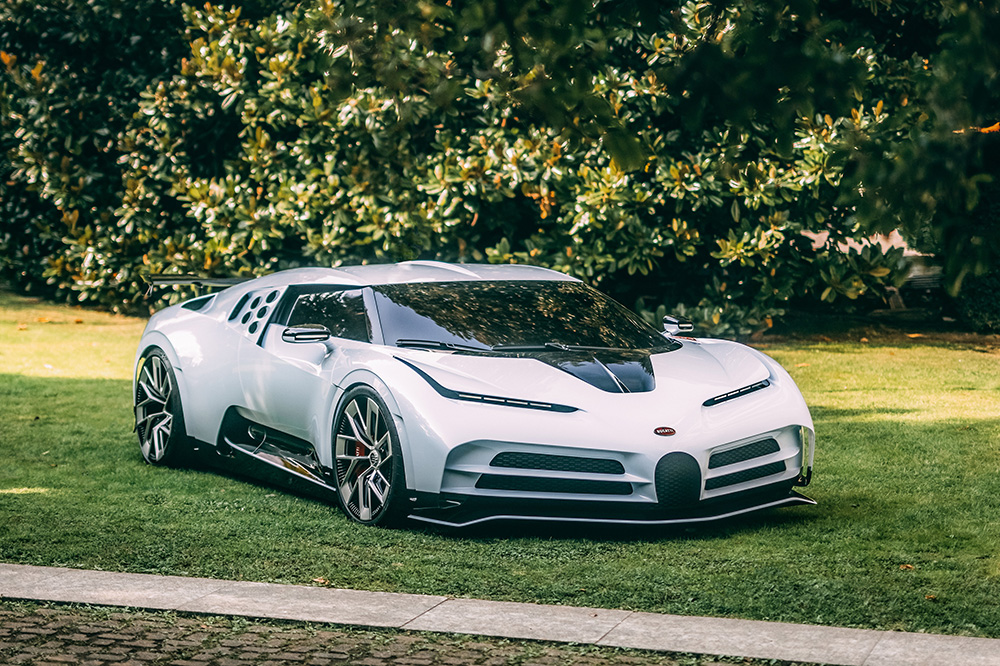
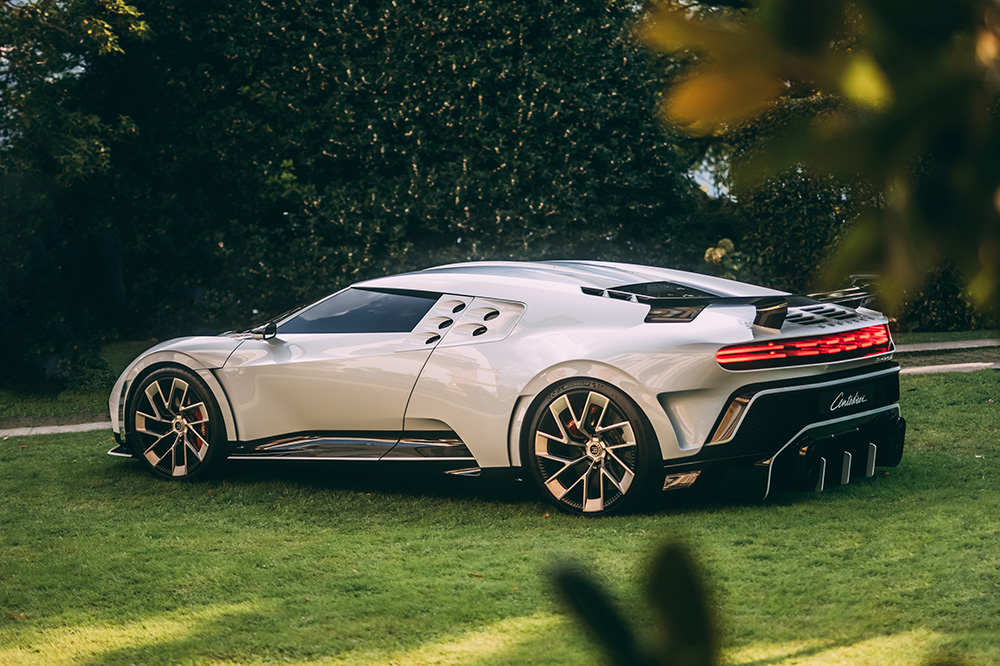
Bugatti Presents the Centodieci at Concorso d’Eleganza Villa d’Este 2021 and celebrates 30 years of the legendary Bugatti EB110

Bugatti Presents the Centodieci at Concorso d’Eleganza Villa d’Este 2021 and celebrates 30 years of the legendary Bugatti EB110

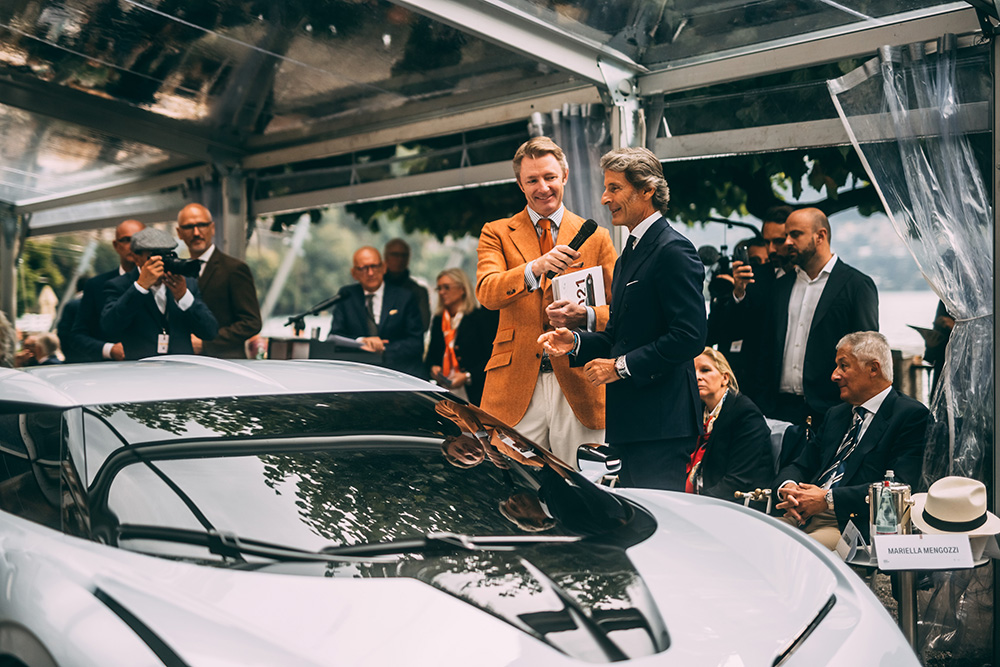
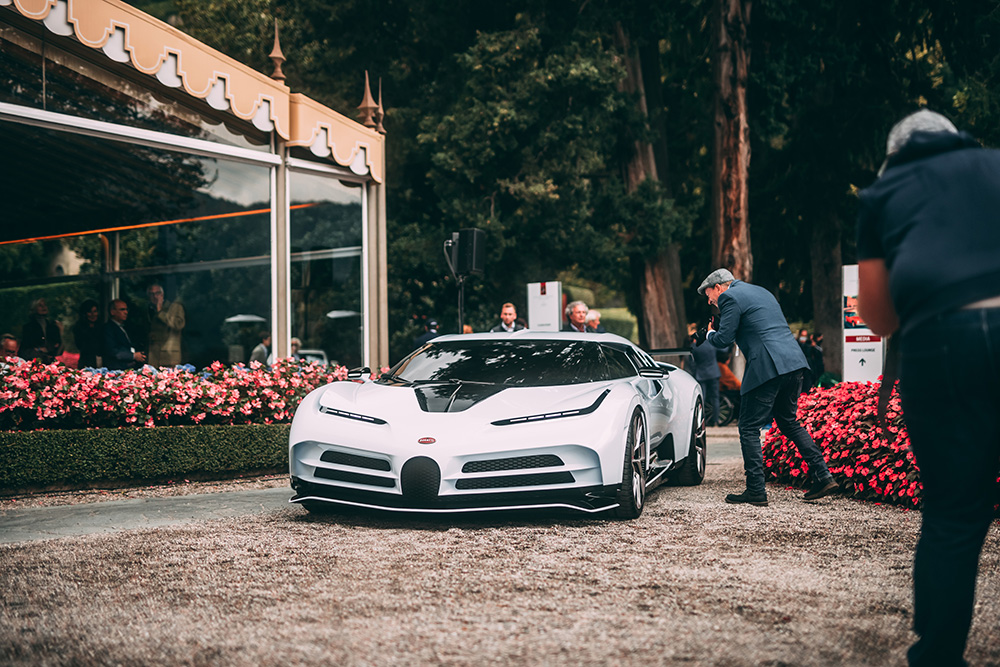
With its timeless beauty, Villa d’Este on the shores of Lake Como has provided a residency for the aristocracy, princesses, marquises, sultans and tsars for centuries. Considered one of the most breath-taking architectural works of the sixteenth century, every year, this elegant five-star resort welcomes automotive enthusiasts from all over the globe to the Concorso d’Eleganza Villa d’Este. Here, they can appreciate the spectacle of some of the finest automobiles and motorcycles, in both production and prototype form, ever created. This year, visitors could also enjoy Bugatti’s stunning Centodieci, which the French luxury brand was presenting in the ‘Concept Cars & Prototypes’ category over the previous weekend from Saturday 2nd to Sunday 3rd October 2021.

With its timeless beauty, Villa d’Este on the shores of Lake Como has provided a residency for the aristocracy, princesses, marquises, sultans and tsars for centuries. Considered one of the most breath-taking architectural works of the sixteenth century, every year, this elegant five-star resort welcomes automotive enthusiasts from all over the globe to the Concorso d’Eleganza Villa d’Este. Here, they can appreciate the spectacle of some of the finest automobiles and motorcycles, in both production and prototype form, ever created. This year, visitors could also enjoy Bugatti’s stunning Centodieci, which the French luxury brand was presenting in the ‘Concept Cars & Prototypes’ category over the previous weekend from Saturday 2nd to Sunday 3rd October 2021.

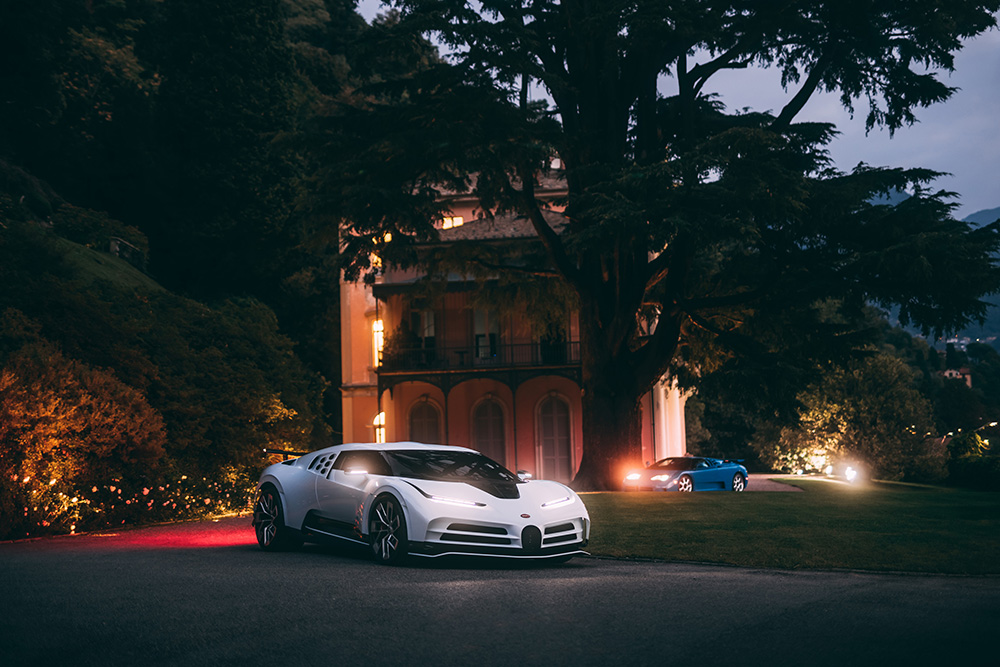
Bugatti unveiled the Centodieci – which translates as 110 in Italian – during Monterey Car Week in California at the Quail in 2019 to celebrate the company’s 110th anniversary. Inspired by the legendary Bugatti EB110 of 1991 and powered by the 8.0-liter W16 engine producing 1,600PS, just 10 Centodieci units will be hand-built at Bugatti’s Molsheim Atelier and be delivered to customers next year. All ten Centodieci models had already been accounted for by customers prior to the car’s unveiling.

A Concours d’Élégance for automobiles was first held at Villa d’Este back in 1929, and Bugatti has enjoyed a long and successful relationship with the event. Recent highlights have included the Bugatti La Voiture Noire taking the premiere prize in the ‘Concept Cars & Prototypes’ category the last time the event was held in 2019. Models from Bugatti’s illustrious past, such as the 1937 Type 57S four-seater sports tourer, the 1934 Type 59 Grand Prix car and the 1938 Type 57SC Atlantic, have all been awarded significant accolades in recent years.

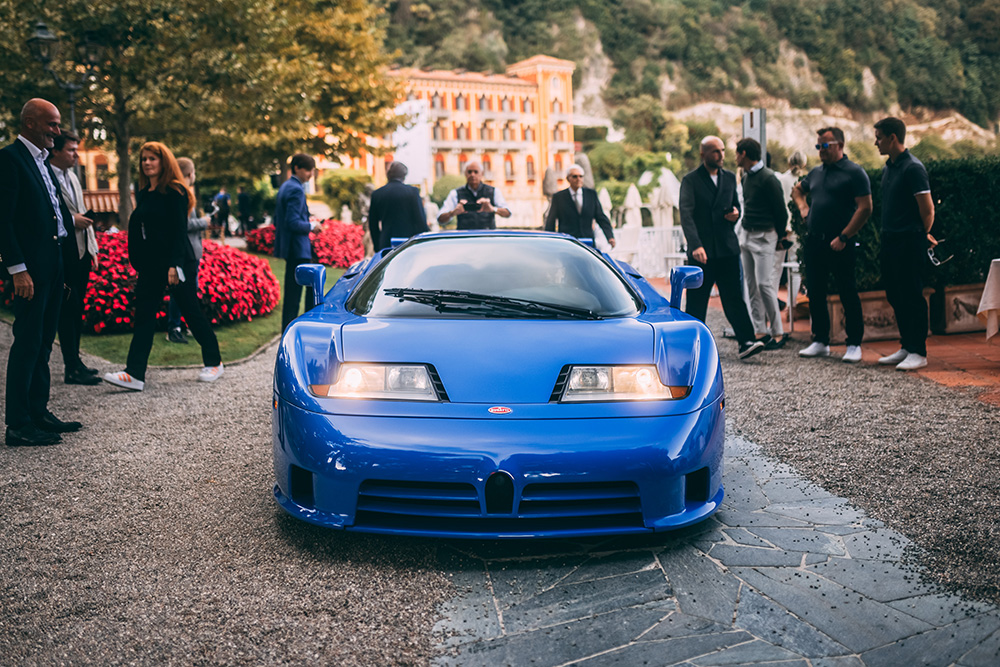
This year also marks the 30th anniversary of the Bugatti EB110. The groundbreaking and first supercar of its time represents the mid-period of Bugatti’s history, when Bugatti Automobili S.p.A. was based in the famous ‘Blue Factory’ in Campogalliano in Italy under the stewardship of Romano Artioli. Introduced in 1991 to mark 110 years since the birth of Ettore Bugatti in 1881, the EB110 elevated the supercar genre to a new level. It featured a revolutionary engineering package that included a carbon fiber chassis and a 3.5-litre 12-cylinder engine with five valves per cylinder and quadruple turbochargers. The transmission was also incorporated within the engine block to create more space for cabin occupants. Exemplary grip, traction and safety were delivered by four-wheel-drive, another key D.N.A. strand that remains pivotal to today’s production Bugatti models.

The historic supercar model – a blue (originally silver painted in “Grigio Chiaro metallizzato”) EB110 SuperSport – presented at Villa d’Este in the class “The Next Generation: Hypercars of the 90s” was formerly owned by Romano Artioli. The Italian entrepreneur, who relaunched Bugatti as Bugatti Automobili S.p.A. in 1987, prior to the company’s closure in 1995, has fond memories of the development of this revolutionary supercar. “While we were at the premiere of the EB110 in Paris in 1991, the engineers back at Campogalliano were urging us to return swiftly to the Blue Factory, as they were eager to begin work on the EB110 Supersport version. Everyone was focused on reducing weight and boosting power, while keeping in mind that I was ferocious that the safety characteristics of the car be upheld.”

The final result was a quite remarkable weight reduction of nearly 150kg from the original configuration, and an increase in performance from 560PS to 612PS, with the engine developed entirely in-house at Campogalliano. Immediately after the EB110 SuperSport was presented to the world’s press at Salon de l’Automobile in Geneva, the team took the car to the Nardò circuit in the South of Italy, to carry out the homologation tests.

“After a warm-up lap we set the world record with a speed of 351 km/h and an acceleration of 3.2 seconds from 0 to 100 km,” recalls Artioli proudly. And it didn’t stop there. The car also set a speed record on snow and ice at 296km/h, while a Bugatti EB110 GT powered by natural gas achieved at top speed of 344.7 km/h.

“I left my heart in my Supersport. No other car gives the same sensation of power, control and safety in every road condition as the EB110 – and with such beautiful style. I could not be more proud for “her” to be at the Concours d’Elegance in Villa D’Este.

“The Centodieci Concorso d’Eleganza at Villa d’Este is one of the jewels in the crown of the automotive season,” explains Bugatti Automobiles S.A.S. President Stephan Winkelmann. “After the event was lost to the pandemic in 2020, it is even more special for Bugatti to return to the wonderful location of Villa d’Este and present our Centodieci to customers and friends of the brand from all around the globe. And of course, the event is even more exciting with the presence of the personal Bugatti EB110 Supersport “America” owned once by Romano Artioli himself. This seminal supercar represents the second period of Bugatti’s history, and gave our designers and engineers the inspiration for the Centodieci.”

The Bugatti Centodieci was presented as a static display within the Concorso d’Eleganza Villa d’Este ‘Concept Cars & Prototypes’ area on Saturday 2nd October and again on Sunday 3rd October, the car also participated in the dynamic presentation parade.


6 October, 2021/by Carlos
https://www.myluxepoint.com/wp-content/uploads/2021/10/bugatti_cd_vde_08.jpg 667 1000 Carlos https://www.myluxepoint.com/wp-content/uploads/2017/11/logo2v-1.png Carlos2021-10-06 12:06:342021-10-06 12:06:34Bugatti Presents the Centodieci at Concorso d’Eleganza Villa d’Este 2021 and celebrates 30 years of the legendary Bugatti EB110
Aniversarios, Coches, Especiales, Superdeportivos

THE TESTA ROSSA J, A SCALE REPLICA OF THE 1957 250 TESTA ROSSA

THE TESTA ROSSA J, A SCALE REPLICA OF THE 1957 250 TESTA ROSSA, IS BORN.

A JUNIOR CAR TO EXPERIENCE ONE OF THE MASTERPIECES OF FERRARI HISTORY.

Maranello, 9 August 2021 — The Ferrari Testa Rossa J is a special project that gives Ferrari enthusiasts of all ages the opportunity to experience the thrill of driving an automotive legend.

A new limited edition for our most passionate collectors, the Ferrari Testa Rossa J is a 75% scale replica of a renowned classic, powered by an electric engine. The car is a faithful reproduction of the 1957 250 Testa Rossa, one of the most iconic and successful cars in Ferrari and motorsport history. A limited run of just 299 vehicles will be built.

Ferrari has led every aspect of the project, in collaboration with The Little Car Company, a firm specialising in the production of junior cars. Ferrari’s Styling Centre in Maranello oversaw the proportions and liveries, while the chassis and other components were created using original design drawings held by Ferrari’s Classiche department.

While the Ferrari Testa Rossa J is designed to be driven by anyone over 14 years of age, it is not homologated for road use.

Ferrari 250 Testa Rossa

A key track protagonist in the 1950s and 1960s, the 250 Testa Rossa is one of the all-time great Ferraris, distinguished by its lengthy list of honors and its longevity. The car claimed some 18 victories in its history, and three championship titles in 1958, 1960 and 1961. It is also the only Ferrari to have won the 24 Hours of Le Mans four times – in 1958, 1960, 1961 and 1962 (considering the 330 TR – the last evolution).

Page 1 of 0

Design

The Ferrari Testa Rossa J meticulously reproduces the lines of the 250 Testa Rossa in the original Scaglietti-designed barchetta version, nicknamed “pontoon fender”. Attention to detail is exquisite: the bodywork is constructed from hand-beaten aluminium, the same process that was employed in historical models. The paint is the same as that applied to Ferrari’s present road car range, as is the insignia on the front.

To accurately recreate the intricate chassis of the 250 Testa Rossa, the original paper drawings from the Ferrari Classiche Department were scanned and digitally recreated. The junior car retains the same steering and suspension geometry, giving it authentic handling to match its original appearance.

The same meticulous detail is found in the interior. Ferrari’s Styling Centre has designed a single seat that accommodates an adult and a teen, faithfully incorporating the piping motif of the original and using the same high quality leather upholstery found in the Ferrari range today. The steering wheel is made by Nardi, the same specialist company that supplied the 1957 model, and features Ferrari’s smallest-ever quick-release system to facilitate driver entry. The classic dials have been remastered and repurposed for their new role in an electric car, but retain the original design and fonts. The oil and water gauges now monitor the battery and motor temperatures, while the fuel gauge is now the battery gauge and the tachometer has become a speedometer. There is even a power gauge which also shows the level of regenerative braking being deployed.

As a nod to the current generation of road cars, the pedals are from the F8 Tributo and the tyres are supplied by Pirelli, Ferrari’s official technical partner, fitted on the handmade 12 inch wire wheels. Suspension is taken care of with Bilstein coilover dampers and custom springs which were fine-tuned and signed off by Ferrari’s test divers at the Fiorano test track in Maranello.

Performance and safety

The three batteries powering the electric engine are positioned at the front of the car, and provide approximately 90 km range, depending on driving style. The batteries are accessed under the front bonnet, while the car can also be charged where the fuel cap previously resided.

The ‘Manettino’ dial gives the choice of four driving modes, ensuring driving pleasure with the highest levels of safety. The Novice mode (1 kW / 20 km/h) eases rookie drivers into the driving experience with controlled acceleration and the ability to remotely disable the car from a distance with a key fob. The Comfort mode (4 kW / 45 km/h), Sport and Race modes become progressively sportier, with instantly responsive acceleration and increased maximum speeds.

Safety has been a priority throughout the car’s development: the metal side panels were reinforced and an optional roll-bar can be anchored to the chassis. Brembo disc brakes replace the original drum system to maximize braking performance, and these are complemented by a hydraulic handbrake.

Customization

The Ferrari Testa Rossa J offers a wide range of personalization and colour combinations. The Ferrari Classiche department carried out extensive research into all the liveries that have adorned the 250 Testa Rossa throughout its racing career. An online car configurator allows clients to choose from 14 historical liveries, 53 bodywork colours and additional personalized racing liveries, all authentically in keeping with Ferrari style.

FERRARI TESTA ROSSA J — TECHNICAL SHEET

PRODUCTION   299 units

MEASUREMENTS   3.1 x 1.1 x 0.7 meters

ENGINE

Electric engine.
Three batteries with approximately 30 km range each, for a maximum 90 km total range.

DRIVING MODES

Novice mode 1 kW / 20 km/h
Comfort mode 4 kW / 45 km/h
Sport mode over 60 km/h
Race mode over 60 km/h

SAFETY

Engine and battery managed by software that governs power delivery
Laterally reinforced chassis
Disc brakes for greater control
Roll-bar anchored to chassis (optional)

STEERING WHEEL   Nardi

TYRES AND WHEELS

Pirelli Cinturato.
Re-proportioned wheels based on the original Borrani rims.
Authentic Borrani wheels are available as an optional.

PRICES FROM   € 93,000 (taxes, shipping and optional features excluded)


10 August, 2021/by Carlos
https://www.myluxepoint.com/wp-content/uploads/2021/08/20101-ferrari-testa-rossa-j.jpg 958 1276 Carlos https://www.myluxepoint.com/wp-content/uploads/2017/11/logo2v-1.png Carlos2021-08-10 20:52:002023-01-30 13:09:52THE TESTA ROSSA J, A SCALE REPLICA OF THE 1957 250 TESTA ROSSA
-Maserati5000GT-1959MichaelFurman
Aniversarios, Coches

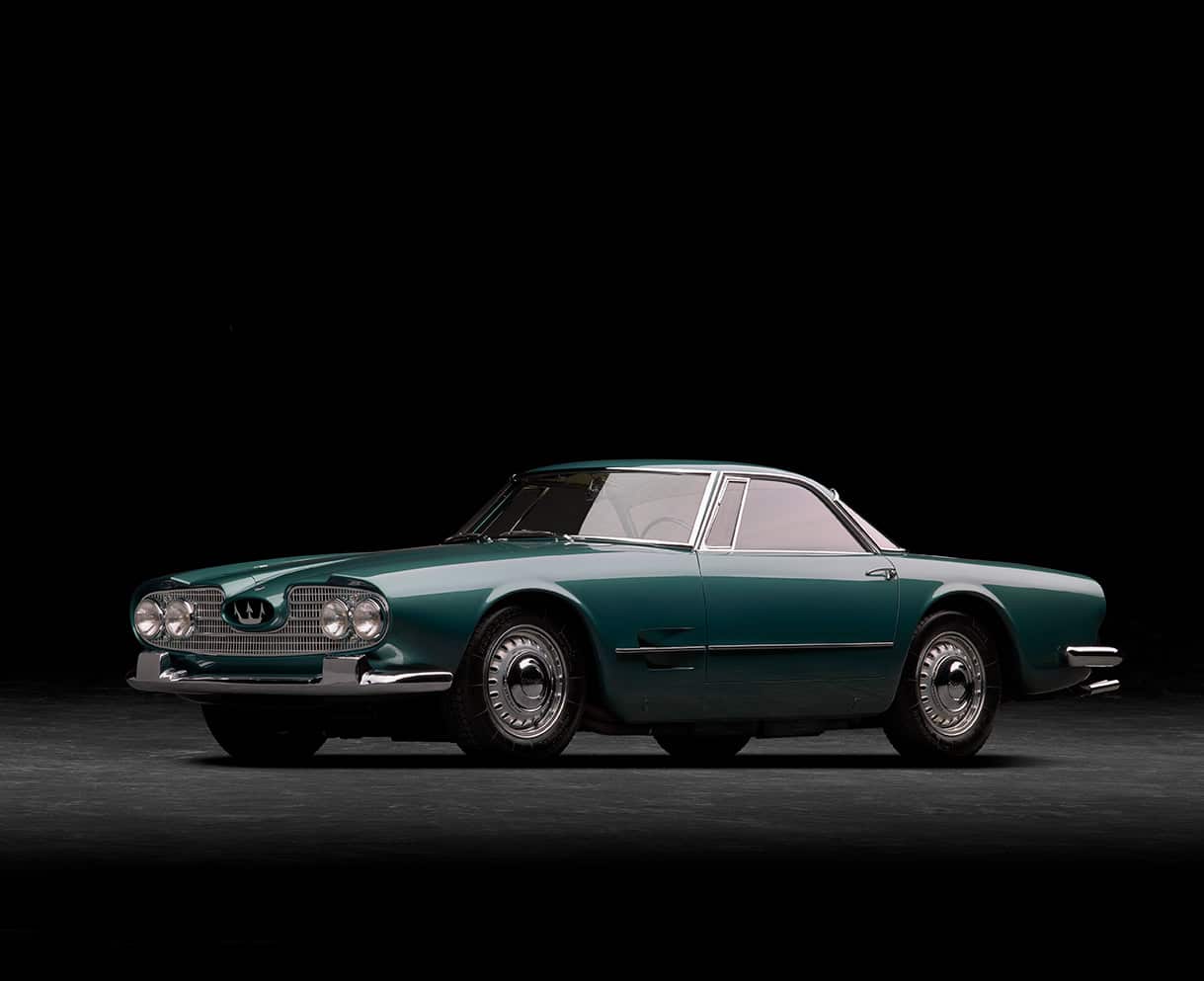
Maserati celebrates the 60th anniversary of the launch  of the 5000 GT 2+2 coupé at the Turin Motor Show

Maserati celebrates the 60th anniversary of the launch  of the 5000 GT 2+2 coupé at the Turin Motor Show

Modena, 29 November 2019 – Sixty years ago, the 5000 GT, a 2+2 coupé, was presented at the Turin Motor Show and was the undisputed star of the event.

-Maserati5000GT-1959MichaelFurman

-Maserati5000GT-1959MichaelFurman

Maserati ahora celebra el aniversario de este extraordinario automóvil, construido a pedido específico del Shah de Persia, Reza Pahlavi. Solo 34 automóviles de este modelo fueron construidos en la planta de Viale Ciro Menotti en Módena, con la carrocería agregada por los mejores carroceros italianos de la época.

-Maserati5000GT-1959MichaelFurman

-Maserati5000GT-1959MichaelFurman

Reza Pahlavi, the then Shah of Persia, and a great enthusiast of high-performance sports cars, test-drove a 3500 GT towards the end of 1958 and was delighted with it. However, he requested an increase in performance, and Giulio Alfieri, Maserati technical director at the time, realised that the car would have to be completely redesigned to satisfy this prestige customer’s demands.


The resulting AM103 project, continued through during 1959, and was in effect a new car and not merely a customisation: the heart of the design was the V8 engine of the 450S (the famous Maserati racing barchetta), with its bore increased to upgrade its displacement to almost five litres.


The 5000 GT, a prestigious  2+2 coupé, was born.

The car, of which the first bodywork was built by Carrozzeria Touring, was launched at the 1959 Turin Motor Show, and received the nickname “Shah of Persia” in honour of this unique customer. Only three of that special version were ever produced.

The next year, in 1960, the 5000 GT was exhibited on the stand at the Geneva International Motor Show, with a few revisions to the engine.

El hecho más interesante del Maserati 5000 GT fue que fue construido con carrocería por casi todos los principales autocares italianos de la época: de Allemano, Pininfarina, Monterosa, Ghia, Bertone y Frua, sin mencionar Michelotti para Vignale.

-Maserati5000GT-1959MichaelFurman

-Maserati5000GT-1959MichaelFurman

Su gran éxito condujo a la producción de una serie de automóviles para clientes de prestigio, incluidos el Príncipe Karim Aga Khan (automóvil con carrocería de Carozzeria Frua), el jefe de Fiat Gianni Agnelli (Carozzeria Pininfarina), el industrial Ferdinando Innocenti (Carrozzeria Ghia), la estrella de cine Stewart Granger (Carrozzeria Allemano) y el presidente mexicano Adolfo López Mateos (Carrozzeria Allemano).

Su gran éxito condujo a la producción de una serie de automóviles para clientes de prestigio, incluidos el Príncipe Karim Aga Khan (automóvil con carrocería de Carozzeria Frua), el jefe de Fiat Gianni Agnelli (Carozzeria Pininfarina), el industrial Ferdinando Innocenti (Carrozzeria Ghia), la estrella de cine Stewart Granger (Carrozzeria Allemano) y el presidente mexicano Adolfo López Mateos (Carrozzeria Allemano).

Detalles técnicos


Model Type 5000 GT
Production period 1959/1964
Engine Eight cylinders, V – 90°
Displacement 4937,8 cc (from 1960: 4941,1 cc)
Bore and stroke 98,5 mm x 81 mm (from 1960: 94 mm x 89 mm)
Power 325 HP a 5500 rev/min. (from 1960: 340 HP a 5800 rev/min)
Compression ratio 8,5:1
Valves train Dual overhead camshafts per bank
Valves Two per cylinder
Ignition Double with two Marelli or Lucas distributors
Engine lubrication Forced with pressure pump
Clutch Dry twin discs
Gearbox Four speeds + R (from 1963: five speeds + R)
Frame Tubular
Front suspensions Coil springs and telescopic shock absorbers
Rear suspensions Semi-elliptical leaf springs and telescopic shock absorbers
Brakes Power-assisted front discs and rear drums
Wheelbase 2600 mm
Track Front 1390 mm ; Rear 1360 mm
Body Two doors Coupè, 2+2 seats
Dry Weight 1500 Kg
Max. Speed 260-270 Km/h

Maserati S.p.A.

Maserati produces a complete range of unique cars with an amazing personality, immediately recognisable anywhere. With their style, technology and innately exclusive character, they delight the most discerning, demanding tastes and have always been an automotive industry benchmark. Ambassadors of this heritage are the Quattroporte flagship, the Ghibli sports sedan, the Levante, Maserati’s very first SUV, and the GranTurismo and GranCabrio sports cars. A range complete as never before, with petrol and diesel engines, rear and all-wheel drive, the finest materials and outstanding engineering.  A tradition of successful cars, each of them redefining what makes an Italian sports car in terms of design, performance, comfort, elegance and safety.

20 December, 2019/by Carlos
https://www.myluxepoint.com/wp-content/uploads/2019/12/16333-Maserati5000GT-1959MichaelFurman.jpg 916 1219 Carlos https://www.myluxepoint.com/wp-content/uploads/2017/11/logo2v-1.png Carlos2019-12-20 22:54:512019-12-20 23:00:34Maserati celebrates the 60th anniversary of the launch  of the 5000 GT 2+2 coupé at the Turin Motor Show

MAGAZINE LUXURY 2023 ENGLISH

Luxury magazine 2023 Nº15

Categories

[the_ad_group id=”74172″]

[the_ad_group id=”74171″]

Tags

2020 2021 2022 2023 Art Barcelona BMW BOCA DO LOBO Brand Finance car cars CEO Chopard colección Collection Concept design design Engel & Völkers españa home lujo luxury luxury luxury luxury luxury luxury luxury luxury luxury luxury luxury Madrid NEW Omega Porsche Relojes Sotheby's timepiece timepieces watch watches watches watches

Site Quality

 YANDEX

Индекс качества сайта

Google

<script>” title=”<script>

[the_ad_group id=”74172″]

Calendar

August 2026
M T W T F S S
 12
3456789
10111213141516
17181920212223
24252627282930
31  
« Apr    

Luxury News & Magazines - MyLuxePoint is proudly powered by WordPress