Tag Archive for: Bugatti

Bugatti and Champagne Carbon

Bugatti and Champagne Carbon Reveal ‘La Bouteille Noire’

In 2019, Bugatti revealed the ultimate incarnation of its no-compromises approach to the hyper sports car, with ‘La Voiture Noire. This one-off tailor-made creation was handcrafted to represent the perfect form and finish, inspired by one of Bugatti’s most legendary historic models, the Type 57 SC Atlantic. Now, the latest one-of-one creation is revealed by Bugatti and Champagne Carbon: ‘La Bouteille Noire’.

Bugatti and Champagne Carbon have worked in partnership since 2018, both hailing from the Grand Est region in France and each dedicated to translating the knowledge and expertise gathered over their proud histories into an innovative present and future, always striving for perfection. The first manifestation of the partnership was the launch of ‘ƎB.01’, a champagne consisting of 90% Chardonnay and 10% Pinot Noir. Only grapes from the most distinguished terroirs of Champagne were used from a 2002 vintage; the very year which saw Bugatti working at full speed on its modern era revival and the Veyron, while the Grand Est region had perfect weather conditions for good ripeness and Champagne flavor concentration.
Now, Bugatti and Champagne Carbon – inspired by the haute couture creation of La Voiture Noire – reveal the most spectacular, hand-crafted champagne bottle and case in the world: the one-of-one, La Bouteille Noire.

A 15-liter carbon fiber bottle, itself the result of 150 hours of craftsmanship involving 37 steps, nestles securely within a sculptural case, which draws inspiration from La Voiture Noire and the flowing elegance of the Type 57 SC Atlantic. With pure surfaces and clean lines, the visual flow of the hand-crafted case is entirely uninterrupted, except by the ultrafine fiber structure hidden beneath the deep glossy black surface.

The case itself is a masterpiece, featuring 314 individual sheets of prepreg carbon fiber, exactly like the materials used in Bugatti’s line-up of advanced hyper sports cars. The cutting-edge technology within includes an automatic solid-state thermodynamic cooling cell – normally found in orbiting satellites – together with 14 high-end fans circulating cool air within the case.

La Bouteille Noire sits upon an illuminated vivid red base, which itself is a miniature recasting of La Voiture Noire’s elegant rear light – one flowing lit panel, with no joints. It’s recreated here by a block of sanded acrylic glass, illuminated in red LEDs, incorporating the jewel-like letters of BUGATTI over a surface of brushed natural aluminum.

The case opens and closes at the push of a stainless-steel button, bathed in a gentle blue light. The doors themselves are trimmed with a piece of laser cut aluminum, mimicking the central fin of the Type 57SC Atlantic, and open with technical hinges and a bespoke transmission to reveal a sumptuous interior. As the doors gently unfold, another automatic system releases the neck of the bottle, which is secured while closed.

Fine Havana Brown grain leather lines the interior – just as it does in La Voiture Noire – which is gently illuminated by aluminum-encased LED lights, creating a theatrical display that rightly places the bottle, and its contents, at the fore.

Alexandre Mea, CEO, Champagne Carbon, says: “With a creation as spectacular as ‘La Bouteille Noire’ it was only right that we pair it with one of our most spectacular vintages. On this occasion, we have chosen a 2000 Vintage blend of 60% Chardonnay and 40% Pinot Noir. Celebrating the beginning of a new millennium, the year 2000 was marked by a relatively mild winter followed by a succession of summer temperatures throughout the flowering period. It’s characterized by rich notes of vegetables, pepper and white fruits – the result of the finest Grands Crus that the Champagne vineyards offer us. Each one brings its own surprises to magnify this cuvee.”
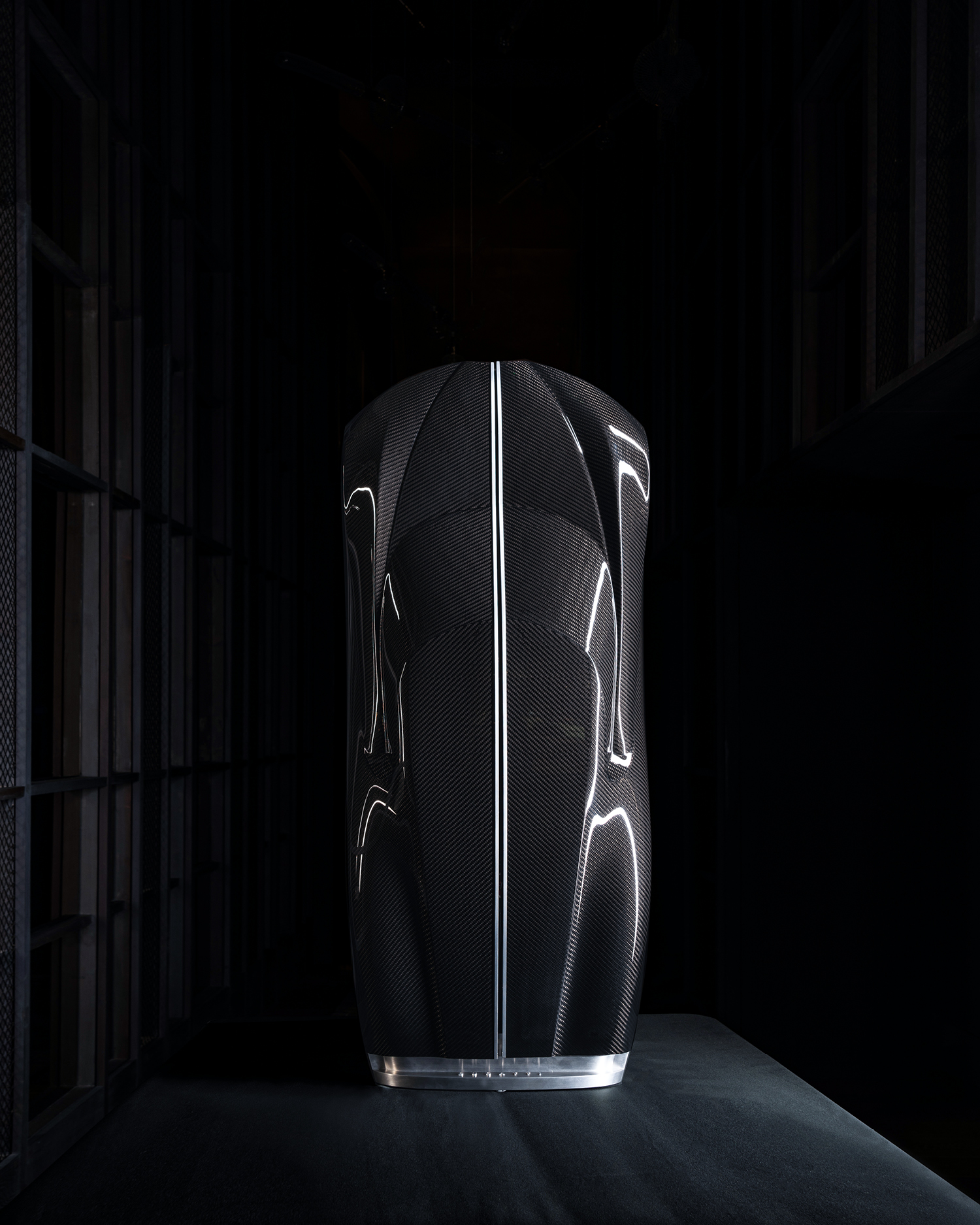
The case is the work of Bugatti partner IXO, master craftsmen in carbon fibre, transforming everyday components into works of art through an intense passion and an unwavering dedication to the finest materials. Most recently Bugatti and IXO revealed the Bugatti Pool Table: a masterpiece designed with perfect proportions and crafted with advanced technologies.

Wiebke Stahl, Managing Director at Bugatti International, comments: “At Bugatti we have always believed that our creations are not just cars, they are works of art, delivered with perfection in every detail. Champagne Carbon and IXO apply the same ethos to their work; La Bouteille Noire is the ultimate expression of design, attention-to-detail and craftsmanship in the world of champagne”.

La Bouteille Noire was revealed at a private event this week at The Londoner, London’s newest five-star hotel and the world’s first super-boutique residence. The exclusive restaurant, ‘8 at the Londoner, counts ƎB.01 as one of the most exclusive bottles of champagne in its wine cellar.

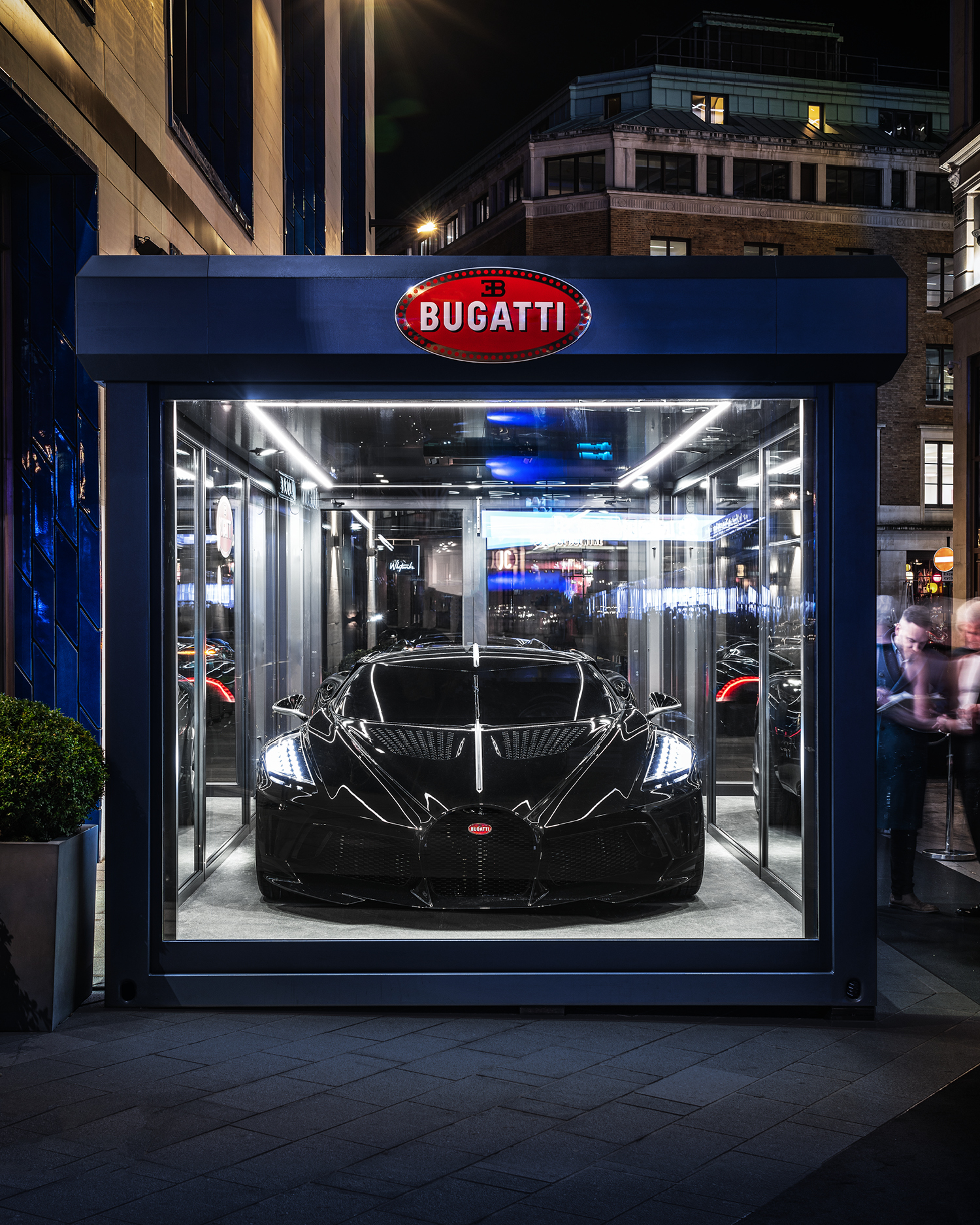
Until December 1st, the Bugatti ‘La Voiture Noire’ will be displayed within an illuminated glass box outside The Londoner in Leicester Square.


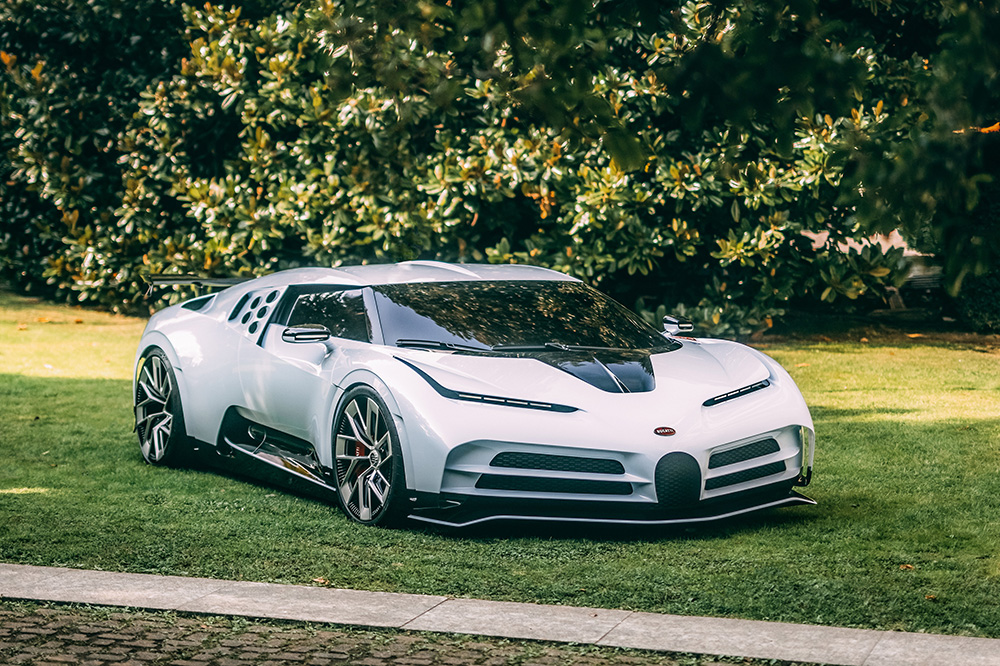
Bugatti Presents the Centodieci at Concorso d’Eleganza Villa d’Este 2021 and celebrates 30 years of the legendary Bugatti EB110

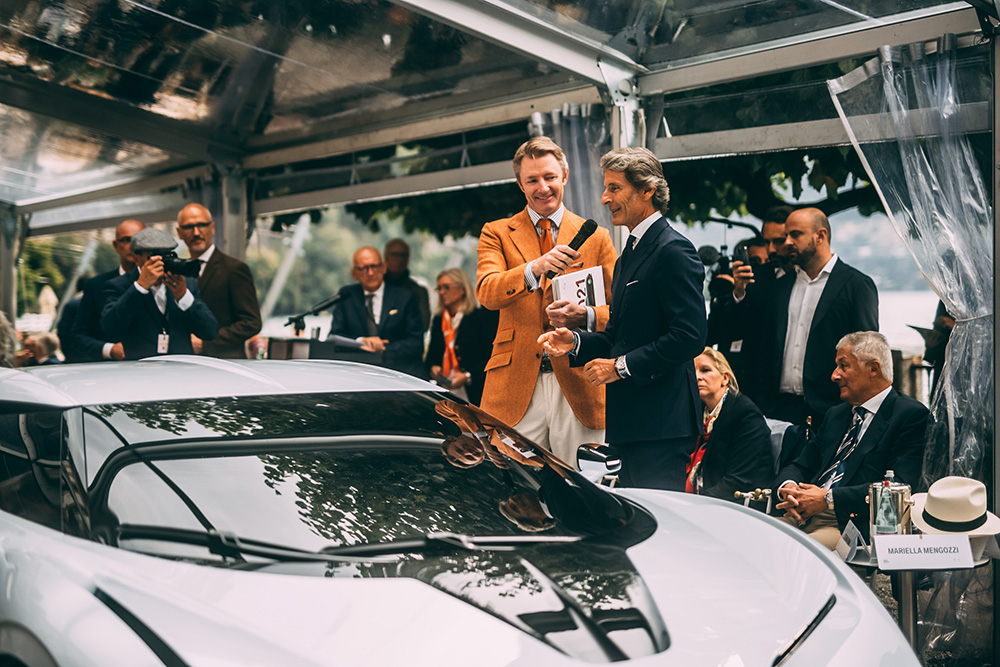
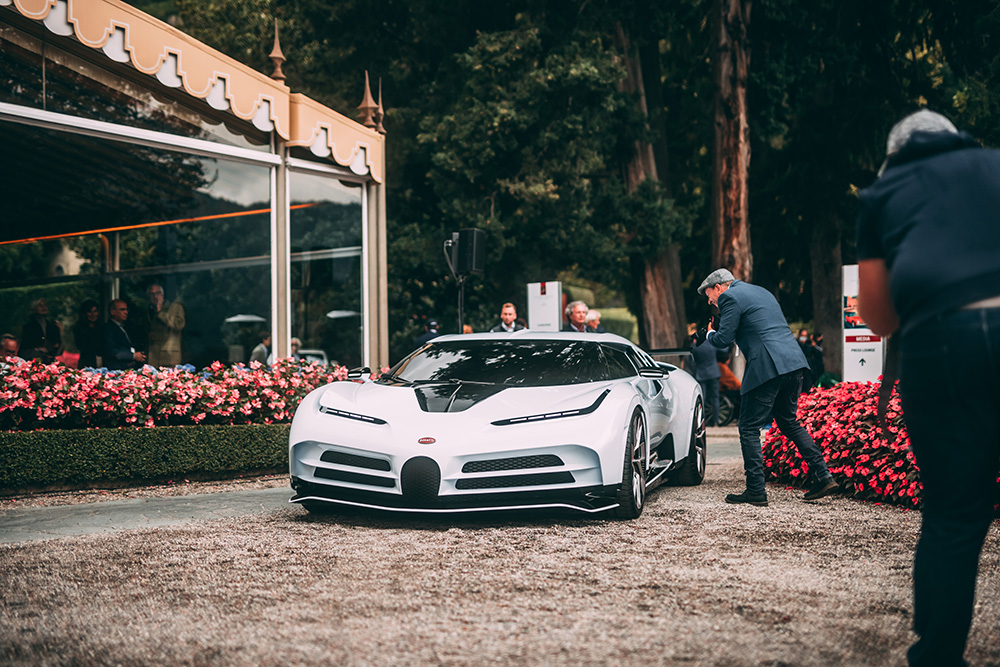
With its timeless beauty, Villa d’Este on the shores of Lake Como has provided a residency for the aristocracy, princesses, marquises, sultans and tsars for centuries. Considered one of the most breath-taking architectural works of the sixteenth century, every year, this elegant five-star resort welcomes automotive enthusiasts from all over the globe to the Concorso d’Eleganza Villa d’Este. Here, they can appreciate the spectacle of some of the finest automobiles and motorcycles, in both production and prototype form, ever created. This year, visitors could also enjoy Bugatti’s stunning Centodieci, which the French luxury brand was presenting in the ‘Concept Cars & Prototypes’ category over the previous weekend from Saturday 2nd to Sunday 3rd October 2021.

With its timeless beauty, Villa d’Este on the shores of Lake Como has provided a residency for the aristocracy, princesses, marquises, sultans and tsars for centuries. Considered one of the most breath-taking architectural works of the sixteenth century, every year, this elegant five-star resort welcomes automotive enthusiasts from all over the globe to the Concorso d’Eleganza Villa d’Este. Here, they can appreciate the spectacle of some of the finest automobiles and motorcycles, in both production and prototype form, ever created. This year, visitors could also enjoy Bugatti’s stunning Centodieci, which the French luxury brand was presenting in the ‘Concept Cars & Prototypes’ category over the previous weekend from Saturday 2nd to Sunday 3rd October 2021.

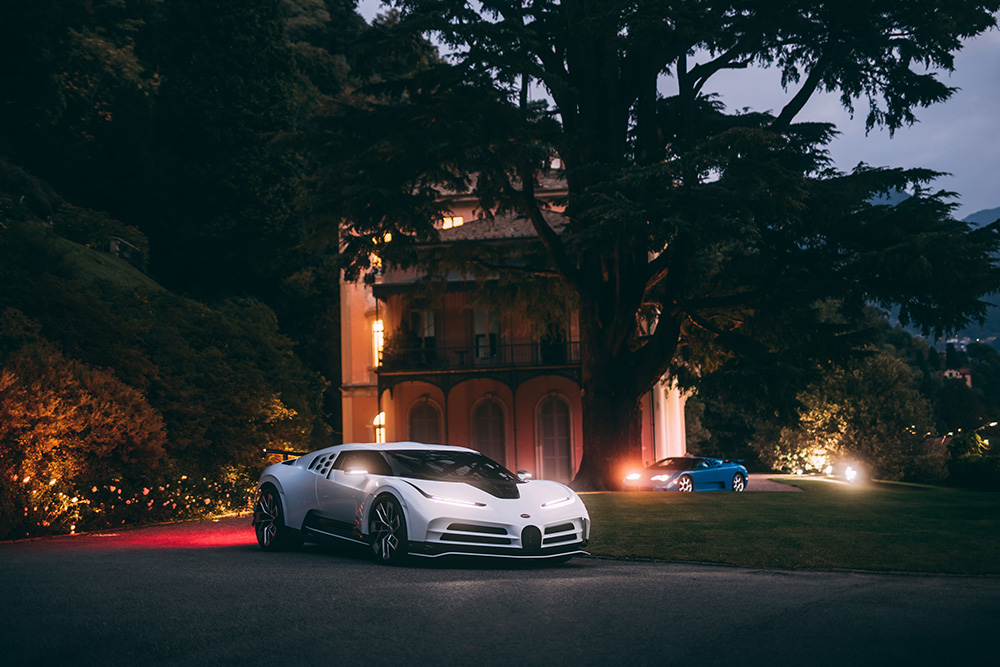
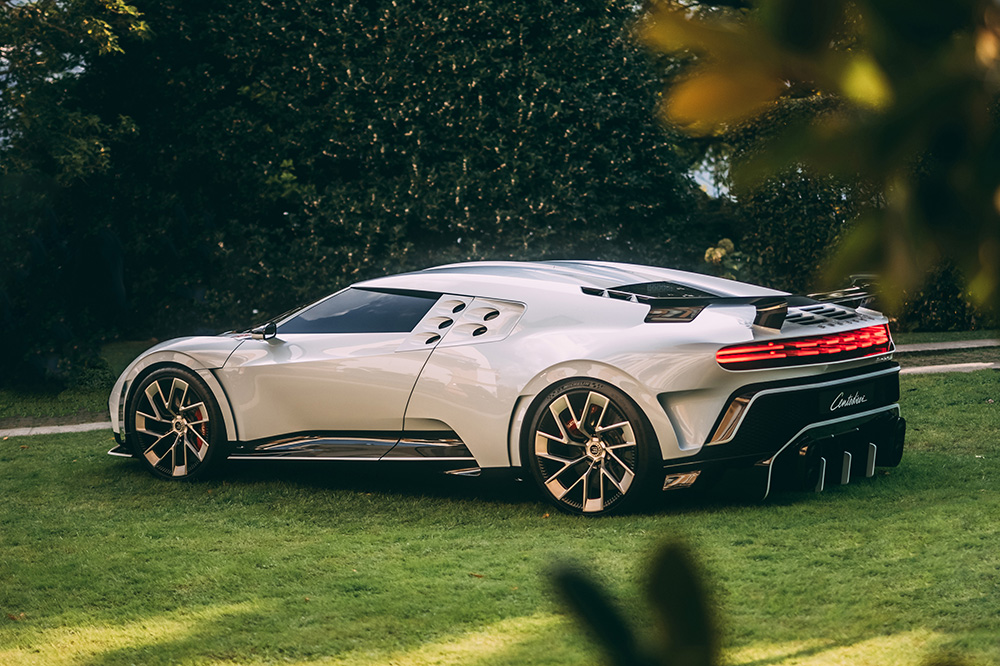
Bugatti unveiled the Centodieci – which translates as 110 in Italian – during Monterey Car Week in California at the Quail in 2019 to celebrate the company’s 110th anniversary. Inspired by the legendary Bugatti EB110 of 1991 and powered by the 8.0-liter W16 engine producing 1,600PS, just 10 Centodieci units will be hand-built at Bugatti’s Molsheim Atelier and be delivered to customers next year. All ten Centodieci models had already been accounted for by customers prior to the car’s unveiling.

A Concours d’Élégance for automobiles was first held at Villa d’Este back in 1929, and Bugatti has enjoyed a long and successful relationship with the event. Recent highlights have included the Bugatti La Voiture Noire taking the premiere prize in the ‘Concept Cars & Prototypes’ category the last time the event was held in 2019. Models from Bugatti’s illustrious past, such as the 1937 Type 57S four-seater sports tourer, the 1934 Type 59 Grand Prix car and the 1938 Type 57SC Atlantic, have all been awarded significant accolades in recent years.

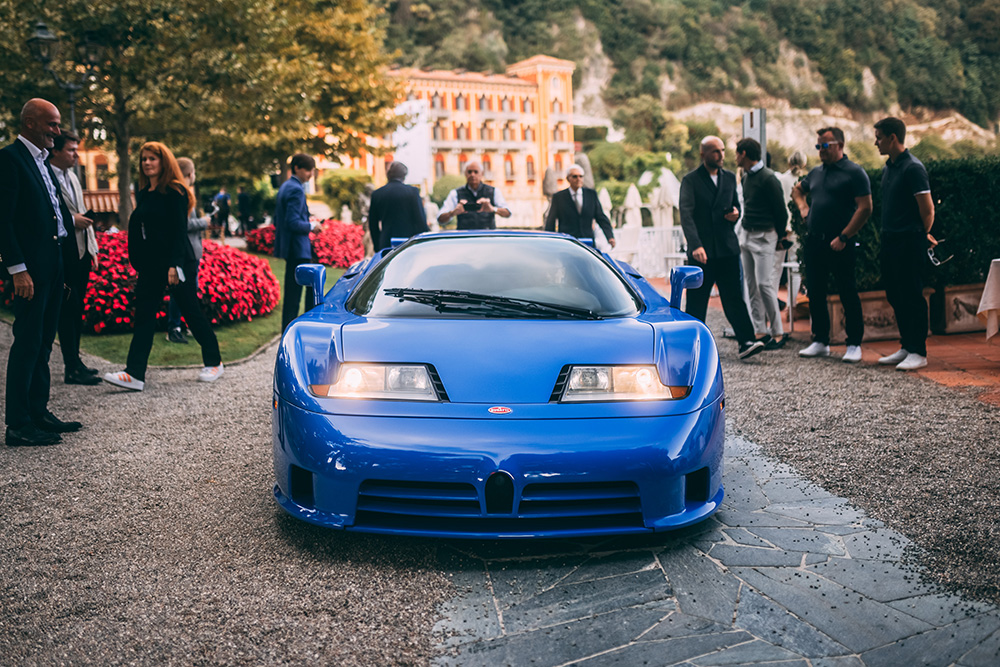
This year also marks the 30th anniversary of the Bugatti EB110. The groundbreaking and first supercar of its time represents the mid-period of Bugatti’s history, when Bugatti Automobili S.p.A. was based in the famous ‘Blue Factory’ in Campogalliano in Italy under the stewardship of Romano Artioli. Introduced in 1991 to mark 110 years since the birth of Ettore Bugatti in 1881, the EB110 elevated the supercar genre to a new level. It featured a revolutionary engineering package that included a carbon fiber chassis and a 3.5-litre 12-cylinder engine with five valves per cylinder and quadruple turbochargers. The transmission was also incorporated within the engine block to create more space for cabin occupants. Exemplary grip, traction and safety were delivered by four-wheel-drive, another key D.N.A. strand that remains pivotal to today’s production Bugatti models.

The historic supercar model – a blue (originally silver painted in “Grigio Chiaro metallizzato”) EB110 SuperSport – presented at Villa d’Este in the class “The Next Generation: Hypercars of the 90s” was formerly owned by Romano Artioli. The Italian entrepreneur, who relaunched Bugatti as Bugatti Automobili S.p.A. in 1987, prior to the company’s closure in 1995, has fond memories of the development of this revolutionary supercar. “While we were at the premiere of the EB110 in Paris in 1991, the engineers back at Campogalliano were urging us to return swiftly to the Blue Factory, as they were eager to begin work on the EB110 Supersport version. Everyone was focused on reducing weight and boosting power, while keeping in mind that I was ferocious that the safety characteristics of the car be upheld.”

The final result was a quite remarkable weight reduction of nearly 150kg from the original configuration, and an increase in performance from 560PS to 612PS, with the engine developed entirely in-house at Campogalliano. Immediately after the EB110 SuperSport was presented to the world’s press at Salon de l’Automobile in Geneva, the team took the car to the Nardò circuit in the South of Italy, to carry out the homologation tests.

“After a warm-up lap we set the world record with a speed of 351 km/h and an acceleration of 3.2 seconds from 0 to 100 km,” recalls Artioli proudly. And it didn’t stop there. The car also set a speed record on snow and ice at 296km/h, while a Bugatti EB110 GT powered by natural gas achieved at top speed of 344.7 km/h.

“I left my heart in my Supersport. No other car gives the same sensation of power, control and safety in every road condition as the EB110 – and with such beautiful style. I could not be more proud for “her” to be at the Concours d’Elegance in Villa D’Este.

“The Centodieci Concorso d’Eleganza at Villa d’Este is one of the jewels in the crown of the automotive season,” explains Bugatti Automobiles S.A.S. President Stephan Winkelmann. “After the event was lost to the pandemic in 2020, it is even more special for Bugatti to return to the wonderful location of Villa d’Este and present our Centodieci to customers and friends of the brand from all around the globe. And of course, the event is even more exciting with the presence of the personal Bugatti EB110 Supersport “America” owned once by Romano Artioli himself. This seminal supercar represents the second period of Bugatti’s history, and gave our designers and engineers the inspiration for the Centodieci.”

The Bugatti Centodieci was presented as a static display within the Concorso d’Eleganza Villa d’Este ‘Concept Cars & Prototypes’ area on Saturday 2nd October and again on Sunday 3rd October, the car also participated in the dynamic presentation parade.


100 Years of the Type 13 Brescia: Quadruple Victory for Bugatti

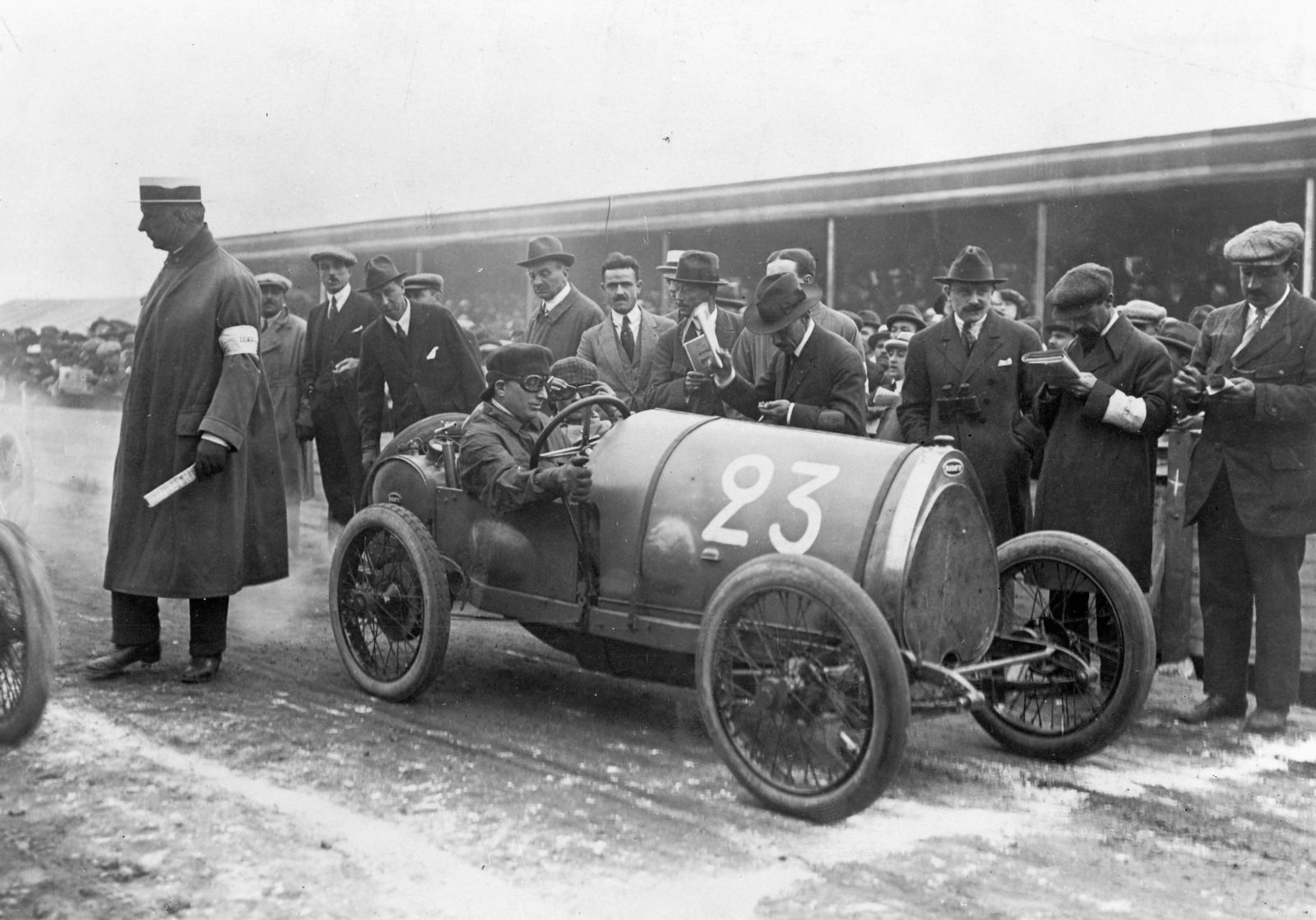
The event is the Gran Premio delle Vetturette. On the Circuito di Montichiari, race cars zip back and forth between the towns of Montichiari and Brescia. Tires screech, dust is thrown up into the air. There are 60 laps to be completed, each one 17.3 kilometers long. This is a real challenge for both man and machine, and remains a legendary race to this day. Bugatti Type 13 vehicles take the top four spots in the Grand Prix for Voiturettes cementing the French luxury brand’s motorsport expertise.

To mark the round anniversary, the Bugatti Club Italia organized a special event between September 12 and 16: 40 historic Bugatti vehicles, including the Type 13, 22 and 23 from all over the world, celebrated the historic victory on the beautiful routes around Lake Garda. The start and finish of each day’s tour was the legendary city of Brescia. For over 35 years, the Bugatti Club Italia has kept the history of the famous French luxury brand alive – long before the first super sports car of modern times was created with the EB 110 in 1991.

With the Type 13 “Brescia” Bugatti was responsible for a turning point in the history of motorsport in 1921. The first of its kind, the open-top sports car heralded the end of large and heavy race cars just a few years later. From 1921, its light bodywork, superior chassis, and powerful engine allowed the Type 13 to leave its competitors for dust.

As did Ernest Jules Friedrich. The French race car driver and mechanic had been convinced of the Type 13 for some time and had won the famous Le Mans race one year previously. Racing in the Voiturette category in the race in Brescia, he performed lap after lap with great concentration, took corners with precision and speed, and crossed the finishing line first – ahead of his teammates Pierre de Vizcaya, Michel Baccoli, and Pierre Marco.

Voiturettes are lightweight, maneuverable race cars. Bugatti’s Type 13 is just such a vehicle – a mere 490 kilograms in weight and a 1.45-liter four-cylinder engine that initially offers 40 PS, and later 50 PS. The open-top two-seater hits a top speed of 150 km/h and can take corners at a pace thanks to its lightweight construction and precise chassis. With the Type 13, which went into production in 1910, Ettore Bugatti brought together his ideas, continued to refine the technology over the subsequent years steadily, and focused systematically on lightweight construction and high-quality workmanship.

First four-valve engine in a car

From 1914, the engine boasted a displacement of 1.35 liters, and from 1919, it featured the first four-valve cylinder head for faster gas exchange, allowing the four-cylinder engine to deliver 30 PS. Bugatti also introduced white metal for the crankshaft bearings and pistons for higher revs as well as a fuel pump and a pump that sprayed oil onto specific components. Easy-shift four-speed transmission made it easier for the driver to change gears frequently.

In 1921, Bugatti increased the displacement to 1.45 liters, while new ball bearings for the crankshaft, which were even lighter and more smooth-running, were introduced for the later race car. At the same time, Bugatti increased the engine’s compression ratio and the carburetor flow rate, opting for a dual magneto ignition for two spark plugs per combustion chamber. As a result, the racing engine delivered powerful combustion at high revs of up to 4,500 rpm. Light wire-spoked wheels that replaced heavy wooden wheels reduced the unsprung masses and increase the vehicle’s agility further still. The Type 13 essentially set the benchmark in motorsport. It was powerful, fast, and sinewy, like a racy thoroughbred; a “pur sang.”

In the 1920s, the Bugatti vehicles won virtually every competition they entered. The lightweight, powerful and reliable sports cars from Molsheim were superior on tough road races and hill climbs in particular, making them close to unbeatable.

Following its quadruple victory in Brescia, the French atelier sold 711 Type 13 Brescia vehicles with a four-valve head as well as 388 vehicles with engines featuring an easy-turn crankshaft with ball bearings. All the subsequent four-valve vehicles even officially bore the name “Brescia” in memory of this unique success. Bugatti also applied the Type 13 concept with other vehicle lengths like the Type 15, Type 17, Type 22, and Type 23. The Type 13 was produced in Molsheim until 1926, with Bugatti selling a total of approximately 2,000 units of the model.

Bugatti Type 35 furthers the racing success

The staff began to assemble Type 35 vehicles in 1925. This vehicle furthered Bugatti’s run of success – in the subsequent years, it became the most successful race car of all time, having clocked up more than 2,000 wins. Among these wins were five consecutive victories in the Targa Florio in Sicily between 1925 and 1929, one of the toughest races of its time. With this impressive success story, the Type 35 therefore followed in the footsteps of its successful predecessor a few years previously in Brescia.


The French luxury brand is paving the way for series production of its exclusive and unique hyper sports car.

Highly exclusive, distinctive and high-performance. At “The Quail – A Motorsports Gathering” in California in summer 2019, Bugatti presented another project reflecting its excellent coachbuilding expertise: the Centodieci. The Centodieci evokes automotive history: the unique project is a tribute to the legendary EB 110. This few-off project comprises production of just ten vehicles for an exclusive clientele. The next phase is about to start for the hyper sports car with a W16 engine and 1,600 PS: the first prototype for series development is currently being assembled.

The design of the Centodieci with its flat front, low-slung front spoiler and three-part air intakes reinterpret the shape of the most famous super sports car of the 1990s. The EB 110 was a key milestone on the road to the revival of the Bugatti brand in 1998 at Bugatti’s historic headquarters in Molsheim, ultimately resulting in the first hyper sports car of the modern era – the Veyron.

The Centodieci is Bugatti’s way of paying its respects to the Italian entrepreneur Romano Artioli and architect Giampaolo Benedini, the men who created the EB 110 some 30 years ago. “The challenge for us was not to get caught up in the design of the legendary EB 110 itself and avoid focusing solely on a retrospective approach. Our aim was to create a modern interpretation of the shape and technology of that time: but at the same time, we didn’t want to lose the charm and character of the EB 110.

After all, the super sports car is still fascinating today with its distinctive design and technology,” says Achim Anscheidt, Design Director at Bugatti. The biggest challenge: to transform the very flat, wedge-shaped and graphically virtually two-dimensional body of the EB 110 into a modern, three-dimensional sculpture to project the fascination of the super sports cars of that time into the modern age.

Since the world premiere of the Centodieci, the Bugatti development team has been working on the technical implementation of the strictly limited model. “Every newly developed vehicle poses an immense challenge, as we are creating a very small series that at the same time has to meet and even exceed all the quality and safety standards of a large series,” says André Kullig, technical project manager for one-off and few-off projects at Bugatti.

The engineers first delve into calculations for the body, aerodynamics, engine and transmission. They simulate the airflow on the vehicle and check all components down to the smallest screw.

Meanwhile, the design team checks the styling in close collaboration with the developers before finalising this and designing the surfaces. They adjust the curvature of the components according to the incidence of light so that the appearance is homogeneous in all lighting conditions – an elaborate development process. After well over a year of design and simulation, the team has now developed the first prototype.

“I was hugely looking forward to the first prototype of the Centodieci,” says Kullig, who has been with Bugatti since 2004 and was previously involved in projects such as the Divo and La Voiture Noire3. “Series development of a few-off project is an especially exciting challenge – and that is also true in the case of the Centodieci, which is a very design-driven project,” says Andre Kullig. His task is to ensure a perfect match between the exterior shape and the technology. Despite only producing ten vehicles, the Centodieci must meet all the same technical requirements as a Chiron.

“With the newly designed body, there are changes in many areas that we had to simulate using special computer programmes. Based on the data, we were able to establish a basic set-up as a starting point for series development and the first prototype,” explains André Kullig.

The team was recently able to successfully put the rolling chassis into operation on the site’s own roller dynamometer in the Molsheim Atelier and check all the drivetrain functions –to ensure the Centodieci can move onto the next stage of development. The next step is now to build the elaborate exterior. “With a high-performance hyper sports car like the Centodieci, it’s a matter of filtering out subtleties based on the modified requirements of a completely new exterior – something that requires highly focused and intense development work,” says André Kullig.

The technical challenges involved were enormous: an engine with eight litres of displacement and 1,600 PS generates high temperatures that require sophisticated thermal management. As in the EB 110, the engine is seen behind a transparent glass surface. So to ensure more efficient engine thermodynamics, the Centodieci has a wide air outlet opening and modified air flows. In addition, guide flaps around the five circular air inserts – positioned in the form of a rhombus – ensure sufficient air intake for the 16-cylinder power unit. As a result, the otherwise dominant Bugatti line, the C-line, gives way to a new design. The rear is formed into a large ventilation outlet opening defined by the eight rear light elements. Other development challenges include the new light elements and the rear wing design, which is permanently mounted in the style of the EB 110 Super Sport.

But even if the development team can simulate and test so much data on the test rigs, the Centodieci will also undergo dynamic testing. “In the next few months, in addition to building the exterior and running more advanced simulations in the wind tunnel, we’re very much looking forward to going out on the test track to start tuning the chassis,” says Kullig.

Within a few hours, all ten units of the Centodieci were sold out at a net price of eight million euros. The highly exclusive, hand-crafted small series will be delivered to customers next year.